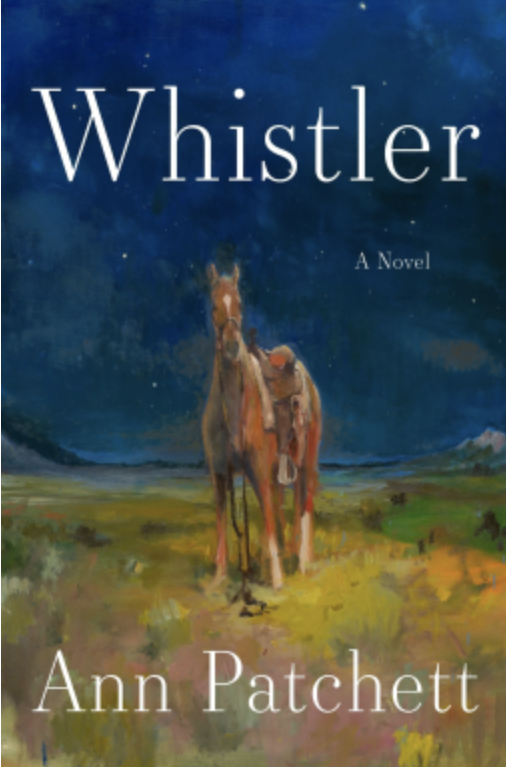
Whistler by Ann Patchett (Literary Fiction)

The key to my love for all Ann Patchett novels is the depth and intricacies of her characters. There is no other writer that I know of who consistently imbues her characters with the level of introspection and thirst for personal knowledge that her characters have — or at least the ones that I relate to! Having read many of her essays, I think the secret is the profundity with which Patchett gets to know people in real life — and I mean any and all of the people she comes into contact with. Not many of us are blessed with the ability to know too many others at this level, and this wide ranging understanding of the varying types of human experience makes for characters who feel real and complex. The fact that Patchett is also an incredible storyteller, with ideal pacing and consistently enlightening disclosures, does not hurt!

So. Our deep and complex characters are launched in this story by a chance encounter between Daphne (our protagonist) and her (first and quite beloved) stepfather — the one who disappeared from her life abruptly after a traumatic car accident when she was nine (she is now 53). Through a set of discussions, connections, and events (celebrations, get-togethers, random walks), we get to unravel the very components that go into telling anyone’s personal story — the different pathways that lead to the person one becomes over time. The story (for me) was one touching moment after another, and I promise that none were of the overly schmalzified Hallmark variety. These are the moments that mark our lives, that matter, and that cause the shifts in our understanding of the world and ourselves.

I loved Daphne’s sister, the best friend and therapist; I loved her (older) husband Jonathan, who is unraveling a family mess of his own (a now deceased mother whose each element of hoarding precipitates a cornucopia of overwhelming memories); I especially loved Eddie, the newly discovered, now-ex stepfather. We see him skillfully through the eyes of the once and current Daphne, whose life experiences only slightly shade perceptions gained as a child during some intensely pivotal moments. The narrative reminded me of how different we are in each dynamic relationship with another.

There are LOTS of (really good) literary references and asides — Eddie is in publishing, Daphne writes, and let’s face it — Patchett knows a thing or two about the business! Themes include the impact of childhood experiences, mistakes and missed opportunities, the contemplation of life and death, human connection, and what it means to show up — really show up — for the people you love. The biggies! I couldn’t put it down.

Thank you to Harper and NetGalley for providing an advance copy of this book in exchange for my honest review. The book will be published on June 2nd, 2026.
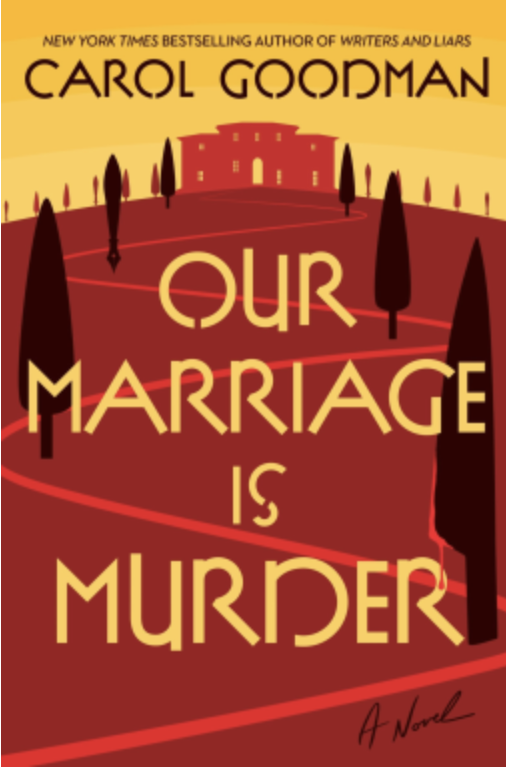
Our Marriage is Murder by Carol Goodman (Literary Mystery)

A love story and a mystery, immersed in literary and classical references with a touch of modern greed and drama. Master genre novelists Fred and Theda Morgan-Lane are both writing and life partners. At least they were. Now — on the cusp of attending a mystery convention at the gorgeous Italian castle where their very popular “Death Takes a Holiday” series was launched — they plan to announce the end of both. Or at least Theda does; Fred has a few other plans up his sleeve. Ignoring whatever plans they each may have, things start going horribly wrong as one by one the murders from their first novel seem to be repeating in real life.

The writing is (as always) good; the pacing deliberate and triggering just the right blend of edge-of-the-seat and calm curiosity; and the characters are all interesting (to me) people. The characters and their various relationships are intriguing because they capture multiple levels of overlapping and inconsistent emotional undercurrents. Especially once the murders start and everyone is forced to look at everyone else in a whole new, and highly suspicious, way. Goodman is both a classicist and a feminist, and both themes run through the narrative in credible fashion. Most importantly, the resolution was surprising (to me), tenable, and completely satisfying — the perfect combination!

Thank you to William Morrow and NetGalley for providing an advance copy of this book in exchange for my honest review. The book will be published on July 21st, 2026.

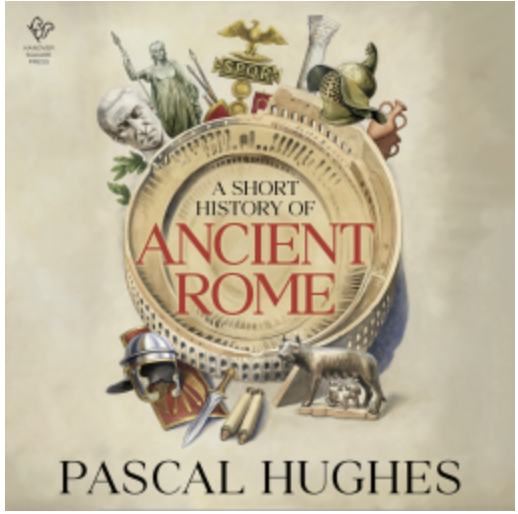
A Short History of Ancient Rome by Pascal Hughes (Non fiction – Audio Book)

The title doesn’t lie — the book covers about 1,000 years of Roman history (from founding to end) and is only 352 pages (or in my audio book case, about 8 1/2 hours of listening). I don’t read a lot of non-fiction, as I find most of it muddied, tedious with extraneous detail, and overly biased, BUT I found this one to be very well-organized, clear, engaging, and with plenty of reference to the (sometimes competing) sources. It also started with a quip from Monty Python which put me in the right mood!

The book was well-structured, beginning with the stories of Rome’s founding (Romulus and Remus) and traipsing through a set of chronicles garnered from pivotal points in Rome’s history including the “real” stories behind popularized versions of characters like Spartacus, Caesar, Nero, Boudicca, and Attila the Hun. Progressing through the history at a reasonable pace allows the reader to watch the evolution of culture and values, political systems, definitions of personhood, and the technical accomplishments for which the Romans are justly famous. It was a bloody and brutal story from start to finish, to be honest, but it helps put our current issues and ideas of civilization into perspective. I found listening to it (while out on walks) to be useful as I enjoyed breaks from the (mostly unpleasant) “action.” After reading, I find myself marveling at how civilized we actually are in comparison, and also how fragile civilization always is.

Thank you to Harlequin Audio and NetGalley for providing an advance copy of this book in exchange for my honest review. The book was published on November 11th, 2025.