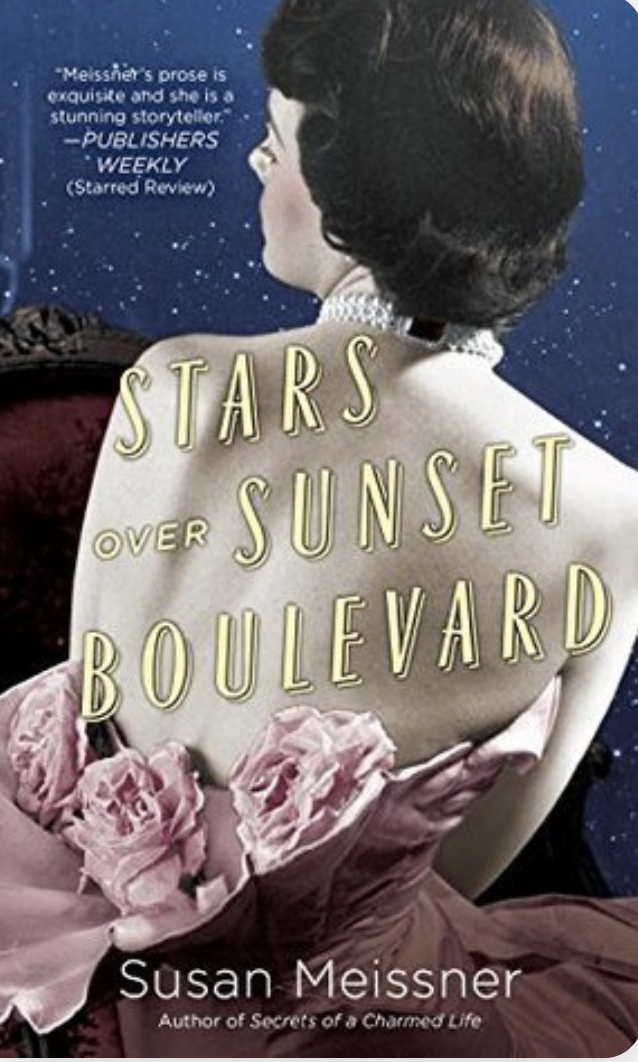
Stars Over Sunset Blvd by Susan Meissner (Historical Fiction)

This is the story of the long friendship between two very different women. Alabama born and bred Violet Mayfield, has fled from the home she loved when her dream of being a wife and mother is dashed. Audrey Duvall is desperate to restart a career that was dashed by the introduction of the talkies. They meet as secretaries on the set of Gone With the Wind in Los Angeles, 1938. The book follows the two of them to the ends of their lives, embedding the complexities of real relationships and the many emotional and moral issues that populate any thinking person’s life: honesty and fear, suspicions and jealousies, loyalty and deep connection. The audiobook reader was fine — a little too slo for my taste.

Susan Meissner is one of my favorite writers. She writes the kind of historical fiction that I love — plumped full of historical detail that awakens fascination — in this case, the movie set of Gone With the Wind. Full of every kind of detail — the technical work, the movie stars, the voice coaching (to make the British actors sound Southern), the filming of epic scenes such as the fall of Atlanta. If you’ve ever seen the movie (and if you haven’t, my goodness!) you’ll be spellbound by all that went into it. At the same time, Meissner writes the kind of human-centered novels that I like — full of thoughtful characters whose interior lives we access as they make their way through a life full of desires, setbacks, regrets, opportunities, and insights. And these are “regular” lives — no giant melodramatic events, but plenty of relatable experiences and thoughts. Her settings often include the kinds of ethical dilemmas we all face, along with the individual choices and the (often predictable and yet somehow surprising) fallout. Because that’s the thing about ethical dilemmas — there are no obviously right answers so some negative fallout is guaranteed.

On a deeper level, I initially felt a lot of judgement about one of the characters — I did not like her. Meissner managed to turn her behavior into something that could be understood (if not applauded), forgiven, and relationship deepening. It’s so easy to immediately judge and so difficult to try to understand. It was inspiring to watch the two continuing their friendship even when one or the other was feeling angry, resentful, or jealous. I was also impressed by some deeply felt and well articulated views on love and why people don’t need reasons to love someone and about recognizing the “brokenness” or maybe “incompleteness” of being young and how you choose to stay close to someone despite irritations, betrayals, and misunderstandings. That understanding, remorse, and a willingness for honesty can mend and make stronger any relationship. Surprisingly insightful.

Looking forward to Meissner’s next book (which I think is due out next March!)

Fog City by Claire M Johnson (Historical Mystery)

I loved this first episode of a new crime noir series starring a hard boiled detective’s equally hard boiled secretary who takes over for her boss when he goes on an extended bender. 1930s San Francisco where a wealthy elite doesn’t even give a nod to Prohibition, and absolutely everyone seems to be running their own con. A banker’s (second) wife comes to the agency to ask for help in locating her errant stepson. In no time we’re whirling about in opium dens, speakeasies, fancy restaurants, and police cells trying to get to the bottom of a widely expanding set of dead bodies. I loved the supporting cast (many of whom I look forward to meeting again in future books) — all fully fleshed out, non dull, people with distinct and intriguing personalities, and I loved that there were plenty of opportunities for philosophical discussions on evil vs “regular” sin and morality in general. The style (and environs) reminded me of Dashiell Hammett at his best — with the clever substitution of the substituting secretary. Plenty of great male characters, by the way, and full acceptance of what women were able (allowed) to do at the time. I always like stories where some group has difficulty getting things done because of social conventions but they get on and do it anyway without bothering to whine about it 🙂
A great surprise read for me!

Thank you to Level Best Books and NetGalley for providing an advance copy of this book in exchange for my honest review. The book will be published on July 30th, 2024

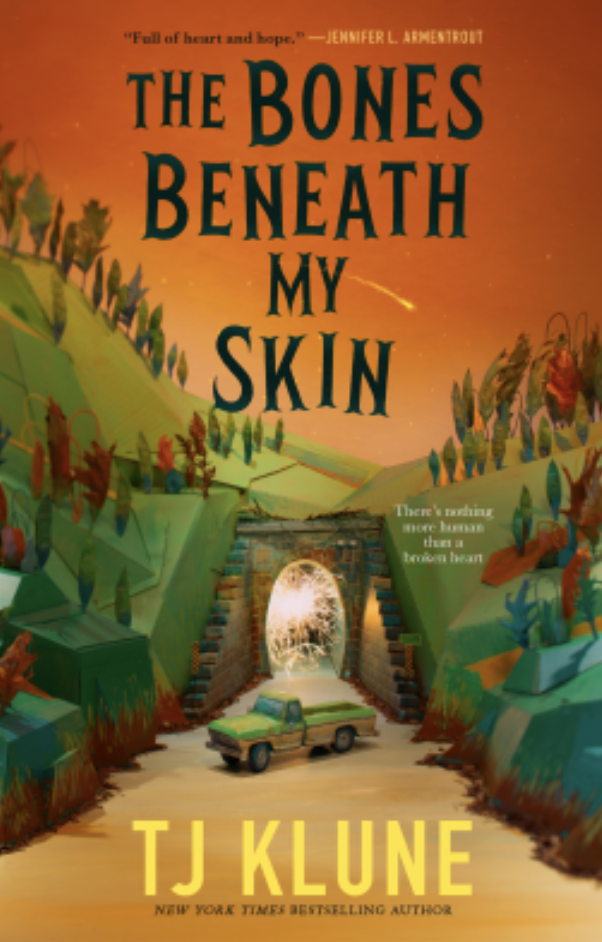
The Bones Beneath My Skin by TJ Klune (Sci Fi)

Aliens (non traditional, portrayed with depth), conspiracy theories, cults, and secret government facilities populate this action packed speculative fiction story with a lovely (and at times quite steamy) gay romance slowly percolating through. Beautifully woven themes of loneliness, love, grief and recovery suffuse the narrative. This is my third Klune book — each was completely different from the others, and all were creative in the way I found old style sci-fi to be, yet firmly rooted in the character development and personal experience that draws me to fiction. He has a very natural writing style — I get hooked at the very beginning and completely forget that I’m reading a book. More like I’m sitting in a comfy room listening to a storyteller bind me with sparkly spells.

In his own words, Klune is “gay as balls” and this is clearly reflected in the books he writes. I’ve never been drawn to specifically LGBQ+ fiction as it isn’t something I’m drawn to, but I like his matter-of-fact fiction where characters are individuals that continue personal development throughout the story, and increase my exposure to human experience significantly. Some of the (quite detailed) sex scenes took me a bit by surprise but I definitely learned a lot! As a complete aside, I did enjoy the little digs at veganism. I often feel surrounded by vegans, and it’s refreshing to hear someone unashamedly express a love for bacon and the superiority of meat over a lentil stew. 🙂

My only complaint is about the pace — I found the beginning a little too slow. It felt like the characters were repeating, rather than developing. Once I hit the 35% mark, the pace stepped up to something that worked a lot better for me. In other words, skim if you have to to get to where things start really moving.

Thank you to Tor Books and NetGalley for providing an advance copy of this book in exchange for my honest review. The book will be published on February 4th, 2025

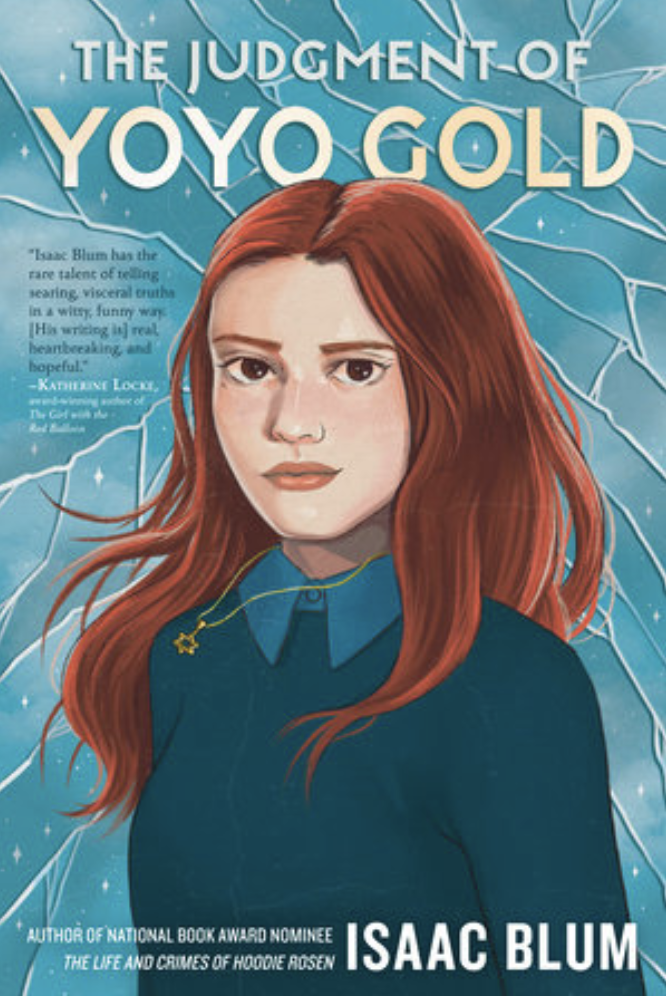
The Judgement of Yoyo Gold by Isaac Blum (YA)

A surprisingly engaging coming-of-age story about Yoyo Gold — a young Orthodox Jewish girl who has always been a model for the community. She kind of has to be as she is the daughter of the rabbi and held to higher standards than most. As she explores and experiments with her place in the world — the one she has been raised to inhabit and other enticing options — she gets closer to understanding what is actually important to her.

I’ve always respected the questioning aspect of the Jewish religion, but I’ve never cared for the more conservative sects of any religion. Those are the groups where so much of daily life is proscribed that it feels too controlling — at least to me as a complete outsider. However, in this book I was able to see both sides of the religion — the questioning and the proscription — through the eyes of someone growing up in that culture. I was better able to see how the required conformity gave rise to a true sense of a close knit community that can be a strong attractor to a person contemplating the life they want to live. People seemed to have purpose and be apparently more free to experience the joys of life without the anxieties and neuroses that seem to plague so many people today.

I learned a lot about the orthodox culture — much of which was new to me, even though I’ve read about that world in the past. The characters were vibrant and had more depth of thought, responsibility, and inquisitiveness than most coming-of-age books I’ve read. I enjoyed seeing the interfaces between her community and people outside — reform Jews and non-Jews alike — through her eyes. Her thoughts, feelings, and experiences were quite real and her reactions easy to understand and to identify with. I also learned quite a bit about the practices of Orthodox Jews which were new and interesting to me — much more depth than the typical story covers.

Thank you to Philomel Books and NetGalley for providing an advance copy of this book in exchange for my honest review. The book will be published on October 15th, 2024.

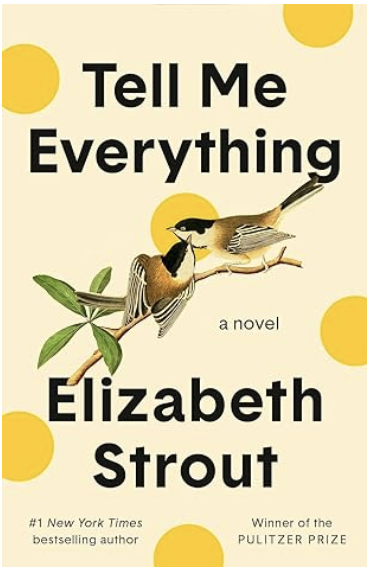
Tell Me Everything by Elizabeth Strout (Literary Fiction)

This is (yet another) beautiful and deeply thoughtful book by Elizabeth Strout, featuring two of our favorite characters from Crosby, Maine: Lucy Barton and Olive Kitteridge (who until this book have not actually met). With plenty of small town plot, including an actual dead body mystery and a “different” sort of affair, this takes us through samplings of post-Covid Crosby life in lively detail.

In truth it is all about connection, knowing yourself and others, and the joy of being allowed to be genuine. (As an aside, I feel like it is harder and harder to meet people who immediately feel genuine — possibly because our culture requires people to curate their presentation so very carefully). It’s about loneliness and the comfort we receive from even the tiniest “real” connections. It’s about the nature of a real friend who makes you feel not alone, regardless of how often you see them, talk to them, or what they do for you. While some of the story takes place in the present, there are many interludes in the form of Lucy’s “stories of unrecorded lives” which she and Olive exchange. Lucy (and Elizabeth Strout) is a writer and these stories are therefore no longer unrecorded. Also a great new phrase for me: “Sin eater.” Some people eat the sins of others… It’s an interesting concept and you can learn more by reading the book. A bit of a slow start but that’s more about the mood you’re in when you sit down to read. Come to it in a meditative and curious state.

Some quotes (plus the last line — as always — is great but I can’t include it here):

“Didn’t anyone ever have anything interesting to say? They talked of movies they were all watching, of series on Netflix, they spoke about their children, but always carefully and in terms meant to hide their private disappointments, and they talked about one another. Of course.”

“I mean, we don’t ever really know another person. And so we make them up according to when they came into our lives, and if you’re young, as many people are when they marry, you have no idea who that person really is. And so you live with them for years, you have a house together, kids together. But even if you marry someone later in life. no one knows who another person is. And that is terrifying.”

“…because nobody can go into the crevices of another’s mind, even the person can’t go into the crevices of their own mind, and we live — all of us — as though we can.”

“And yet, as is often the case, those of us who need love so badly at a particular moment can be off-putting to those who want to love us, and to those who do love us. Bob, as he looked at her — she seemed like a beached sea animal to him with her eyes that had almost disappeared — he did love her, he did.”

“Solzhenitsyn said the point of life is the maturity of the soul.”

Thank you to Random House and NetGalley for providing an advance copy of this book in exchange for my honest review. The book will be published on September 10th, 2024.

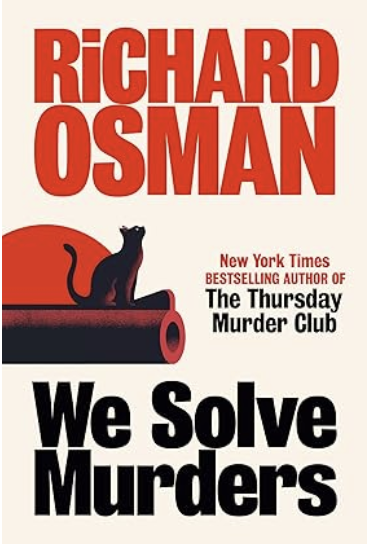
We Solve Murders by Richard Osman (Mystery)

A “humorous” thriller, if there is such a thing. Full of grand scale money laundering, kick-ass private security, and jetting about from Santa Lucia to Dubai to any other place sporting dead bodies somehow linked together. Clearly designed to launch another series, I didn’t fall in love with it the way I immediately did “The Thursday Murder Club.” Mostly because I didn’t fall in love with the characters — yet. The three primary characters are Amy Wheeler — the aforementioned kick-ass private security person, Rosie D’Antonio — the over-the-top flamboyant and very wealthy best selling author, and Amy’s father-in-law Steve — widowed ex-cop who was by far my favorite character (the other two seeming oddly personality-less). The bad guys are cartoonish but kind of funny, and there is a humorous depiction of a nefarious usage of ChatGPT as well as a subtly searing portrayal of the new breed of influencers (who provide some of dead bodies mentioned above). The plot relied on more stupidity than I enjoy, but by the last quarter of the book I was hooked and found the ending pretty satisfying. I’m a big Osman fan, so I’m hoping book two fleshes of the personalities a little more and gets off to a slightly more engaging start.

Thank you to Pamela Dorman Books and NetGalley for providing an advance copy of this book in exchange for my honest review. The book will be published on Sept. 17th, 2024.

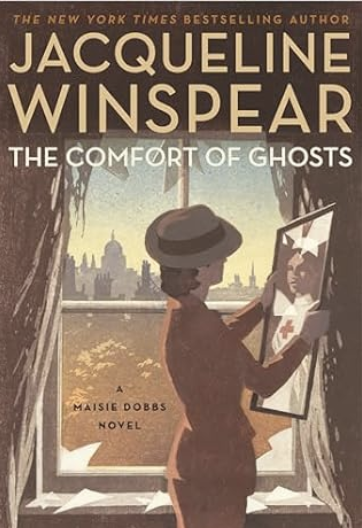
The Comfort of Ghosts by Jacqueline Winspear (Historical Mystery)

I feel a melancholy knowing that this is the last of the Maisie Dobbs series. I’ve enjoyed the series tremendously — Winspear is one of my favorite historical mystery authors. The series follows Maisie Dobbs from 1910, when she was a 13-year old housemaid in the Compton manor house — through her experiences as nurse, psychologist, and investigator spanning two world wars and their aftermaths. Most involve mysteries, equal amounts mysteries of the spirit as well as of the body(ies). This is the 18th (and final) episode.

The book opens in October, 1945 with an unknown man in a demob suit looking at his reflection in a shop window and thinking to himself: “He couldn’t face home. Not yet. Perhaps not ever. Couldn’t face the wanting in the eyes of others, the wanting for him to be himself again, the man they had known so long ago. But that old self had perished, and now he was looking at the reflection of a wraith that turned out to be him. Alive. Against all odds.” I was hooked (and moved) instantly. This story is focused on recovery — the war is over and people are trying to rebuild lives and there are equal amounts of guilt, relief, worry, and grief. As the last book, we find closure for most of our favorite characters along with some new additions, all going through what it takes to heal from the overwhelming residue of the war. Because after all of the celebrations, England is still struggling with rampant homelessness (think the Blitz), food shortages, missed loved ones, broken bodies and minds, and near financial ruin at the national level. Winspear covers this without melodrama in a way that I rarely see captured in fiction. Full of the reality of individual lives that refuse to be overwhelmed by ubiquitous calamity, yet obviously experience great tears to the soul from the devastation of their homes and families.

I’m going to miss this series. I’ve grown to love the characters, the friendships, and the deep portrayals of individuals coping when faced with the barely surviving wreckage of their civilization. Winspear differs from other historical fiction authors not in her research of the past (which is excellent and thorough) but in her ability to find the depth and impact in “ordinary” lives during extraordinary times. She is a keen observer, diving into personalities and professions ranging from housewife to civic leaders to the aristocracy to Scotland Yard personnel to the many intricate layers of the British Secret Service. I keep reading WWII books, particularly regarding the British home front because I so respect the British spirit that got them through the destruction of two world wars with the attitude of “getting on with it” and “making do” and the strength that comes from real ties of community.

Just a couple of quotes — I love her writing:

“He often wondered why his calculating mind would spin in expanding and contracting circles until he came to the point where a new truth was revealed.“

“She had met a woman, once, who told her she could see the prayers from distressed souls littering the ceiling of every church she had ever entered, as if those heartfelt messages had been inscribed on fine tissue paper and cast up so God could reach down to collect each one.”

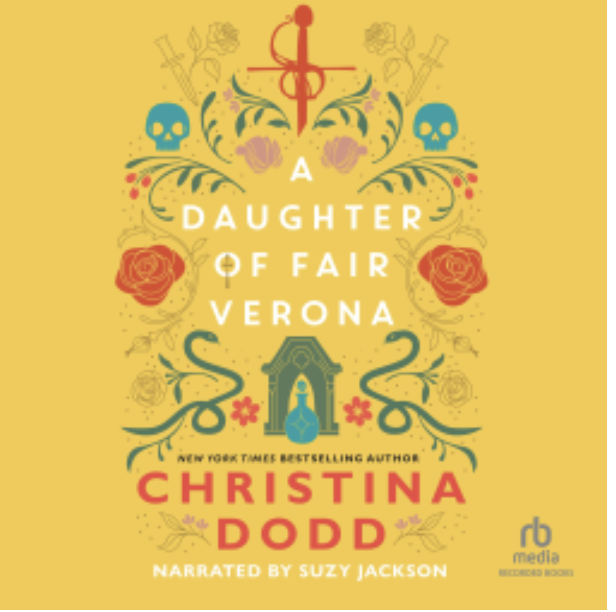
A Daughter of Fair Verona by Christina Dodd

This potentially silly but actually clever, engaging, funny, and even insightful book was tons of fun to listen to. Rosaline, the eldest daughter of Romeo and Juliet (yes, in this version they didn’t die but lived a long, loving, and particularly fecund life), keeps finding clever ways of avoiding marriage until all of a sudden — she can’t seem to avoid her impending nuptials to a real brute whose wives seem to die rather quickly after marriage. The reader was perfect for the text — I think listening to it really added to my enjoyment.

Full of lovable characters, several dead bodies, surprising plot twists, an even more surprising who-done-it reveal, and plenty of snark, the story is a masterful depiction of how a strong, intelligent, heroine living at a time where only her virtue and virginity “count,” manages to get what she wants from life despite the very real constraints on women at the time. And she does it with the kind of wry commentary that kept me in stitches. I haven’t read Dodd before, but an online browse makes me think she usually writes thrillers. This had many of the plot elements of a thriller, but I had such faith in our heroine I guess I never got too stressed — a real plus in my book.

As an aside, I also appreciated the way the author did not change any of the character’s personalities or any element of the original Shakespeare story (aside from a clever explanation of how they survived), unlike other story extensions I have read (and was greatly irritated by).

Thank you to Recorded Books and NetGalley for providing an advance copy of this book in exchange for my honest review. The book will be published on June 25th, 2024.

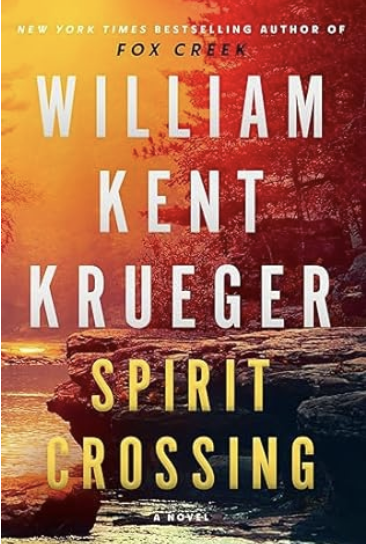
Spirit Crossing by William Kent Krueger

Writing: 3/5 Characters: 4.5/5 Plot: 3.5/5

This is my first foray into the Cork O’Connor, Minnesota Ojibwe territory mystery series. Obviously I’m way behind because this is the 20th in the series! In this story, a body “felt” by O’Connor’s 7-year old grandson on a berry picking expedition turns out not to be the missing daughter of a local (white) politician, causing the FBI and BCA to lose interest rapidly. But through his grandson’s “visions” they quickly identify the body as belonging to a local native girl, missing for some time. And O’Connor, along with the tribal police and local sheriff, do not lose interest. Danger ratchets up for everyone as more grim discoveries are made and the grandson (among others) appears to be the next target.

There were several other story lines not directly related to the plot. Members of O’Connor’s family are part of a large, and sometimes violent protest at the Stockbridge pipeline. One of his daughter’s has just returned from Guatemala with a pretty deep secret that she isn’t quite ready to share. And there are plenty of depressing stories of trafficking, runaway Native girls, alcoholism, and other stereotypically labeled Native American problems. A strong theme of forgiveness, even for people who commit heinous acts, with the blame laid squarely on their bad childhoods. To be honest, this always rubs me the wrong way. Not everyone who has a bad childhood becomes a cold hearted killer, and regardless of the problem’s origin, people who are or who have become sociopaths need to be stopped. But I digress.

Overall, I liked the characters. I found the writing acceptable though a little choppy, sometimes making deep sentiments come off as saccharine when they really aren’t. The plot moved at a good pace, though I didn’t appreciate the preachiness (and the fact that all but one white man were “bad” while all Natives and women were “good.”) I did enjoy the depiction of Native philosophy and positive ways of life when we weren’t focusing on those afflicted by alcoholism, abandonment, etc.

Thank you to Atria Books and NetGalley for providing an advance copy of this book in exchange for my honest review. The book will be published on August 20th, 2024.

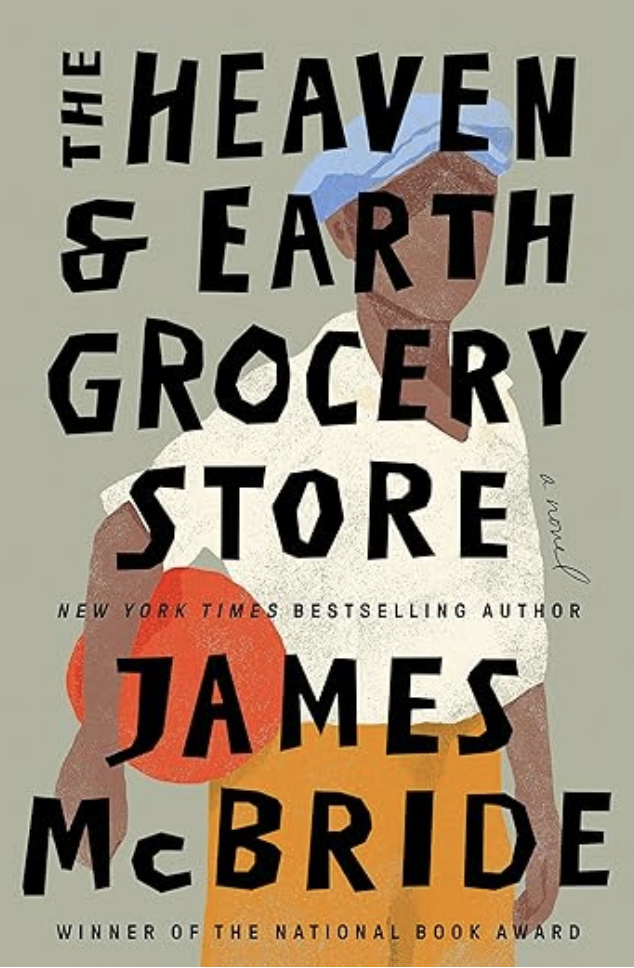
The Heaven & Earth Grocery Store by James McBride (Literary Historical Fiction)

Plot: 4.5 Characters: 5/5 Writing: 4.5/5

A body found in 1972 during a building project in Pottstown, PA, gives rise to the 400 page story describing (in a very roundabout way!) how it got there. But really the body is unimportant — it’s just a piece of string that connects the reader to the tumultuous world of Chicken Hill in the early 1900s — Chicken Hill being the part of Pottstown where the Blacks, Jews, and immigrant whites who couldn’t afford any better lived. When an orphaned, 12-year old, deaf boy is taken by the state to be institutionalized “for his own good,” the best parts of this community combine forces and in a complex effort (bringing to mind Mission Impossible) work to extract him.

That’s the plot but it’s really a tiny part of the story. McBride is a masterful storyteller — presenting a layered tableau of individual (full and richly rendered) characters, disparate groups that form constantly fluctuating alliances and communities, and the realities of life for the disenfranchised. This is not a story of lynchings, or people being shot at traffic stops, but of persistent bias, disdain, and shifting laws that are set and enforced by people who owe allegiance only to their own interests. But again, the story is not focused on the injustice, but about how one goes about living in an unjust world. How one gets on with it, and all the different ways people choose to do so.

I loved the characters and their deeply complex (and utterly consistent) backstories. I loved the tumult of the constantly evolving immigrant populations — the Jews and Blacks taking the main stage but the Jews broken into multiple, distinct, groups from Romania, Lithuania, Poland, Hungary, etc. and the Blacks divided into different groupings based on attitude. Throw in Germans, Italians (but with a strong sense of identity from their origin in different parts of Italy!). This book is one of the best portrayals of the bedlam of immigrant assimilation in the early 1900s that I have ever read. I loved the depiction of the historic friendship between Blacks and Jews that lasted well into the Civil Rights era of the 60s.

The writing style was hard for me at times — long sentences, paragraphs, scenes with tangential information spinning in rapidly at multiple points — but it was necessary to get across the reality of the multiple forces and influences at play. So much valuable content but hard to hold in your head at the same time. Poor me! On the other hand, who wants to cut the live music scenes that Moshe, the Wandering Romanian, brings into his first-to-integrate theaters (see quote below about the kind of music preferred by the white upper-crusters), or of the experiences and daily dismissals that forged Nate Timblin into the strong, deeply principled man that he was, or the many, many restrictions put on Black people at the time and how they impacted simple, every day activities. I can’t honestly come up with a single scene I could do without, so my advice — caffeinate a bit before reading or take good notes.

In addition to all of the above, and perhaps most importantly, it’s a book about love, connection, community, and trying to be the best person that you can in the world in which you land.

Some great quotes:
“Principle. In all the years of being a fusgeyer, when he and Moshe were children, running for their lives from the soldiers and starving, that was the one thing that Moshe never gave away. He never hated anyone. He was always kind. He’d give away his last crumb. And here in America, he’d married a woman who was the same way. Kindness. Love. Principle. It runs the world.”

“Nate peered into his wife’s searching, pleading brown eyes, then down at her hand on his chest, the long fingers that wiped the sweat off his face after work, that knitted his pants and stroked his ear and cared for him in ways that he’d never been cared for as a child. And the rage that overcame him eased.”

“Nate Timblin was a man who, on paper, had very little. Like most Negroes in American, he lived in a nation with statutes and decrees that consigned him as an equal but not equal, his life bound by a set of rules and regulations in matters of quality that largely did not apply to him. His world, his wants, his needs were of little value to anyone but himself. He had no children, no car, no insurance policy, no bank account, no dining room set, no jewelry, no business, no set of keys to anything he owned, and no land. He was a man without a country living in a world of ghosts, for having no country meant no involvement and not caring for a thing beyond your own heart and head, and ghosts and spirits were the only thing certain in a world where your existence was invisible.”

“ ‘That woman,’ his cousin Isaac once grumbled, ‘is a real Bulgarian. Whenever they feel like working, they sit and wait til feeling passes. They can’t pour a glass of water without making a party of it.’”

“To make peace with the town’s power brokers, every month or so Moshe booked a bevy of horrible bands that Pottstown’s high-class, pasty-faced Presbyterians enjoyed, just to keep the peace. Moshe watched in puzzlement as these Americans danced with clumsy satisfaction at the moans and groans of these boneless, noise-producing junk mongers, their boring humpty-dumpty sounds landing on the dance with all the power of empty peanut shells tossed in the air.”

“Most of the seventeen original Jewish families on Chicken Hill were German and liked getting along. But the newer Jews from Eastern Europe were impatient and hard to control. The Hungarians were prone to panic, the Poles grew sullen, the Lithuanians were furious and unpredictable, and the Romanians, well, that would be Moshe — the sole Romanian — he did whatever his wife told him to do even though they didn’t agree on everything; but the relatively new Jewish newcomers were not afraid to fight back.”

“These lost people spread across the American countryside, bewildered, their yeshiva education useless, their proud history ignored, as the clankety-clank of American industry churned around them, their proud past as watchmakers and tailors, scholars and historians, musicians and artists, gone, wasted. Americans cared about money. And power. And government. Jews had none of those things; their job as to tread lightly in the land of milk and honey and be thankful that they were free to walk the land without getting their duffs kicked — or worse. Life in America was hard, but it was free, and if you worked hard, you might gain some opportunity, maybe even open a shop or business of some kind.”