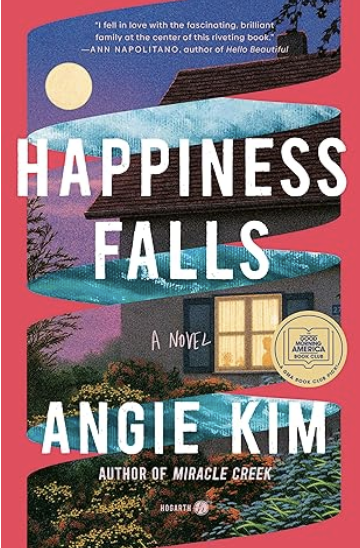
Mia’s family is unusual to say the least. Half Korean, half white, a working mother and a stay-at-home father, wildly different fraternal twins (Mia and John), and a younger brother (Eugene) who has both Autism and Angelman’s Syndrome (also known as the Happiness Syndrome as it is characterized by a happy demeanor). While Mia is hyperlexic (new word for me) and ultra analytic (sinking often into her vortex mode as in “warning, warning you’re sinking into a vortex of over analysis”), her twin John is ADHD, with a heavy emphasis on the H. Their mother is a linguist (who once helped with the libretto of a Vulcan opera) and their father is engaged in some very interesting “Happiness” research while caring full time for the now teenaged Eugene.
One day, the father goes missing and a very distraught Eugene — the only witness — makes it home on his own in a disheveled mess — without the ability to communicate anything about what occurred. What follows is an intricate plot to solve the mysteries of both the missing father and the essence of Eugene, complete with detectives, crowdsourced clues, behavioral specialists, plenty of confusion and misdirection, and some real surprises. The plot is engaging enough to attract most readers on its own, but what intrigued me was the obsessively interesting characters. The inner meanderings of our narrator (Mia — explained in the first pages as her compulsive need to digress) traipsed through philosophy, neurology, linguistics, human perception, music and emotion, modes of communication, and most especially the tools and abilities for understanding oneself and others — especially those others who do not function in the same way as yourself. Lots of research on conditions such as Eugene’s woven seamlessly into the narrative. While none of this would get in the way of a plot-oriented reader finding fulfillment, to me it was a Disneyland of intellectual treats that actually propelled the story forward.
Apropos of nothing, the author had a fantastic working vocabulary — I particularly liked the phrase “titular panache” — tickled me.
Highly recommended!
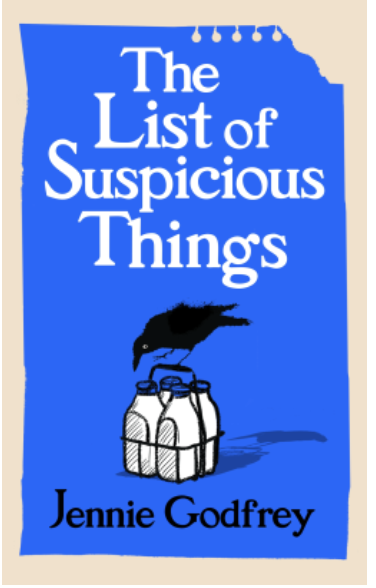
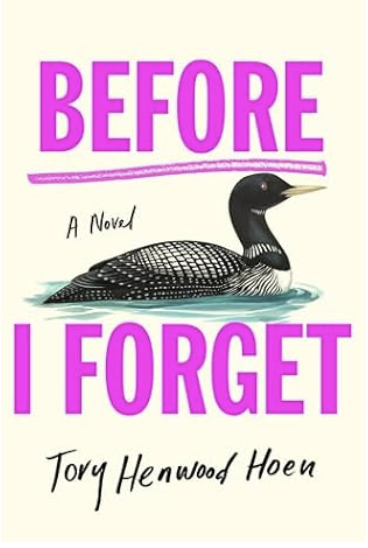

 Books to look forward to ...