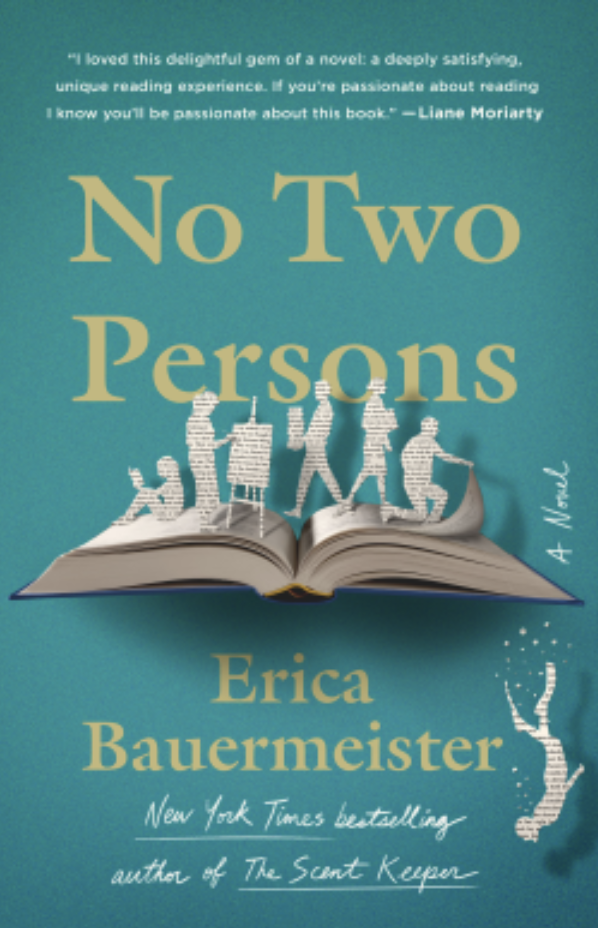
No Two persons by Erica Bauermeister (Literary Fiction)

Writing: 5/5 Characters: 4/5 Plot: 3/5
An interesting premise — in the first chapter, Alice Wein writes, and manages to publish, a deeply felt book, drawing on her own emotional experiences. It is titled “Theo.” Each of the next nine chapters (extending over a number of years) is a story about an individual who interacts with the book in a way that has a significant impact on his or her life: the Assistant who discovers the manuscript, the actor who narrates the audio book, a blocked artist, a driven diver, a deserted teenager, a bookseller, a ghost town caretaker, an intimacy coordinator (my favorite), and a book agent.

Each story is deeply personal; several brought tears to my eyes. While I didn’t find the book depressing, many were quite poignant. As the stories continue, we learn more about the book itself from it’s opening line — “wandering is a gift given only to the lost” — to succinct summaries of its development and denouement. Kind of clever embedding a book within a book without actually having to write it! I did find one story trite (I won’t tell you which — it may not feel that way to you!)

I greatly prefer novels to short stories, so I was a little disappointed that this wasn’t really a novel. On the other hand, I read them all (I often stop after the first few in a story collection). Bauermeister is a lovely writer, and the characters have real depth. And I have always liked the concept of books and how subjective each reader’s experience is. As an aside, I also really like the cover!

Thank you to St. Martin’s Press and NetGalley for providing an advance copy of this book in exchange for my honest review. The book will be published on May 2nd, 2023

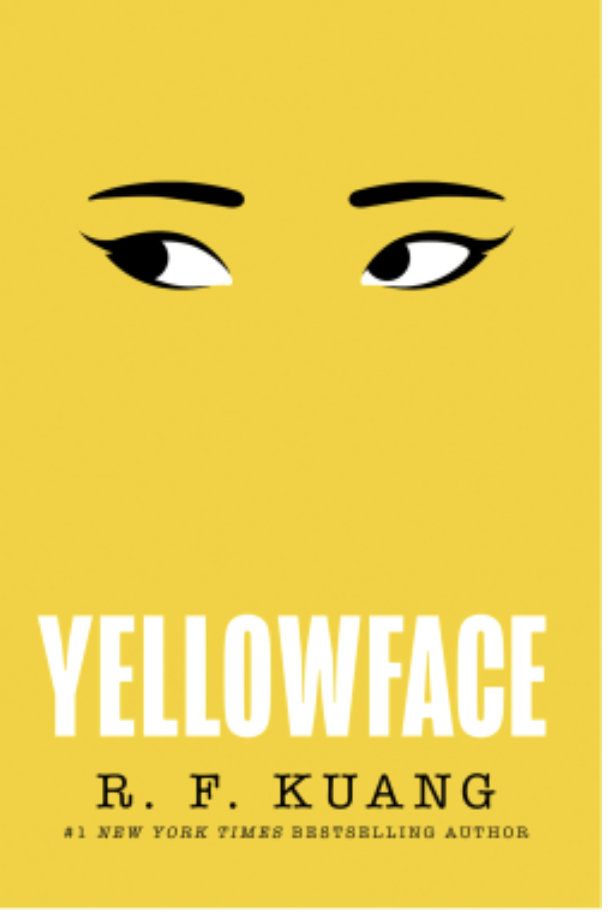
Yellowface by RF Kuang (Literary Fiction)

Writing: 5/5 Characters: 4/5 Plot: 4.5/5

This book never goes where you expect it to go. Ostensibly the story of an author (Juniper Song) who takes the latest manuscript from a recently deceased friend (Athena Liu), completes it, and publishes it as her own. But the depth of introspection, thought, and reaction every step of the way neatly details the complexities of every aspect of the world of writing, publishing, marketing and fandom. And it is absolutely fascinating.

Ever noticed how easy it is to have a (strong) opinion on something for which you’ve only read a headline? You’re not the only one. This book forces us to think a lot more deeply about a whole slew of issues: What is plagiarism vs influence vs mashups? How are we influenced by both direct marketing / branding and the more subtle (but equally insistent) influence of current trends and fads? How quick are we to leap to conclusions without analysis or an attempt at understanding?

Kuang also tackles the hydra of cultural appropriation by having her narrator (a white woman) writing a (thoroughly researched) book about Chinese history. Does she have the right to write about something that is not her heritage? Is it more reasonable for someone who is of Chinese descent but has never experienced (or been exposed to) anything like the characters in the book to write it? Kuang (who herself is ethnically Chinese) presents multiple sides to a whole slew of issues via the opinions, thoughts, and comments of various characters — both fully fleshed out and spewed in every angry storm of social media commentary. If Kuang herself has a strong opinion on these topics, she keeps it well camouflaged through her characters’ many disparate voices. I think she showed real courage tackling the subjects — helpful that she is already an award winning author — but I hope the strong-minded Internet trolls bother to think things through before attacking!

Lots of literary references, real insight into the industry, and a wildly convoluted plot that is actually clean, believable, and easy to follow. Human nature presented with all of its intricate folds dancing about in the intersection of morality, social acceptability, and judgement. Very different from her last book (Babel — which I loved) — it is equally compelling.

A fantastic first line, which drew me in instantly: “The night I watch Athena Liu die, we’re celebrating her TV deal with Netflix.” A fantastic last line, too, but I won’t include that here!

A small selection of good lines — there are so, so many:
“I stare at Athena’s brown eyes, framed by those ridiculously large lashes that make her resemble a Disney forest animal, and I wonder, What is it like to be you?”

“Cue the myth making in real time, the constructed persona deemed maximally marketable by her publishing team, paired with a healthy dose of neoliberal exploitations. Complex messages reduced to sound bites; biographies cherry-picked for the quirky and exotic.”

“The Last Front hardly breaks new ground; instead, it joins novels like The Help and The Good Earth in a long line of what I dub historical exploitation novels: inauthentic stories that use troubled pasts as an entertaining set piece for white entertainment.”

“In any case, Twitter discourse never does anything — it’s just an opportunity for firebrands to wave their flags, declare their sides, and try to brandish some IQ points before everyone gets bored and moves on.”

“It’s hard to reach such a pinnacle of literary prominence that you remain a household name for years, decades past your latest release. Only a handful of Nobel Prize winners can get away with that. The rest of us have to keep racing along the hamster wheel of relevance.”

“But enter professional publishing and suddenly writing is a matter of professional jealousies, obscure marketing budgets, and advances that don’t measure up to those of your peers. Editors go in and mess around with your words, your vision. Marketing and publicity make you distill hundreds of pages of careful, nuanced reflection into cute, tweet-size talking points. Readers inflict their own expectations, not just on the story, but on your politics, your philosophy, your stance on all things ethical. You, not your writing, become the product — your looks, your wit, your quippy clapbacks and factional alignments with online beefs that no one in the real world gives a shit about.”

Thank you to William Morrow and NetGalley for providing an advance copy of this book in exchange for my honest review. The book will be published on May 16th, 2023
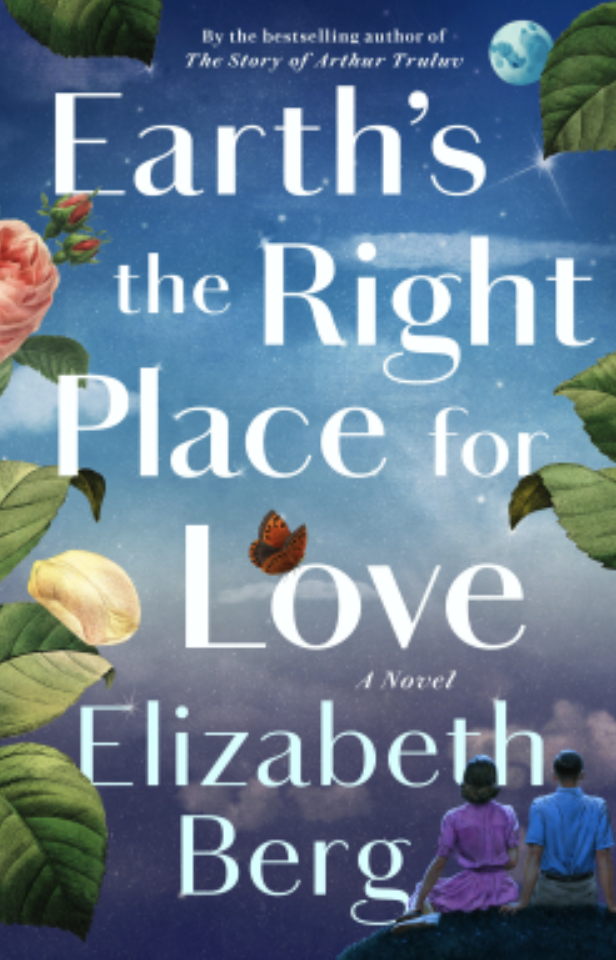
Earth’s the Right Place for Love by Elizabeth Berg (Literary Fiction)

Writing: 5/5 Characters: 5/5 Plot: 4/5

A sweet, uplifting story with real depth.  I loved Berg’s previous novel — The Story of Arthur Truluv (see my review here).  This novel is Arthur’s memory of the long courtship of and friendship with his (now deceased) wife. Beginning in 2016 when Arthur is 85 and finds himself “waiting for small things,” we spend most of the book in the 1940s when he first falls in love with Nola McCollum.

The novel deals with the key elements of life — relationships, mortality, family, and nature. Her descriptions of the every day aspects of life often brought tears to my eyes, simply because they touched the essence of tiny details so very well.  There are some wonderful quotes because Berg is a fantastic writer, but I’m not including them as they tend to give away certain aspects of the plot.

Beautifully done.

Thank you to Random House and NetGalley for providing an advance copy of this book in exchange for my honest review. The book will be published on March 21st, 2023

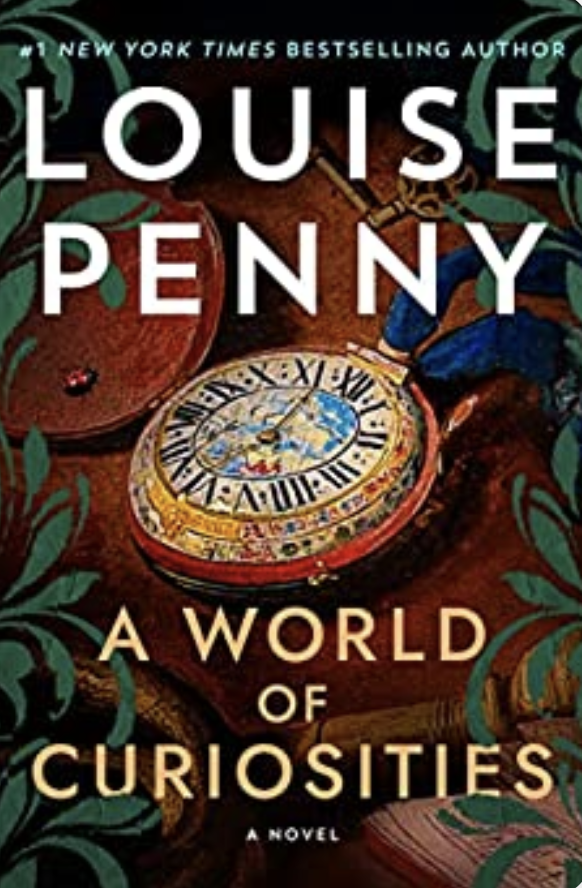
A World of Curiosities by Louis Penny (Literary Mystery)

Number 18 in the extremely (and understandably) popular Inspector Gamache from Louise Penny. An absolute page turner; I read it in just a couple of sittings (was preparing to host a party — had to take some breaks to cook and clean!).

In addition to the actual who-done-it or who-is-about-to-do-it plot line, I found it full of scenarios that triggered thought about when to trust your instincts and how even well-trained professionals can be subject to bias and manipulation. Also — despite Gamache’s overwhelming kindness and ability to see potential in people who have been tossed aside by the rest of humanity — the book appears to admit to some people being beyond redemption, broken to the point of no return, even hinting at some genetic predisposition to “badness.”

As always, the book is full of interesting arcana — literary references, historical notes, and art commentary, including a full description of an enormous (and unfortunately fictional as I would love to see it) painting called “A World of Curiosities.”

I can definitely pick a few holes of the “why wouldn’t he have thought of that” variety, but why bother? Completely gripping.

Poster Girl by Veronica Roth (Speculative Fiction)

Writing: 5/5 Plot: 4.5/5 Characters: 4.5/5

This concise description of the plot comes from Goodreads: Poster Girl is an adult dystopian and mystery novel about the imprisoned former face of a strict government regime and the task she’s given to buy her freedom. I’ll add to this that I don’t really think it is any more dystopian than our modern life is today and I wouldn’t call it a typical mystery per se, but the plot summary is accurate if not inspiring. Just read the book — it’s good!

Roth seems to have been born a skilled writer — she penned her first novel (Divergent) at 22 over her senior year winter break and in addition to be a runaway best seller, it was actually good (I read it)! Poster Girl is — as expected — completely gripping from start to finish. No tangents, no filler, perfectly structured plot. What I really liked was the major shift in the reader’s understanding of the situation that paralleled the (equally major) shift in the main character’s understanding. And in this particular case, that shift brings up an essential (to me) issue: at what point in someone’s life do they reach an understanding of their own sense of morality? And when should they be held accountable for that? We all go through a kind of conditioning (or brainwashing) when we are young — it’s called being raised and your parents, schools, and community all take part. What does it take to question and possibly overcome your conditioning? Why is it easier for some people than others?

A fast, engaging read with plenty of thought provocation and no long battle or chase scenes (those are so tedious!)

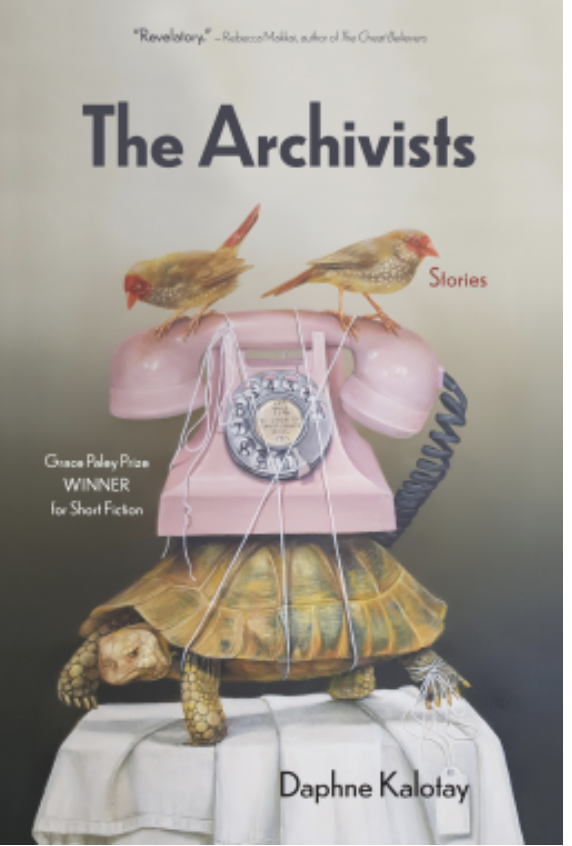
The Archivists by Daphne Kalotay (Short Stories)

A collection of stories taking place in Charlottesville, Virginia, spanning a wide array of people who all seem to be somewhat lost in their own lives (as anyone who spends time thinking about larger issues often will be). Some good reflections on self with respect to those larger issues. My favorite story was the eponymous The Archivists which introduced the concept of possible epigenetic manifestations throughout generations from an initial extreme trauma (in this case the Holocaust). One phrase really stuck with me: heart-scalded — meaning “an anguished, active, grief.” Not just grief at the loss, but “the ongoing torment of her regret.”

I admit I found many of the stories mildly depressing, though all were thoughtful and piqued my interest in some way. One made me laugh while simultaneously despair: Guide to Lesser Divinities — wherein an adjunct professor of English lectures her class on the subtle difference between similar meaning words:

“To deny the accuracy of one versus the other, I explained, was a first step toward moral corrosion. I told them how the degradation of language set the stage for ethical misjudgment, that our careful parsing of word choice and allusion were skills to combat despots and charlatans. That the semicolons they so blithely misused might be the last feeble shims propping up our teetering republic.”

And later in the same story: “To be imprecise is moral laziness. Not idleness. Not sloth. Moral laziness. It’s a matter of morality because to knowingly misuse a word is a way of lying. And deception is, of course, immoral.”

I’m not a big short story person, but I like Kalotay’s writing and each of the stories did provide insight into experiences outside of my own.

Thank you to Northwestern University Press, TriQuarterly and NetGalley for providing an advance copy of this book in exchange for my honest review. The book will be published on April 15th, 2023

The Trackers by Charles Frazier (Literary Historical Fiction)

Writing: 5/5 Characters: 4.5/5 Plot: 4/5

Works Progress Administration (WPA) painter, Val Welch, heads West for an enviable New Deal commission in small town Dawes, Wyoming. His remit: to paint a mural in the town Post Office that represents the region. His chosen topic: “The Energy of America or the natural and human history of this place.” He is offered free lodgings at the ranch of the wealthy John Long and his wife, Eve, a former honky tonk singer with her own troubled past. Faro, a rather iconic tough cowboy (and complete horse whisperer) is one of those mysterious characters who draws you in against your conscious inclination.

When Eve runs off, Val takes a break from painting to moonlight as a tracker, criss-crossing the Depression riddled country in search of her. It’s a rich narrative, teeming with individual stories and told from a young (and somewhat embittered) painter’s eye. His search takes him from Wyoming to Seattle to San Francisco to Florida — each location suffering from the Depression in its own Hellish way. Each character — from the four leads to the many supporting — is both an individual and an obvious product of his or her history in these troubled times. We are treated to Val’s narrative commentary on the way, ranging from his own hopes and desires to his surprises to his inner rantings on subjects of government, greed, and some (previously unknown to me) dispiriting Supreme Court Decisions.

The deep dives (scattered throughout the story) on how the mural was conceived and executed were engrossing. It was to be done in “roughly the ancient way” and I enjoyed learning about how to make, tint, and use tempera paint, build scaffolding, and simply look at the world in a different (artistic) way.


The story is bold, expansive, and yet also intricately detailed. Excellent writing — see some of my favorite quotes below. I liked the balance between action and introspection, and I loved the description of the physical surroundings integrated with internal landscape of Val’s thoughts.

Highly recommended.

Some great quotes:
“Looking now, the missing element — and it was down in a deep crater — was the violence of the West. Not so much the physical geography, but the violence inherent in the concept of the West, the politically and culturally and religiously ordained rapacity smearing blood all over the fresh beauty.”

“Traveling the country, town by town, I felt a heady drift of grief and sometimes a breakthrough of optimism from the long Depression.”

“So the mural’s main argument, however it was shaped, was that this particular place held importance and was not forgotten after all.”

“The look seemed inhuman until I realized that just because I might never have felt or thought whatever passed through Faro’s mind and body in that flicker of time did not mean it wasn’t human.”

“Which struck me, a childless man with the first number in his age still two, as a better position on childrearing if you meant it metaphorically and if the floor wasn’t rock-hard hexagonal tile laid over a slab of concrete.”

“The higher the elevation, the more I felt like I was being rendered transparent by X-rays or gamma rays or whatever.”

“After all, the ultimate expression of Capitalism is not democracy. It’s a dictatorship not of individual men but of corporations with interchangeable leaders. I wasn’t sure if the Depression was straining the structural limits of our Constitution or simply revealing that its fundamental idea were faulty.”

“After Florida — a state equivalent to a hotel towel from somebody else’s bath flung sopping across your face — Wyoming felt clean and brittle, the light fragile as a flake of mica, the high air rare enough to be measured in the lungs and appreciated in its thinness, it’s lack of substance.”

Thank you to Ecco and NetGalley for providing an advance copy of this book in exchange for my honest review. The book will be published on April 11th, 2023

The Vanishing of Margaret Small by Neil Alexander (Historical Fiction)

Writing: 4/5 Plot: 3.5/5 Characters: 4/5
Margaret Small is not your typical protagonist. Seven year-old Margaret was “Vanished” (her words) in 1947 — left at St. Mary’s Hospital in Canterbury by her grandmother who never saw her again. St. Mary’s was an institution for people who were unwanted — those with disabilities such as Down’s Syndrome, polio, or “moral imbecility.” Though we never get a stated diagnosis for Margaret, she appears to have been “slow” or “simple minded.” When we meet her in 2015 at the age of 75, she is (still) unable to read or write.

In a dual timeline, the 75-year old Margaret recalls her past in a set of chunks: the sudden drop off at seven — scared, and confused; a confusing sexual experience when she is 22; sudden (scary) freedom at 32 when she is told she can leave the hospital and live in a small group home with the help of a Social worker / carer. As her social worker helps her come to terms with her life, he draws an analogy between people with disabilities and people who are gay 50 years before when that was illegal. There are several long lectures about how people with disabilities were seen as having illnesses (like being gay) and how they were put away for that reason.

While the end is ultimately uplifting, I found the (longish) story somewhat depressing and a little simplistic in terms of how her life could have easily been much better. The story did highlight how people were shunted to these institutions with no hope of “release” and no effort made to help them overcome whatever difficulties they had. While the story is not new to me, it was particularly upsetting to lump in people who literally could not care for themselves (severe mental retardation or extreme physical disabilities) with people who simply did not confirm to social norms at the time (usually due to some kind of sexual preference or action that upset someone else).

Thank you to Embla Books and NetGalley for providing an advance copy of this book in exchange for my honest review. The book will be published on Nov 16th, 2022

The White Lady by Jacqueline Winspear (Historical Fiction)

Writing: 3/5 Plot: 4/5 Characters: 4/5
Elinor White has been trained to be a predator rather than prey which served her well during WWI when her home in Brussels was occupied by Nazis. It also served her well during WWII as she worked to protect her adopted country (England). But exercising those skills left their mark, and she finds herself torn between protecting those who can’t protect themselves and letting go of the violence that continues to haunt her.

A standalone (or possible new series beginning?) from the author of the Maisie Dobbs series, this book is kind of a mix between an historical novel and a mystery, with an emphasis on the former. It had a bit of a slow start but I was drawn in and found myself caring very much about the characters. I’m a big Winspear / Maisie Dobbs fan. I wouldn’t mind finding out more about Elinor White if this turns into a series…

Thank you to Harper and NetGalley for providing an advance copy of this book in exchange for my honest review. The book will be published on March 21st, 2023

Romantic Comedy by Curtis Sittenfeld (Literary Fiction)

Writing: 5.5/5 Plot: 4/5 Characters: 5/5

Loved, loved, loved this book! It’s clever, witty, full of intra- and inter-personal insights and … it simply made me happy. Our narrator is a 26-year old writer for The Night Owls (TNO — think Saturday Night Live) whose goal is to one day write “non-condescending, ragingly feminist screenplays for romantic comedies.” The book opens with a grumpy and well depicted annoyance that her office mate — middle aged schlub writer Danny Horst — is engaged to a gorgeous and popular celebrity. Her curmudgeonly point? This could never happen if the genders were reversed. And this sets the stage for this laugh-out-loud and deeply satisfying examination of love, romance, gender stereotyping, and personal insight with plenty of grammar jokes, neuroses, soul baring and an extremely funny and yet poignant story of how she got her hamster tattoo.

It is a self-referential, Covid fueled, Romantic Comedy for our times. I always love Sittenfeld’s writing — it is clean, pointed, and intelligent (and allows her audience to engage intelligently) while never belaboring an obvious point and always remaining simultaneously funny and meaningful. I would love to see some of the SNL style skits her characters propose and the whole thing would make a great movie that would easily bear multiple rewatches. Great cast of characters.

Some great quotes — out of context and just a drop in the bucket:
“Did he realize I wasn’t yet wearing earbuds or did he not care? I suspected the latter; every day, things were said at TNO, often on camera, that would have constituted sexual harassment in any other workplace except the current White House.”

“Even with the baked-in sexism, even when I’ve barely slept. I just can’t imagine a job where I laugh more, or the people are more talented and hard-working. And to get paid to make fun of stuff that deserves to be made fun of and have this huge platform — what more could a misanthrope from Missouri wish for?”

“Another of my pet peeves is that the female characters used to all be sort of cutesy, like having flour on their nose after they baked cookies and not knowing it. And now they’re all a mess, like waking up really hungover and getting fired. I want to create characters who aren’t flawless but also aren’t ridiculous or incompetent at life.”

“Just to be clear, I do lead a life of quiet desperation. I wouldn’t want to be friends with anyone who doesn’t, or anyone who isn’t filled with ambivalence, because I assume they’d be incredibly shallow. But I’m sure I’d be ten times more quietly desperate if I were living in the suburbs with a two-car garage.”

“Aren’t we all just looking for someone to talk about everything with? Someone worth the effort of telling our stories and opinions to, whose stories and opinions we actually want to hear?”

“All of which was to say that the sketches I’d written over the years about the absurdity and arbitrariness of beauty standards for women had arisen not from my clear-eyed renunciation of them, but from my resentment at their hold on me.”

“I thought, not for the first time, that plainly expressing what you thought about fraught topics was significantly harder than writing banter between imaginary characters.”

Thank you to Random House and NetGalley for providing an advance copy of this book in exchange for my honest review. The book will be published on April 11th, 2023