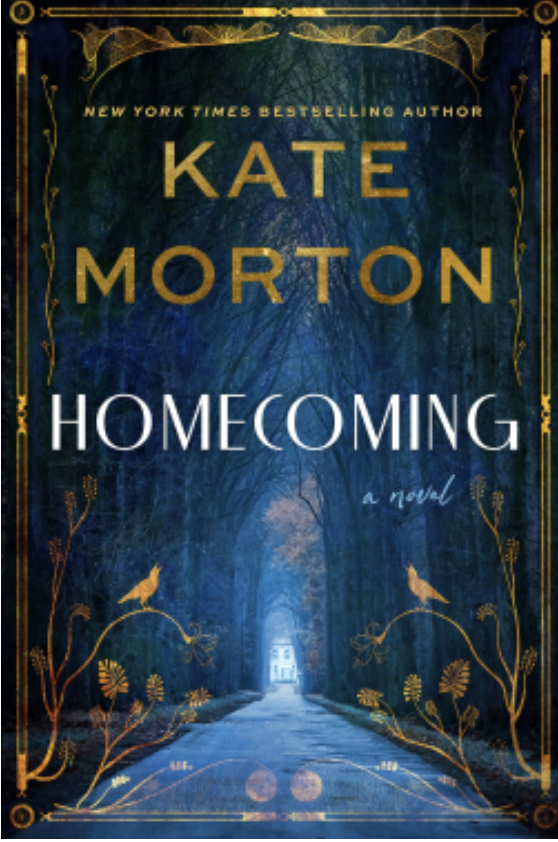
Homecoming by Kate Morton (Literary Fiction)

Writing: 4/5 Characters: 5/5 Plot: 5/5

A dual timeline story in the Adelaide Hills (Australian Outback). In 1959 an inexplicable tragedy occurs with a nasty, but generally accepted explanation which is never actually proved. In 2018 Jessica Turner-Bridges races back to Sydney when the grandmother who raised her suddenly takes ill. A free lance journalist, Jessica gets obsessed with the 1959 story which she has stumbled on and which — it turns out — is closely related to her family.

Vivid writing bringing to life the surroundings and individual, interconnected stories. Good pacing continually introduces new stories and sources that shift your understanding at the same pace as it does for Jessica. I kept thinking I knew what had happened but was continually surprised. There was a little more scenic description than I like (I’m not a visual person) but I was able to skim those sections if they got too long. Plenty of drama (but not melodrama — the events were dramatic but the characters got on with doing their best and didn’t descend into wailing and teeth gnashing). It was difficult at time knowing in advance what happened (and that is is awful) and watching the narrative slowly unfold to explain the details. On the other hand, in a weird way it is less stressful knowing the end as there is no way to avoid it.

Some beautiful commentary on books and reading and a nice array of literary and cinematic references. Some genuine and insightful reflection on loneliness, community, motherhood, purpose, identity, and the impact of events on a wider assemblage of persons than might be suggested by the event itself.

Thank you to Mariner Books and NetGalley for providing an advance copy of this book in exchange for my honest review. The book will be published on April 4th, 2023.

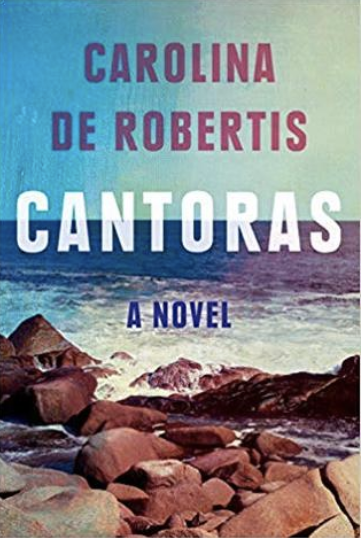
Cantoras by Carolina De Robertis (Literary / Historical Fiction)

Writing: 3.5/5 Characters: 4.5/5 Plot: 4.5/5
Five women find each other amidst the oppressive dictatorship in Uruguay in the 1970s. Together they manage to find and buy a small shack in a lonely coastal town where they can be themselves without fear, where they can blossom into themselves. They are “cantoras” or “women who sing” — a euphemism in this case for women who prefer women. Flaca, a relatively masculine butcher’s daughter; Romina, a Jewish refugee from Ukraine; Anita, renamed “La Venus,” a housewife who can no longer bear the standard life she is expected to lead; Malena, a schoolteacher with a hidden past; and Paz, the youngest at 16.


Following the individual and collective stories of these women through the long dictatorship and through the first years of recovery was far more captivating that I had expected. Based (I believe) on many interviews with people who had lived through this time period, the author really captured the experiences, feelings, and reactions of individuals without going overboard on the drama. I’m always appreciative of an author who recognizes that the subject can speak for itself when properly depicted without resorting to melodramatic finger pointing. Woven together in the narrative is the general persecution of people during an oppressive regime as well as the more generic persecution of homosexuals (in truth this persecution seemed to be more cultural and not actually related to the dictatorship, though the book jacket links the two together). The writing was full and descriptive, doing an excellent job of depicting the sensuality of the lesbian relationships and the pervasive tumult of feelings — fear, joy, worry, exultation — resulting from living through the period. I liked the reflection of each character as she considered her life and the larger situation into which she had been born. And her decision as to how she would participate — enjoy what she has? Take chances by working with those willing to rebel? Hide — either physically or culturally?


I learned a lot about Uruguay — I’m probably not alone in simply being unaware of this aspect of Uruguayan history. While not mentioned in the story, the all-knowing Wikipedia claims the 1973 coup that brought in the military was backed by the U.S. (I’m guessing to stop the perceived Community insurgency). Separately, the gradual opening of the culture to homosexuality, culminating in the 2013 right to same-sex marriage (the third country to do so in the Americas after Canada and Argentina), was also depicted through the stories of these women. The narrative brought together these two concurrent themes well — the book felt quite real.

A few good quotes:
“Histories tend to grow richer with time, gathering details as they pour down generations.”
“That the silence of dictatorship, the silence of the closet, as we call it now—all of that is layered and layered like blankets that muffle you until you cannot breathe. For many people it is too much. In Paraguay we have seen it. And so, here, none of you should carry the blame.”
“Furniture gave slow birth to itself: a table started as a plank on four stacks of bricks, then became a slab of swirled driftwood, found on the beach and dragged back home, cut, placed over the bricks at first until the attempt began to hammer on legs and to sand the knots and whorls on the top into a more even surface.”

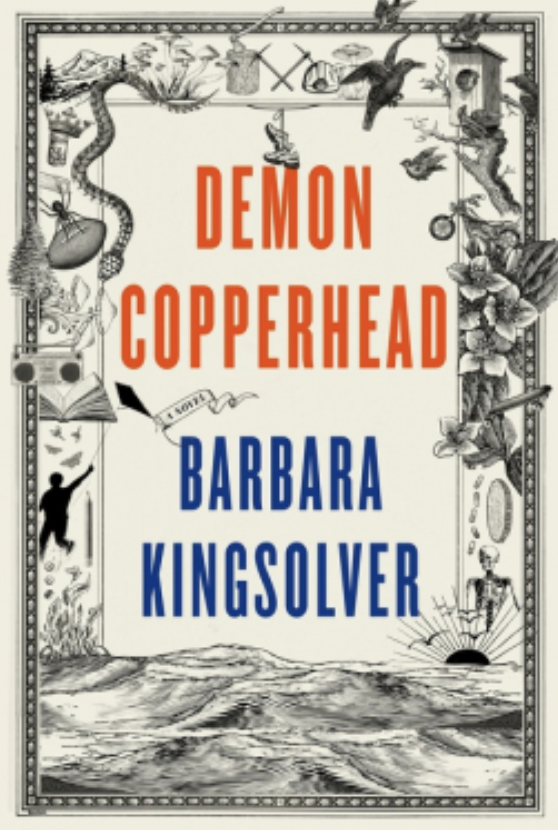
Demon Copperhead by Barbara Kingsolver (Literary Fiction)

Writing: 5/5 Characters: 5/5 Plot: 3/5
A transposition of Dickens’ David Copperfield from Victorian England to Hillbilly country (the Appalachians). Damon (quickly nicknamed Demon) Copperhead is born to a drug addled and largely unconscious single mother in a rickety trailer. Kingsolver’s first line (getting us right into Dickens territory): “First, I got myself born. A decent crowd was in hand to watch, and they’ve always given me that much: the worst of the job was up to me, my mother being let’s just say out of it.” From this point, the book proceeds for 560 pages documenting the story of this one lovable and very lost boy through a childhood of poverty, foster care, addiction, and loss.

The writing is detailed, heart felt and persuasive — almost too much so as the absolute unfairness of almost everything that happens to Damon is described in such detail and with such clarity on his resulting feelings, it is literally hard (for me) to keep reading. His character is so complete and so genuine that you feel helpless watching him get crushed time after time by people and situations that were not of his making.

Aside from the emotional toll this book took on me, the storytelling was superb, with real depth ranging across a whole slew of people and situations. If you can squeeze out your emotional sponge and put it somewhere out of reach, you’ll love this wild storytelling ride. Some real insight into what it would be like to grow up in this environment.

Thank you to Harper Books and NetGalley for providing an advance copy of this book in exchange for my honest review. The book will be published on October 18th, 2022.

Maybe It’s About Time by Neil Boss (Literary Fiction)

Writing: 5/5 Characters: 5/5 Plot: 4/5
A book for our times, this book tackles the Covid era through the intimate stories of two very different people who meet by chance and end up having a surprising impact on each other. Marcus Barlow has everything money can buy, but hates almost every instant of his existence. He works for “The Firm” which is a Dilbertian take on management consulting. It all sounds over the top, and the language is heavily laced in satire, but having lived this myself, I know it’s not terribly exaggerated!. Claire Halford has literally nothing money can buy as she hasn’t any money — only two small children and an STI gifted to her by her adulterous (and now long gone) husband.
When Covid enters the picture — first as a scary whisper and later with a terrifying bang, both characters (along with Marcus’ family, Claire’s neighbors, and Gavin — Marcus’ friend and Claire’s social worker) — are tumbled along in its wake.
There is not a single cliche in this book, despite the fact that the plot could easily have descended into any of the multiple opportunities for banality. We watch each person — from the main characters to the many supporting characters — navigate the confusing, overwhelming, and stressful landscape of lockdowns, shortages, and sudden deaths. As we watch, the taxing times give rise to surprising self knowledge and hidden depths of kindness, compassion, and the desire to behave ethically, despite the discomfort inherent in doing so.
As an aside, the book had a great “soundtrack” as Marcus played different tunes to support his moods (I recognized and liked every one). Also, excellent descriptions of food from multiple tables — from the over-the-top meals for Partners at The Firm, to high end bachelor cooking, to children’s meals cobbled together from discount tins, to vegan meals offered to the unenthused. The author also managed to show empathy for many situations without descending into blame or broadcasting heavy handed social agendas and he spiced the entire book with plenty of humorous and dead accurate social commentary. Very good writing — reminds me of David Lodge who is one of my favorite British authors with the same kind of precise, intuitive writing.
Highly recommended.

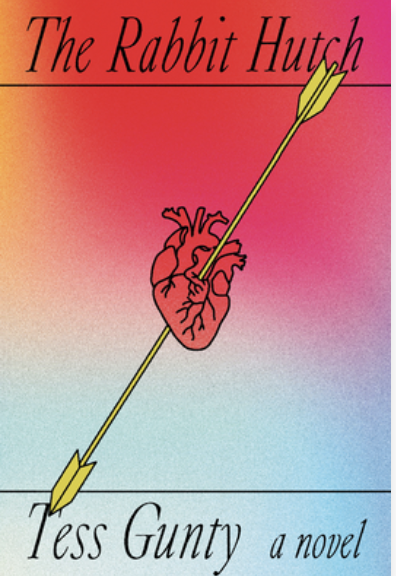
The Rabbit Hutch by Tess Gunty (Literary Fiction)

Writing: 5/5 Characters: 5/5 Plot: 3.5/5

A low-cost housing complex (The Rabbit Hutch) in a dying small town in Indiana, a set of disconnected neighbors, and a build up to a freakish act of violence that somehow weaves them together. It’s a bizarre and convoluted story that races from humor to creepy and back again without a second thought, culminating in an act that brings all the loose strands together. The writing is stunning (see the quotes below), the wildly diverse characters rendered in full technicolor detail with ongoing and minutely documented social commentary attached to individual observations. The characters: a lonely online obituary moderator, a young mother with dark thoughts, a 70ish couple decidedly not keeping up with the times, and a group of four teenagers who have aged out of the foster care system, including Blandine who is seeking meaning in the writings of the mystics — Hildegard von Bingen from the 12th century in particular.

It’s brilliantly done, bringing psychology, philosophy, and reflection to bear on the ways all of these people trying to make sense of their own lives. The author has a pointed ability to see into the motivations, experiences, and fears of those who appear rather anonymous on the outside. From the mystics to sexual grooming to isolation to the environment to the effects of noise pollution (my favorite) — the book was intellectually interesting and humorous in places, but — I admit — overall had a doomed, hopeless feel. I made it a “daytime only” read. However, I did not find the end depressing — I think that is important to note, and I wish I had known that ahead of time!

New words (for me):
Misophonia — People with misophonia are affected emotionally by common sounds — usually those made by others and usually ones that other people don’t pay attention to. The examples above (breathing, yawning, or chewing) create a fight-or-flight response that triggers anger and a desire to escape.
Balayage: a technique for highlighting hair in which the dye is painted on in such a way as to create a graduated, natural-looking effect.

A few quotes, but there are a million more…

“Joan apologized three more times, then returned to her seat, feeling evil. As usual, when she confronted the world about one of its problems, the world suggested that the problem was Joan.”

“…the cackles and squawks of three tween girls overthrow the words on the page, infuriating her. They sound like chimpanzees. Just when Joan thinks the tween cackling will stop, it gets louder, engulfing her flammable peace along with the compartment.”

“Tiffany is insecure, cerebral, and enraged. Pretty in an extraterrestrial sort of way. Addicted to learning because it distracts her from the hostility of her consciousness; she has one of those brains that attacks itself unless it’s completing a difficult task.”

“She did bring a book, but she wasn’t reading it, just bullying the ink into sense.”

“And then on top of that — weaponzing a person’s isolation — it convinced every user that she is a minor celebrity, forcing her to curate some sparkly and artificial sampling of her best experiences, demanding a nonstop social performance that has little in common with her inner life, intensifying her narcissism, multiplying her anxieties, narrowing her worldview.”

“It’s moments like these when Joan fears she is a subject in some elaborate, federally funded psychology experiement.”

“She feels like a demanding and ill-fated houseplant, one that needs light in every season but will die in direct sun, one whose soil requires daily water but will drown if it receives too much, one that takes a fertilizer only sold at a store that’s open three hours a day, one that …

“They are elite, climate controlled, dentally supreme.”

“Frequently, Hope wondered what it would be like to vacation in her cousin’s psychology.”

“She always knew that she was too small and stupid to lead a revolution, but she had hoped she could at least imagine one.”

Central Places by Delia Cai (Literary / multi-cultural fiction)

Writing: 4/5 Characters: 4/5 Plot: 3.5/5
A somewhat over-detailed but ultimately satisfying story of a young woman coming to an understanding of herself — the person she wants to be and the person she evolved from. Twenty something Audrey Zhou loves her life in New York City: her kind and conscientious NYC born and bred photojournalist boyfriend (Ben) and her job as a salesperson for a trendy NY magazine, but most of all she loves the extreme distance from her home and immigrant parents in Hickory Grove, Illinois. When her father has a potential health problem, Ben insists on accompanying Audrey home to meet her parents for the first time and learn more about her.

I was impressed by the way this book worked out — it really did focus on a single person’s experience, rather than another agenda heavy diatribe about racism in the U.S. Assumptions, biases, and exposed hypocrisies appear in multiple places, and the recognition of what part Audrey finds herself playing in all of that is worth the price of admission. The story did NOT evolve the way I expected it to, and I found I really liked the non-standard, unexpected ending. Some of the more descriptive sections contrasting her Hickory Grove memories and current experiences went on for a little longer than I needed, but I was overall quite happy with the book.

Thank you to Ballantine Books and NetGalley for providing an advance copy of this book in exchange for my honest review. The book will be published on January 31st, 2023.

The Bullet that Missed by Richard Osman (Mystery)

The continuation (third book) of the adventures of the Thursday Morning Murder Club hosted at Coopers Chase Retirement Village.

A reminder on the characters from my first review: Elizabeth, with the mysterious (MI5? MI6?) background and friends in high and low places who all seem to owe her favors; Ibrahim, the retired psychiatrist, who pores over the cases he failed; Ron, the former trade union leader who loves a chance to get back on the stage; and Joyce, the newest addition, who has the often underappreciated skill of bringing everyone together while remaining invisible herself. Additionally, a (relatively) new character was introduced: Viktor, the retired KGB general with a knack for getting confessions and an interesting “history” with Elizabeth.

In this case, the group tries to track down the murderer of a young journalist who was hot on a case of massive fraud — and are hampered by the lack of a body.

The book was entertaining but not quite as much as the previous two. Some of the character quirks have become stale and while the whole series requires a certain willingness to suspend massive disbelief, this one didn’t blend well enough to make me forget I was doing that.

Still — it was a page turner, and I’m sure I’ll read the next one but I’ll probably get the next one from the library, rather than shelling out the $$ (or in this case the ££ as I was in London)

Flight by Lynn Steger Strong (Literary Fiction)

Writing: 4/5 Plot: 3.5/5 Characters: 4.5/5

A family drama focussed on three siblings and their families on the first Christmas after their mother’s death. Each is experiencing some disappointment / pressure in life and each twirls within their own constant inner monologue while engaging with each other in a kind of complex dance with needs, desires, and irritations constantly up for rebalancing. Martin, the eldest, is on temporary leave after having made some ill-advised statements to the wrong people at his educational institution; his wife Tess is the practical one, a lawyer who is in a constant state of worry and irritation; Kate is a housewife and mother, married to Josh who has managed to run through the inheritance they were living on; Henry is an artist obsessed with the climate, and his wife Alice somehow shifted from artist to social worker and now finds herself over-attached to one of her charges. When that particular charge disappears on Christmas Eve, each individual gets a jolt that drives him or her to a deeper understanding of his or her own life.

While slow at times, the book contains a lot of insight through each person’s reflections coming from a wide variety of backgrounds and situations. An enjoyable read.

Thank you to Mariner Books and NetGalley for providing an advance copy of this book in exchange for my honest review. The book will be published on November 8th, 2022.

Other People’s Houses by Abbi Waxman (Literary Fiction)

My third Waxman book — I love her combination of humor, reflection, and relatable characters. She reminds me of Anne Lamott (in her earlier, less spiritual days). Other People’s Houses focuses on a Los Angeles neighborhood — a block really — with a set of families and children brought together through proximity and friendship. Frances has become the group “designated driver” with everyone agreeing that it just makes more sense for Frances to drive the 7 kids to the various schools every morning and home in the afternoon. One fateful day when a neighbor’s child is delivered to school sans the essential toilet paper roll required for the day’s craft project, Frances drops by the house to pick it up and sees … something she really, really, wishes she hadn’t seen.

An exploration of different lifestyles brought together by the social glue of gossip, the writing is good, the characters engaging, and the dialog and reflections do a good job of presenting different viewpoints (although I can’t help feel that the author’s own viewpoint is heavily represented by Frances, and I don’t totally agree with it but… fun to think about.

I also liked the neologism (to me) of youthsplaining as in “Frances hated it when neonates lectured her about things she already understood — Youthsplaining.”

A few more fun quotes:
“The dogs followed her, wondering if this morning they would get fed in the bathroom; it paid to keep an open mind.”

“You might think that cotillion, which is basically a class where kids learn to be overly polite, to use the right fork, and where boys learn to open doors for girls, is a trivial offering, but you would be wrong. It is a fulcrum of dispute between parenting paradigms, at least in Los Angeles.”

“She pulled on the same pair of jeans she’d had on the day before and the hooded sweatshirt she found under them. Look, if they hadn’t wanted to be worn a second day they could have run away, but instead they just lay there overnight, asking for it.”

The Ink Black Heart by JK Rowling writing as Robert Galbraith (Mystery)

Writing: 5/5 Plot: 5/5 Characters: 5/5
I’ve been a JK Rowling fan since I bought the first Harry Potter book in England before it was released in the US. She is just a fantastic writer. This book was over 1,000 pages, and I got through it in three days because I could not stop reading, much to the irritation of family and friends whom I was supposed to be paying attention to!

The Ink Black Heart is the sixth book in the Cormorant Strike series. Best one yet. This one tackles murder both spawned and executed within the anonymity of social media with the convoluted detection progressing simultaneously in both online and real life. Edie Ledwell, the now successful author of a surprise hit cartoon, approaches the agency begging them to help her uncover the identity of an online figure who has been publicly tormenting her for years, almost driving her to suicide. With the agency already overloaded and no real skillset in cybercrime, Robin rejects the request, only to be shocked days later when Edie is found brutally murdered.

The ensuing puzzle to identify Anomie — the anonymous tormentor — is muddied by an incredibly complex web of characters — both online and in real life. Reminded me of the old logic puzzles I used to love where you have to match which person goes with which car which goes with which dessert etc. While I’ve been “aware” of some of the nastiness that happens online, the progressing story included plenty of excerpts that brought the nastiness to life in a way that made it finally real for me. From incels (involuntary celibates) to alt-right nasties to pedophiles to naive victims, it was a whole unsavory world I’m glad I have no contact with. And it’s a world that I’m guessing Rowling knows first hand as she has been targeted by various “unhappys” in some very aggressive and loathsome ways. As an aside, I always search out the original comment or event that gets people riled and rarely find anything worthy of the reaction. Certainly not in Rowling’s case. I sure wish people would think and investigate before they jump on the vicious attack bandwagon.

So why are these books so good? Firstly, Rowling has a writing style that I just love — it’s so clean that you completely forget that you’re reading and yet she manages to reduce very complex topics and events to easily comprehensible dialog and action. Yet the complexity is not oversimplified, it’s just explained clearly. Maybe she should run for office. The plots mimic the cacophony of real life — lots going on, plenty of opinions, multiple opportunities for internal biases to raise their ugly heads, and tedious and slow moving mechanisms for verification. Rowling has an incredible ability to juggle multiple complex plot lines into a cohesive whole. Plenty of philosophic commentary on people, the internet, and the inability to think for themselves. Nothing she writes about fits neatly into a “type,” an “identity,” or a “role.” I love it.

I also like the characters a lot — while they are flawed (as is the preference these days in crime fiction) — they have characteristics and values that are important to me — they care about right and wrong, they are intelligent, they understand their flaws and actually work to improve themselves. I would be very happy to spend time with these people were they so inclined!