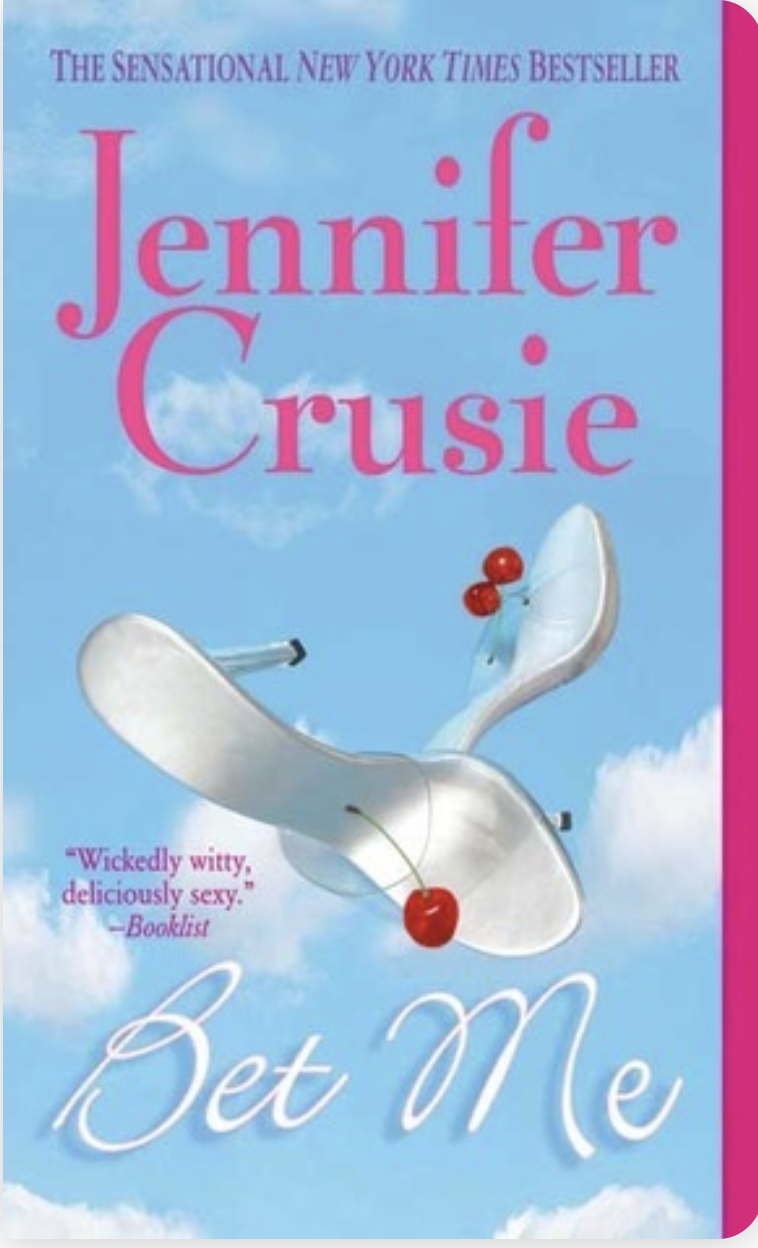
This was just pure fun to read from start to finish. A romcom with a voluptuous (rather than thin) heroine, great banter, a sizzling romance, good messaging around relationships and love, and some even greater friendships that I enjoyed every bit as much as the big romance. I only read romcoms if they are very funny and if the women aren’t portrayed as disorganized idiots (think Bridget Jones) — this one had me laughing and happy throughout. A couple of funny lines that don’t give much away:
“Look mother, I am never going to be thin. I’m Norwegian. If you wanted a thin daughter, you should not have married a man whose female ancestors carried cows home from the pasture.”
“She looked like the blowsy barmaid who worked in the inn behind the castle, the one who’s trash-picked one of the princess’s castoffs.”
“…who should have been hale and welcoming but instead had the vaguely paranoid look of a sheepdog whose sheep were plotting against him.”
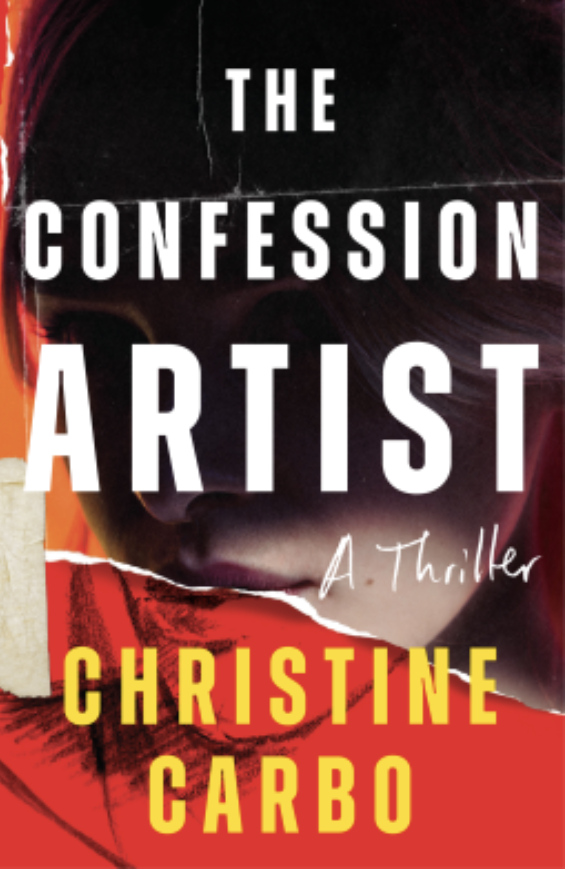
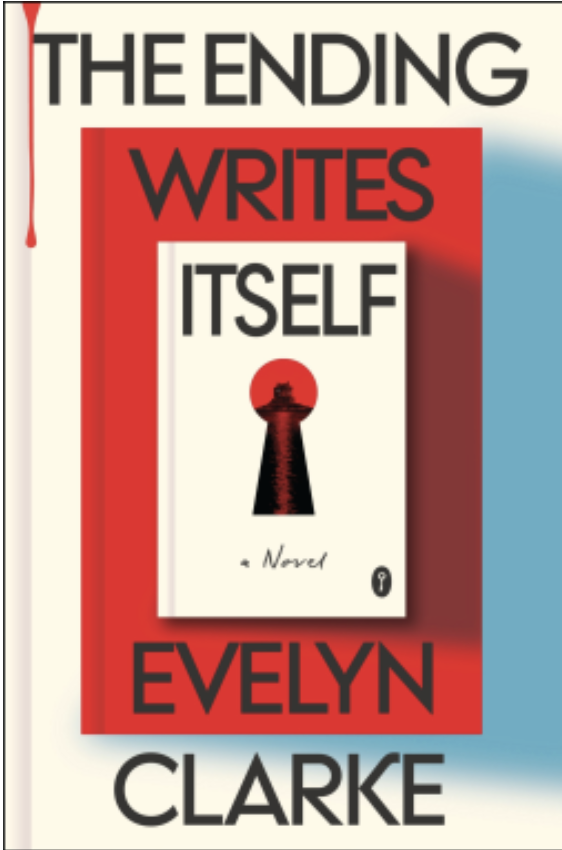
A fun and quite twisted mystery set in the familiar “guests on an island” mystery trope. In this case, the “guests” are a set of mid-list writers (meaning that their work is good but never given the necessary marketing support by their publishers). The book is FULL of funny and probably all-too-true pointed jabs at the publishing industry which is apparently not for the weak of heart. Our cast is summoned to the private island and extravagant castle of the fabulously successful writer Arthur Fletch. But — Arthur is dead and the last book of his highly popular series is only 90% completed. This visit is an opportunity to complete the book and earn a million dollars and a lucrative future publishing contract. They have 72 hours. And just as we start to get to know our characters a bit, and get excited by the way each of them is approaching the problem — bodies begin to appear.
Very twisty plot, relatable characters with personality and depth, and plenty of insight, humor, and varying takes on the writing and publishing process. I enjoyed many of the detailed asides about individual author experiences, approaches, and (many) irritations. Also learned some new (to me) writing principles such as Chekhov’s Gun — a “narrative principle emphasizing that every element in a story be necessary, while irrelevant elements should be removed.”
This book is on several of the 2026 “must-read” lists and is a (very successful!) collaboration between popular authors V.E. Schwab and Cat Clarke.
Thank you to Harper and NetGalley for providing an advance copy of this book in exchange for my honest review. The book will be published on April 7th, 2026.
A sequel to Charles’ The Paris Library which alternates between Paris during the Nazi occupation and a small Montana town to which the protagonist (Odile) flees about 40 years later. In this “chapter,” Lily Jacobson, the young girl Odile befriended in Montana, gets a chance to go to Paris and work in the same American Library that meant so much to Odile in the 40s. The story — MUCH less depressing than the last (as there are no Nazis in this one) — alternates Lily’s experiences with short character vignettes on others in the library community.
The best part of the book for me are these characters and the way they come together to maintain an under-funded, increasingly shabby, but definitely beloved library. Characters range from library staff, to volunteers, to patrons, to a live-in (hidden) homeless person. And the rather two-dimensional and all around loser — the current Library Director. My favorite chapter is the first, introducing Head Librarian Lorenzo Bruni who complains bitterly (but also quite humorously) about the annoying habits of the Public and all of the things he is not allowed to do. I wonder why that appealed to me so much?
It’s a charming story with a happily-ever-after style ending, and lots of literary and artistic references. While I found all of the characters to be interesting people (they all love libraries, so how could I not??), I would have preferred a little more depth, but overall I quite enjoyed my last read of the year (finishing exactly two hours before the New Year began!)
Thank you to Atria Books and NetGalley for providing an advance copy of this book in exchange for my honest review. The book will be published on May 5th, 2026.
One of my favorite books of the year — thoughtful, relatable, and delightful, even, in an odd way, the sad parts. This is in large part due to the characters who are all good and wise people in their way, but always with more to learn. I’d like to say there was a jackass or two in the pages, but there really weren’t.
Polly is a high school English teacher at a private Manhattan school where the kids are (mostly) wealthy and privileged but also driven, smart, and with problems of their own. As an aside, I like the fact that people who are not poor, not downtrodden, and not necessarily members of a minority class are allowed to have problems and drives and desires like anyone else. Her appealingly well-adjusted husband is a big animal vet at the Bronx zoo — possibly my favorite character occupation of all time! And she is part of a perfectly balanced four member book club — unique in that its members must buy, but not actually read, the chosen book every month. At the same time, however, her beloved father is losing his mind to dementia, she is struggling with infertility, she is in a perpetually low-grade state of anger with her mother, and a “joke” DNA test gift has resulted in a surprising and uncomfortable disclosure.
The book is a “tag along” to a thoroughly examined life as it progresses, as all lives do, completely out of the control of the one who lives it. All we can do is adjust, appreciate, understand, and settle in for the ride. Beautifully written with a slew of insightful comments (and many apt literary references and quotations — she teaches advanced Literary Honors courses after all!). Full of myriad families and friend groupings, each with their own distinctive cultures and implicit behavior patterns. I loved that the story was a study in non-dysfunctional ways of handling both life’s vicissitudes and pleasures. I found myself disagreeing with Tolstoy — not all “happy families” are alike, because every family, even the happy ones, find their own way of handling all that life throws at them. And lastly, some truly fun and informative scenes with alpacas.
Some quotes both directly from the author and as referenced in the book:
I am out with lanterns looking for myself — Emily Dickinson.
Marriage. Like calculus without the answers.
There’s a kind of equipoise to our group, so that we’ll veer here and there and somehow always come back to center, and peace.
Sometimes I think the human brain is a house, and the lights only come on in mine one room at a time.
Life is a tragedy for those who feel and a comedy for those who think — Moliere
“Daddy Daddy Daddy is running through my head like a piece of music with only two notes, like Philip Glass. I hate Philip Glass.”
“I’d like to disabuse you of the notion that you are the only woman in the world who doesn’t like her mother,” my therapist had said three years before.
The thing about living in New York City is that you feel either perpetually untethered or unwaveringly embedded.
You girls need to allow me my petty grievances.
Beauty is whatever gives joy — Edna St Vincent Millay.
I’m afraid families are a funnel, and ours is running out.
Thank you to Random House and NetGalley for providing an advance copy of this book in exchange for my honest review. The book will be published on February 24th, 2026.
This book has been gushed over by all of my favorite readers — and I get it. It’s well-written, has characters that attach deeply to your heart, and tells a set of life stories of redemption through the powerful forces of friendship and art. I couldn’t stop reading, and I teared up fairly reliably in response to the truly heartfelt and exquisitely expressed insights, remembrances, and hopeful resolutions.
But — rather than finding it uplifting (as most others did), I was left feeling despondent. So many broken people, especially broken kids, populated these pages. I don’t believe the author ever specifies where this is taking place — what country, what city. We’re left to feel that this level of grief, brokenness, woe, and misery is the lot of most — the essential human experience as it were. I loved the uplift that came with the discussions on art, and the fierce loyalty struck between friendships forged in despair, but I felt more disturbed than inspired by the book as a whole.
I’ve been reading Kellerman’s Alex Delaware series (up to 41 books!) which teams a psychologist (Delaware) with the hard boiled, gay LAPD detective with a high enough homicide case solve rate to “encourage” his superiors to overlook his unorthodox approaches (Milo Sturgis). I started with random audio books towards the end of the series, numbering 30 and above and now have gone back to read this one — the first.
I like this series a lot (obviously), though I do prefer the later ones. The characters — Delaware and Sturgis, their domestic partners, supporting LAPD members and even the perps, victims, and witnesses, are all pretty relatable and interesting. The writing is easy — full of interesting factoids but clean, clear, and never wandering through tangential detail. No long descriptions of nature or furniture or clothing, unless relevant to the case. I tend to read mysteries written by women and I am enjoying reading this series which is written by a man — there is a pointed distinction between reading strong men from a man’s perspective versus from a woman’s. I like it and have fun noticing how it might have been different had a woman written it (obviously not all men or all women write the same way — what I noticed was subtle but I found it fun).
This first book had a few too many scenes where Alex Delaware manages to get himself out of very dangerous situations through some clever hero machinations — that kind of thing just bores me as I prefer the brain stuff. But as the series evolves, Milo takes on more of the work and their partnership replaces the lone hero psychologist nicely.
The key to my love for all Ann Patchett novels is the depth and intricacies of her characters. There is no other writer that I know of who consistently imbues her characters with the level of introspection and thirst for personal knowledge that her characters have — or at least the ones that I relate to! Having read many of her essays, I think the secret is the profundity with which Patchett gets to know people in real life — and I mean any and all of the people she comes into contact with. Not many of us are blessed with the ability to know too many others at this level, and this wide ranging understanding of the varying types of human experience makes for characters who feel real and complex. The fact that Patchett is also an incredible storyteller, with ideal pacing and consistently enlightening disclosures, does not hurt!
So. Our deep and complex characters are launched in this story by a chance encounter between Daphne (our protagonist) and her (first and quite beloved) stepfather — the one who disappeared from her life abruptly after a traumatic car accident when she was nine (she is now 53). Through a set of discussions, connections, and events (celebrations, get-togethers, random walks), we get to unravel the very components that go into telling anyone’s personal story — the different pathways that lead to the person one becomes over time. The story (for me) was one touching moment after another, and I promise that none were of the overly schmalzified Hallmark variety. These are the moments that mark our lives, that matter, and that cause the shifts in our understanding of the world and ourselves.
I loved Daphne’s sister, the best friend and therapist; I loved her (older) husband Jonathan, who is unraveling a family mess of his own (a now deceased mother whose each element of hoarding precipitates a cornucopia of overwhelming memories); I especially loved Eddie, the newly discovered, now-ex stepfather. We see him skillfully through the eyes of the once and current Daphne, whose life experiences only slightly shade perceptions gained as a child during some intensely pivotal moments. The narrative reminded me of how different we are in each dynamic relationship with another.
There are LOTS of (really good) literary references and asides — Eddie is in publishing, Daphne writes, and let’s face it — Patchett knows a thing or two about the business! Themes include the impact of childhood experiences, mistakes and missed opportunities, the contemplation of life and death, human connection, and what it means to show up — really show up — for the people you love. The biggies! I couldn’t put it down.
Thank you to Harper and NetGalley for providing an advance copy of this book in exchange for my honest review. The book will be published on June 2nd, 2026.
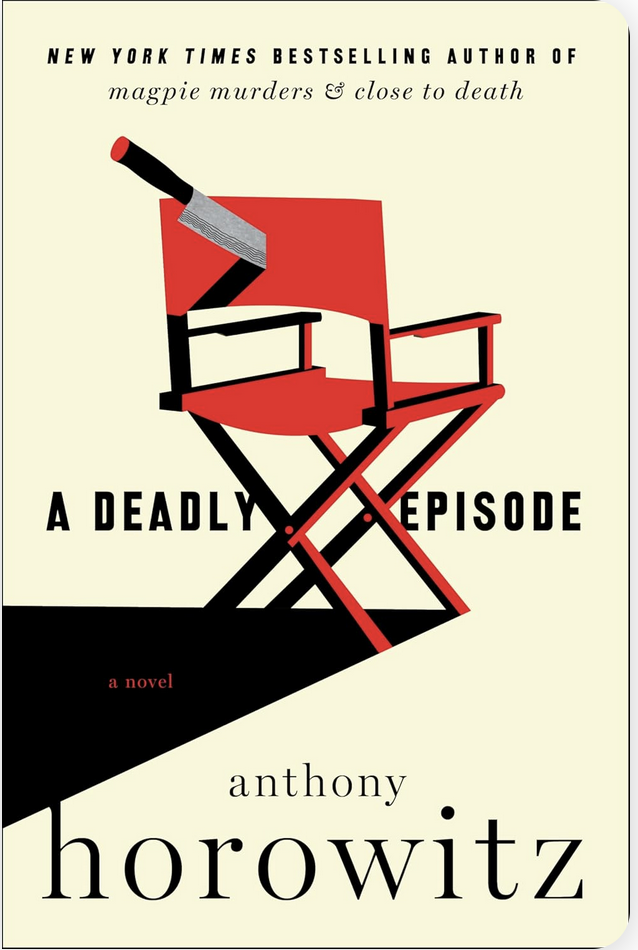
A love story and a mystery, immersed in literary and classical references with a touch of modern greed and drama. Master genre novelists Fred and Theda Morgan-Lane are both writing and life partners. At least they were. Now — on the cusp of attending a mystery convention at the gorgeous Italian castle where their very popular “Death Takes a Holiday” series was launched — they plan to announce the end of both. Or at least Theda does; Fred has a few other plans up his sleeve. Ignoring whatever plans they each may have, things start going horribly wrong as one by one the murders from their first novel seem to be repeating in real life.
The writing is (as always) good; the pacing deliberate and triggering just the right blend of edge-of-the-seat and calm curiosity; and the characters are all interesting (to me) people. The characters and their various relationships are intriguing because they capture multiple levels of overlapping and inconsistent emotional undercurrents. Especially once the murders start and everyone is forced to look at everyone else in a whole new, and highly suspicious, way. Goodman is both a classicist and a feminist, and both themes run through the narrative in credible fashion. Most importantly, the resolution was surprising (to me), tenable, and completely satisfying — the perfect combination!
Thank you to William Morrow and NetGalley for providing an advance copy of this book in exchange for my honest review. The book will be published on July 21st, 2026.
The title doesn’t lie — the book covers about 1,000 years of Roman history (from founding to end) and is only 352 pages (or in my audio book case, about 8 1/2 hours of listening). I don’t read a lot of non-fiction, as I find most of it muddied, tedious with extraneous detail, and overly biased, BUT I found this one to be very well-organized, clear, engaging, and with plenty of reference to the (sometimes competing) sources. It also started with a quip from Monty Python which put me in the right mood!
The book was well-structured, beginning with the stories of Rome’s founding (Romulus and Remus) and traipsing through a set of chronicles garnered from pivotal points in Rome’s history including the “real” stories behind popularized versions of characters like Spartacus, Caesar, Nero, Boudicca, and Attila the Hun. Progressing through the history at a reasonable pace allows the reader to watch the evolution of culture and values, political systems, definitions of personhood, and the technical accomplishments for which the Romans are justly famous. It was a bloody and brutal story from start to finish, to be honest, but it helps put our current issues and ideas of civilization into perspective. I found listening to it (while out on walks) to be useful as I enjoyed breaks from the (mostly unpleasant) “action.” After reading, I find myself marveling at how civilized we actually are in comparison, and also how fragile civilization always is.
Thank you to Harlequin Audio and NetGalley for providing an advance copy of this book in exchange for my honest review. The book was published on November 11th, 2025.
This is the story of the first six women admitted to NASA’s astronaut corps. Drawn from extensive research, interviews, personal papers, etc, it is a blended story that follows each woman from an initial interest (often as children) through to the 1986 Challenger disaster. The narrative focus moved between what it meant for women to (finally) be allowed into the profession, and what it meant to be an astronaut regardless of gender or race. I much preferred the second theme as the level of detail — the (long) training regimen, the detailed prep for each mission, the nightmarish (for some) experience of requisite PR duty, and the actual experience of being in space and on a mission was completely engaging and well documented without a lot of extraneous agenda or overwrought emotion.
The focus on the barriers the women faced and how they were treated as women was actually well done. NASA made a decision to encourage women and minorities to apply to their historic recruitment of Mission Specialists for the new space shuttle program. The focus was completely on the competency of the women under consideration, who were put to the same tests and held to the same expectations as the men. They passed with flying colors — without the need to make changes to the requirements in any way in order to accommodate women. There were a few stories about pranks, teasing, and a Playboy centerfold or two, but nobody got “offended”and everybody simply focussed on doing a great job. The media was irritatingly focussed on asking about “romance in space,” whether the women “weeped” during training, or attacking the morality of a mother for considering such a career, but the women took these questions in stride, answering calmly and rationally and letting the ridiculous questioners look like the fools (IMHO). I was annoyed by the commentary in the prolog and epilog about the need for achieving representation of women and minorities in the astronaut corps — something I disagree with completely. I’m all for equal opportunity, equal pay, and equal recognition — I see no reason for any profession to have its practitioners exactly mirror the gender and racial makeup of the population at large. Get the best! And certainly none of “the six” were turned away from their space dreams by the lack of women role models. So there!
I particularly enjoyed all the details about the space flights — the (multi-year) training routines, the detailed prep for each mission, and the individual experiences on board — both the awe and the practical details on how difficult every day tasks such as movement, eating, and yes, toileting, becomes when one is weightless. I was also intrigued by the medical experiments designed to understand the impact of weightlessness on our internal fluid systems (think blood and a pumping heart). Not something I had considered before. Overall, a clear, engaging description of what it is like to be an astronaut, with personal focus on the journeys of the first six women to take the plunge.