A Dangerous Business by Jane Smiley (Historical Fiction)

Writing: 4/5 Characters: 4/5 Plot: 3.5/5

This was an odd book, though I did enjoy it. Monterey, CA in the 1850s. Eliza Ripple’s short and unhappy marriage is brought to an abrupt halt when her husband is shot in a bar brawl. Eliza takes up the oldest profession in the world, servicing 2-3 clients per evening at a nice brothel and finds her life more enjoyable than the one she had within the marriage her parents had arranged for her. She makes an interesting friend — a woman in a similar profession but aimed at ladies (was this a thing back then or a figment of the author’s imagination? I have no idea!). When the bodies of women — mostly prostitutes like themselves — turn up, they find local law enforcement (such as it is) uninterested, so they feel compelled to figure it out themselves.

This is more of a novel than a mystery, though obviously there is a mystery to be solved and our heroines are trying to solve it, both as a means of self-preservation and out of a sense of justice! Smiley does an excellent job of having Eliza describe her own life and feelings as she discovers them. Eliza is an unsophisticated person, having experienced very little in her life. She learns about geography and other places and foods from sailor clients; she reads the very few books she has access to, and her model of the world expands to encompass what she reads; she becomes observant of people — men in particular — learning what makes them tick and how to take care with assumptions. It’s quite difficult to create a character that has so little education in the ways of the world — removing everything you know in your own brain is so much more difficult than learning something new — and Smiley pulled this off well.

I have no idea how realistic the portrayal of a small town brothel is, but I liked the straightforward and utterly non-judgmental depiction. I’ve never understood why prostitution — which services a basic biological need — is so vilified even today in our society. I think we would all be much happier if prostitution were both legal and free of stigma for both the providers and the clients!

A little slow paced and with more (albeit well done) descriptions (of nature, weather, the state of the streets, facial characteristics, clothing, etc.) for my taste, I nevertheless found myself continuing to think about the life that was presented — an effective vehicle for putting myself in another person’s very different shoes.

Thank you to Knopf Doubleday Publishing Group Books and NetGalley for providing an advance copy of this book in exchange for my honest review. The book will be published on December 6th, 2022.
A Grave Talent by Laurie R. King (Literary Mystery)

Writing: 5/5 Characters: 4/5 Plot: 5/5

The first in the Kate Martinelli mystery series (for which she won an Edgar), and I’m completely hooked! Completely bizarre, twisted plot, fully developed characters and tight writing. Writing quality is right up there with Louise Penny (which I don’t say a lot) — feels more like literary fiction embedding an intriguing mystery rather than a (boring) cozy or a mystery that is all plot/action filled with stock characters.

A serial killer has begun murdering young girls, depositing them all on a road in the midst of an odd colony outside of San Francisco. A seasoned cop and a newly promoted Detective (Kate) have been assigned the case with no real leads — and then they find out that one of the colony residents was associated with a similar crime many years before …

The Marriage Portrait by Maggie O’Farrell (Historical Fiction)

Writing: 5/5 Characters: 4/5 Plot: 4/5

Renaissance Italy brought to life with stunningly sensual (as in all of the senses) language. 15-year old Lucrezia do Cosimo de Medici of Florence is given in marriage to the older (but handsome and charming) new Duke of Ferrara as a replacement for her recently deceased elder sister. An unusual and high spirited girl, we experience her removal to a new land where she must learn to navigate an unfamiliar court and language and meet the expectations of a changeable husband intent on begetting an heir. Lucrezia is a surprisingly talented artist with an artist’s way of viewing the world, and this — coupled with her youth — gives an unusual perspective to her first person descriptions of what she experiences. This individualized viewpoint was my favorite part of the book.

The writing is lush and almost too persuasive and richly drawn, as I found I didn’t want to experience her life quite that vividly. This was not a time period favorable to women, particularly women serving as pawns in the power machinations of Renaissance Italy.

The story is loosely based on a real person — the wikipedia entry is interesting, but don’t read it until after you’ve finished the book!

Thank you to Knopf Doubleday Publishing Group Books and NetGalley for providing an advance copy of this book in exchange for my honest review. The book will be published on September 6th, 2022.

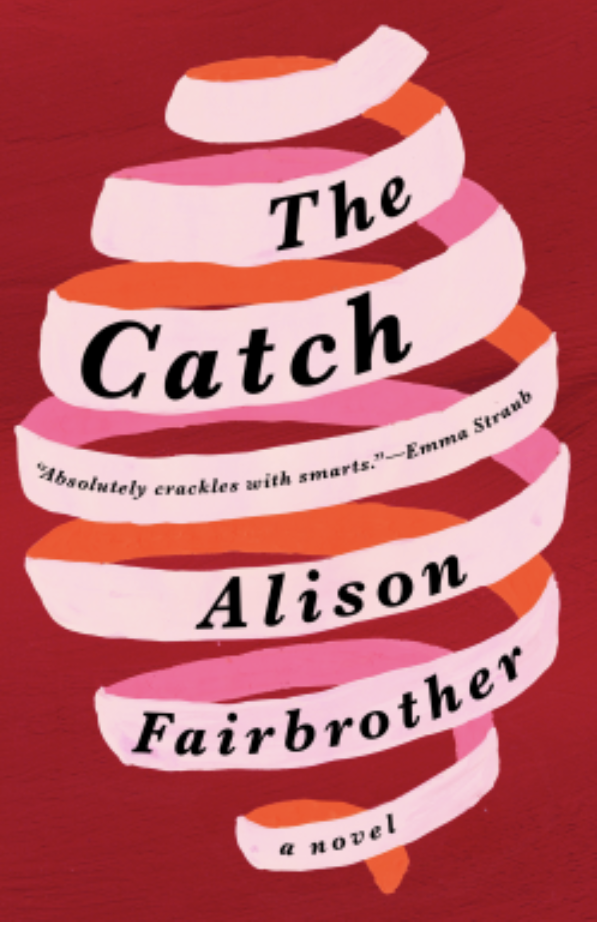
The Catch by Alison Fairbrother (Fiction)

Writing: 5/5 Plot: 4/5 Characters: 4/5

A humorous, well-written, millennial coming-of-age story (to be clear, the coming of age to “real” adulthood in your twenties, rather than the rocky road through puberty). Ellie is 24 when her father dies suddenly. As the eldest of his four children from three different wives, she has always felt she was his favorite, but when she is left an insulting object in his will while the “lucky baseball” she craved went to a complete stranger, she began trying to track down the truth about her father. In the meantime, she is a budding journalist trying to write something meaningful while employed at a D.C. media start-up focused solely on clickbait measures and is seeing a deeply nerdy (and deeply married) man who is (surprise) not always available when she needs him. Somehow this all comes together with a story on the local Osprey cam as a leading indicator of ecological disaster in a way that is both comical and deeply insightful. Very good writing.

I really did love the writing — so many good quotes!

“Exclamation points had become little signposts announcing, I mean well! and had become so normalized that in their absence I felt a deep sense of foreboding. But every now and then you found yourself up against someone who refused to give in to exclamation points, who typed what they meant with zero reassurances, making the rest of us look like overzealous clowns.” (My favorite quote as I am one of those clowns!)

“D.C. was like that. You were always one step away from a cockroach.”

“It was like my mother always said: ‘If you’d just lose some weight, you could enjoy your young body.’”

“It was true that I was proud of the life I’d started to make, getting on my bicycle in the morning, dismounting lightly at a glowing little start-up, then returning home to my ad hoc salon of housemates, whose drive and purpose and hopefulness about the world, I hoped, might spur me on too.”

“The earth had been diagnosed with end-stage cancer, and every morning I learned that diagnosis anew.”

“That was another thing I was learning — I had to read how much people could handle; I had to tuck in my sadness when too much of it showed. I picked the orange peel from my glass and sucked the bitter alcohol from its flesh.”

“If only Katherine hadn’t seen us on the stoop at that exact moment, with her kale body and her hornet’s nest judgement.”

“Talking to him was like getting tapped repeatedly on the shoulder by an octopus with one wet tentacle.”

“Stories could have such unsatisfying and unlikely outcomes. More and more, I felt we willingly built entire worlds on very little information. Like sandcastles, if you poked them anywhere, the whole structure would revert to its components. It was our nature to do that, to fill in the details and become convinced they were true and not our own fantasies and imaginations bumping up against someone else’s reality.”

“At points all over the earth, people were advancing toward each other and away from each other, and this was just one instance in the vast history of these of these moments. I thought that the collection of all such trajectories must make up the most complex atlas in existence.”

Thank you to Random House and NetGalley for providing an advance copy of this book in exchange for my honest review. The book will be published on June 21st, 2022.

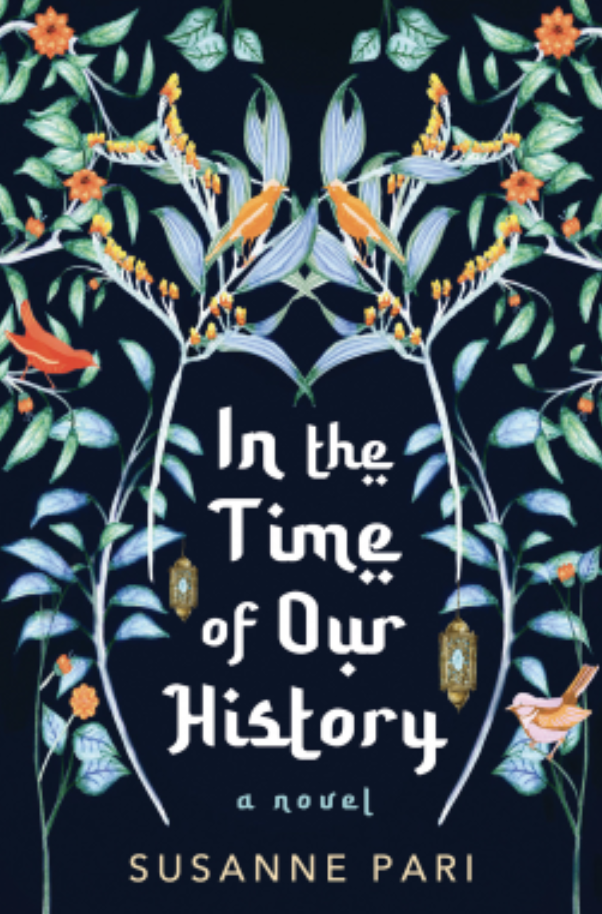
In the Time of our History by Susanne Pari (Literary Fiction)

Writing: 5/5 Characters: 5/5 Plot: 5/5

I loved this character and culture driven drama about an extended Iranian American family post the 1979 Islamic revolution. The characters have depth and nuance that take them far beyond the obvious stereotypes that could describe each of them: the family patriarch, the obedient wife, the rebellious daughter, the faithful family retainer. The depictions are honest — no clear heroes or victims, no melodramatic righteous rage — just people finding their way while blending an inherited traditional culture with the modern practices of their new home.

The language is powerful but never manipulative, and the stories feel real. Moral dilemmas — with no clearly correct solutions — abound, and the frank and straightforward discussions of some of them — perceived racism, roles for women, infidelity, etc. — are captivating. I loved the way immigrants were depicted as individuals, each with their own backstory, set of initial circumstances, and eventual integration paths — none following the same script. Also — one of the best first lines I’ve read in a long while.

Set in the late 1990s and taking place in New Jersey and San Francisco. Great for fans of “Of a Place For Us” by Fatima Farheen Mirza. Highly recommended!

Quotes:

“Espresso and anxiety — well behaved on their own, rambunctious as urchins together.”

“Mitra, on the other hand, had once told a flirtatious union official that if he didn’t smell like a sewer in non ninety-degreee weather, she might consider thanking him for staring blatantly at her breasts. Another time, Mitra told the mayor’s secretary — a consistently rude person — to call after her PMS was over.”

“Anahita had innately understood that it was a traditional woman’s responsibility to refract unwanted male attention, a concept Mitra once denounced as a direct offshoot of the idea of hejab, invented and perpetuated by men who didn’t want to take responsibility for their own lust.”

“I also had a difficult father. Some people cannot abandon their misery. Mitra studied him. His face was drawn, his mouth pulled down either end. ‘Is that how you justify their behaviour?’ ‘No, it is how I keep from hating them. Hate takes too much energy.’ ”

“This was the dynamic, false though it was on its face. Mitra tried to see Akram the way Julian did. ‘She’s just confused, Mitra. Wouldn’t you be? She’s never known anything different. We have to teach her.’ Mitra hates those lines; they sounded like something from a Kipling story about the civilized enlightening the natives. As if the Western world was devoid of poor, uneducated, and bitter people.”

“Surely someone had reminded her of this fact: that few people escaped the tragedy of senseless death, that suffering had no purpose, no meaning, no justification. But she hadn’t heard, hadn’t listened. Until now. Why now? She didn’t know. It didn’t matter. She got it.”

“This is what I’m explaining, Shireen. You came to America, and while you were here, Iran moved forward. After the Kennedys invited the Shah and Farah to visit America, the rush to reform was on. Not only did the landscape change — the buildings and roads and modern conveniences — but also the people, the culture. Even the traditional families couldn’t ignore the excitement of it — the opportunities for prosperity, technology, for resistance against Soviet influence.”

“Mitra squinted at the tube of the jetway and spotted her mother between the hulking arms of two businessmen, their suit bags hanging off their shoulders like slaughtered game.”

“Perhaps she’d seen too many TV talk shows where women displayed their mistakes and misfortunes as if they were wares on a blanket at the bazaar. Or perhaps she knew now that so few outcomes in life could be controlled.”

“The mere fact of their abandonment was a stigma, a curse almost, that prevented them from being wanted by anyone. They came from bad stock, from people in such dire straits or lacking such humanity and sense of goodness that they could abandon their own offspring.”

“Those were the days when she didn’t want to have much to do with her parent’s culture, which prized opaque symbolism excessively. The harder a person had to work to discover hidden meanings, the higher its value.”

Thank you to Kensington Books and NetGalley for providing an advance copy of this book in exchange for my honest review. The book will be published on January 3rd, 2023.

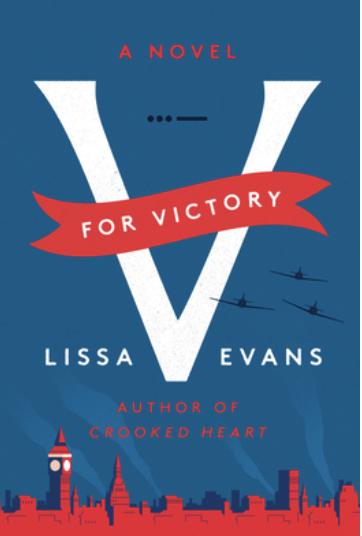
V for Victory by Lissa Evans (Fiction)

Completely heartwarming novel about London in the latter stages of WWII (taking over where Crooked Heart left off). Noel Bostock (15) and his “pretend” Aunt (Vee) are living in the large house Noel inherited from his “pretend” godmother, the famous suffragette Mattie Simpkin. It has become a boarding house where boarders pay rent in both cash and tutoring for Noel. When a room becomes vacant, they search for a boarder with specific knowledge to impart. Noel is the most wonderful character — smart, capable, kind, and curious about absolutely everything. Mr. Reddish teaches him math while quoting his own rather bad poetry; Dr. Parry-Jones teaches science (giving him a dissectible rat for his birthday); the one-eared Mr. Jepson teaches him Latin; and Miss Appleby mixes her French lessons with more personal lessons about the heart (her heart to be precise).

In the odd way different lives seem to come together haphazardly, an American GI drives a lorry on the wrong side of the road, the more fashionable (and obnoxious) twin of an air-raid warden writes a surprising novel about her sister, and Noel’s origin story comes out of hiding.

I really like her writing — some nice quotes below:

“He didn’t have a family tree, he had a Venn diagram, in which none of the circles overlapped.”

“Impossible to explain Vee’s myriad antipathies, her constantly updated list of prejudices and judgements.”

“She had fallen for Romeo and now found herself padlocked to the editor of Modern Homes and Gardens.”

“Since the end, just a year ago, of his own, terrible marriage he found himself studying other couples, like someone conning an aircraft recognition chart — spotting those tics and phrases that signaled contempt or boredom or fear, and when he saw those, he wanted to take one or other of the pair aside, and say, ‘Finish it now.’

“Jepson was present but unlit, so that in the dining room he was more furniture than inhabitant, talked around and over, but never to. But in lessons there were glimmers — he had seized Noel’s first essay and pushed the words around the page like backgammon counters, showing him how to introduce a subject, how to make a neat and satisfying ending, how to prune, and rearrange the content.”

“It was so easy, she thought, as he led her towards the music; he was so easy — a printed postcard, when every other man she’d ever known was a sealed letter filled with blank pages or mystifying codes”

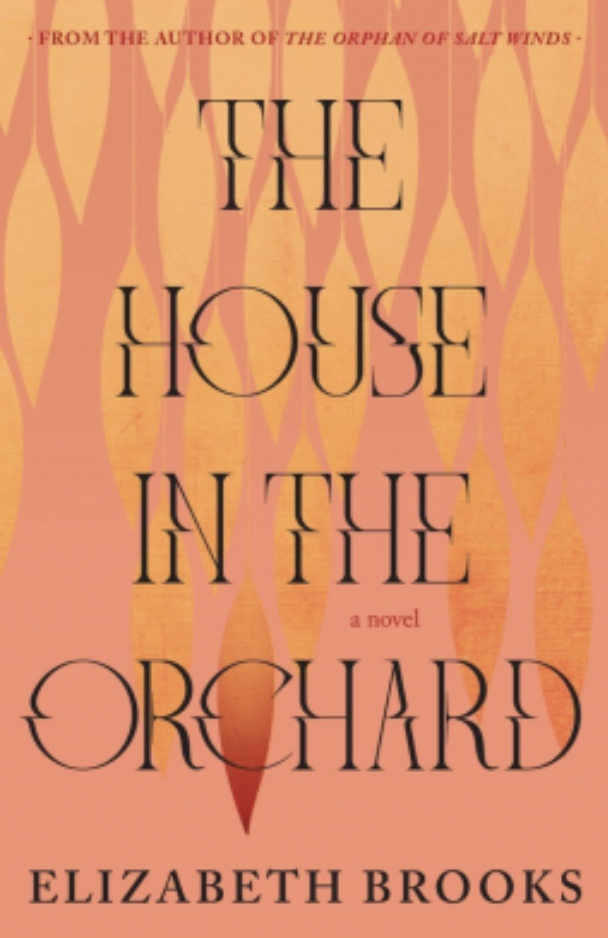
The House in the Orchard by Elizabeth Brooks (Fiction)

Plot: 2/5 Characters: 3/5 Writing: 3/5

A story within a story — in 1941 Peggy inherits the house in the orchard (in Cambridgeshire) from her husband’s Aunt Maude (her husband died in the war). Her rather difficult father-in-law (Maude’s brother Frank) hates the place and encourages her to sell. The bulk of the book is Peggy reading Maude’s diary (beginning in 1876) — a rather horrific tale of how Maude came to own the place.

I wanted to like this book — I love English historical fiction, and there was the potential for a good story. “Victorian era girl brought up to be proper in a home devoid of warmth makes good” is the story I wanted to read, but it was not to be. Instead I disliked her more and more until I thought I couldn’t dislike her any more (I was wrong). By the end, I had to ask myself what was the point of the book? What lesson should I have learned? Who was I supposed to empathize with? And was the story at all believable?

The story moved slowly, and there was a lot of description which I kind of skimmed over, but my main objection is the insidious way the story went downhill into darkness. Luckily (for me) it was not written in a melodramatic way, so I was able to finish the book with my emotional state intact, but I can’t say I gained any wisdom or enjoyment from reading it.

Thank you to Tin House and NetGalley for providing an advance copy of this book in exchange for my honest review. The book will be published on September 27th, 2022.

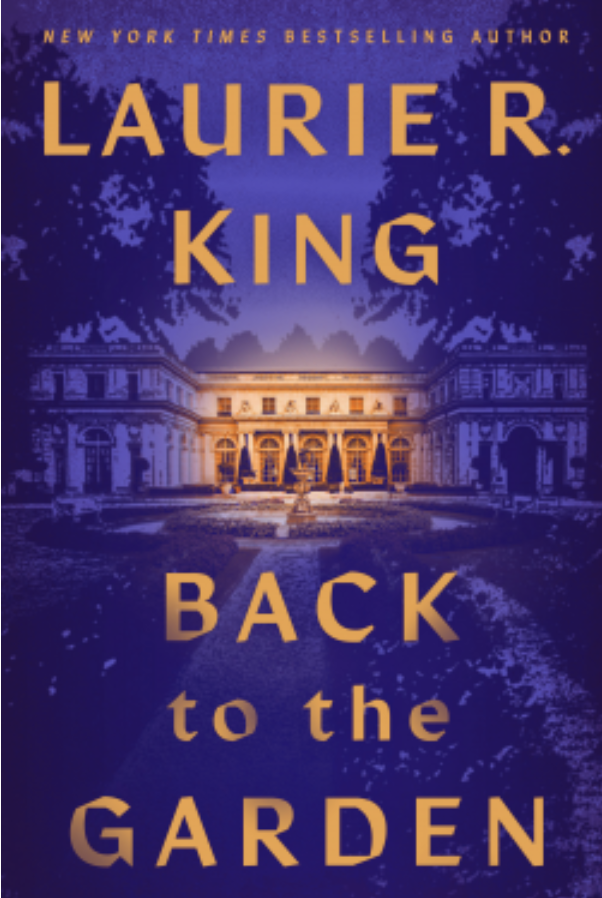
Back to the Garden by Laurie R. King (Mystery)

Writing: 4/5 Plot: 5/5 Characters: 5/5

Loved this book — a complete page turner with engaging characters, a twisted plot, and a hippie commune backstory that I just loved. Raquel Laing is an unintentionally non-conforming behavioral investigator for the SFPD — working on an old serial killer case (The Highwayman) when a body is unearthed from beneath a giant statue on the Gardener Estate outside of Palo Alto, California. The statue was erected 50 years ago — could this be another of the Highwayman’s victims?

This is the perfect kind of mystery for me — character driven, never boring but also never stressful (except for a short bit at the end), and a plot and backstory that never allow my interest to flag. Plenty of interesting psychological details on all the characters — including the serial killer lying in a hospital bed. I read a few of Laurie King’s Mary Russell & Sherlock Holmes books a long time ago, but I didn’t like the premise (I don’t like books that add their own characters to existing fiction), but I liked this book so much I’m now planning on checking out her non Mary Russell books which look pretty interesting. This is a stand alone novel, though I do see opportunity for additional volumes!

Thank you to Random House Publishing Group — Ballantine, Bantam and NetGalley for providing an advance copy of this book in exchange for my honest review. The book will be published on October 11th, 2022.

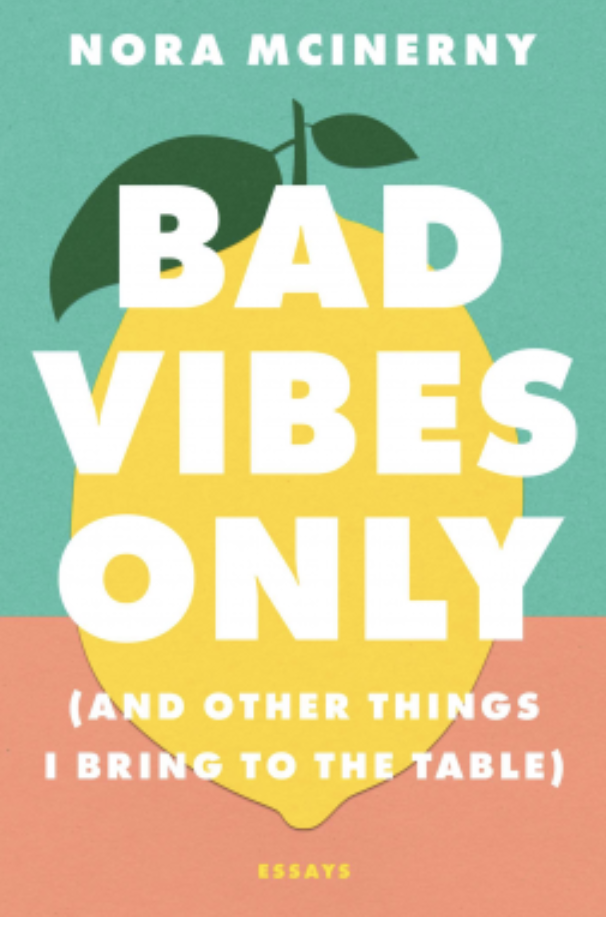
Bad Vibes Only by Nora McInerney (Memoir)

McInerney’s memoir-in-essays takes us from her largely technology-free childhood through to the reality-TV and social media reshares infused present. A cross between Anne Lamott, Florence King, and Nora Ephron, the book is both insightful and hysterically laugh-out-loud funny. Or is it? This woman is self professedly neurotic and an incredibly intuitive writer. What I found both instructive and a little depressing is how closely some of my own neuroses match hers — reading her descriptions made me realize how incredibly neurotic (in just these TINY little ways) I really am — and maybe those aren’t quite as funny as the rest. Still, I totally laughed my way through.

McInerney is the creator / host of the podcast “Terrible, Thanks for Asking.” I haven’t listened to it (because podcasts don’t unreel as fast as I can read) but I bet it’s great.

Some great quotes:

“Memory loss was a problem for future me, and I trusted she’d be able to deal with the consequences of my actions. That trust was entirely misplaced, because I’m not even forty yet and on a good day I’ll walk into a room and ask Matthew, ‘What was I about to say?’ as if he’s a searchable database with a Bluetooth connection to my brain.”

“ ‘Good Vibes Only’ makes a cute saying for a mug, but a pretty ominous interpersonal standard.”

“It doesn’t take a psychology degree to understand that some things are just more pleasant than others, and that as comfort-seeking mammals with disposable income we are attracted to the pleasant, the easy. And yes, we know that ‘life is hard’, but we also really want it to be hard in ways that are manageable and more inconvenient than difficult.”

“Because no, this is not what happens on my version of the internet, where opinions are either inconsequential (what does your coffee mug really say about you?) or authoritative, loud and devoid of all nuance.”

“I hate to describe critical thinking as a privilege, but take a look around: life is hard, and people are tired, and the small doses of camaraderie and dopamine we get from clicking “reshare” on a hot take will always be easier and more satisfying than reading a well-researched piece of reporting and thinking aloud to yourself, ‘Well, it certainly seems like a complex issue.’ “

“Our children — God willing — will grow up and move out, will establish their own lives shrinking and shifting so that we are no longer the sun but some outer planet that upon further inspection actually may just be a defunct satellite stuck in their orbit.”

“At nine she had realized that our memories are the only things keeping us here; a weak Velcro preventing us from being ripped from the history of time. We want to remember because we too fear existential obliteration, shudder at the thought of being lost to an endless sea of unforgettable moments long forgotten.”

Thank you to Atria Books and NetGalley for providing an advance copy of this book in exchange for my honest review. The book will be published on October 11th, 2022.

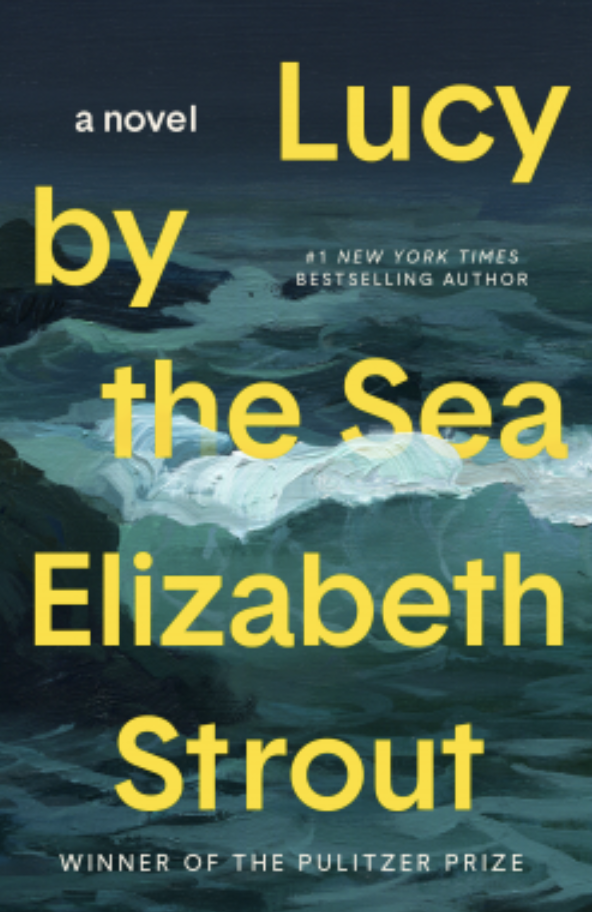
Lucy by the Sea by Elizabeth Strout (Literary Fiction)

Writing: 4.5/5 Plot: 4/5 Characters: 4.5/5
This third chapter in the Lucy Barton series (I am Lucy Barton and Oh William!) might alternately be titled Lucy Gets Through the Covid Pandemic as it extends from just before Covid slams into New York City and continues through the availability of vaccines. Lucy and her first husband, William (the parasitologist), head to Maine for what (very) naive Lucy is told will just be a few weeks to escape the ravages of Covid. William is — very simply — trying to save her life.

I’m a huge Strout fan and have read most or all of her books — I love her clean, clear writing and insight into personal experience. I did find this book a little more preachy than previous novels to the point where I liked the main character much less than I did previously. This is largely because the book took on political topics (Covid, George Floyd, the Capitol Riots) and manipulated the story to show how very correct her side of the political spectrum was in every case (the Capitol Rioters were all nazis and racists but the George Floyd riots were all peaceful; everyone in her book who did not adhere to strict covid protocols were rashly stupid and were all punished by death or hospitalization, etc.). While worrying about the state of democracy and bemoaning child labor in foreign countries, she has access to lots of money, and while befriending people with very different beliefs and professing love for her born again sister, she comes off as feeling superior to them. Of course, it is Lucy’s story and to be fair, the author does let some characters blast Lucy for just that! She even has Lucy (a writer) write stories about people very unlike herself so … overall I enjoyed the book, and it gave me a lot to think about (I think I’m still just sensitive to the many sanctimonious people I weathered Covid with, some of whom called me a “grandma killer” when I went out to run on deserted streets).

Thank you to Random House and NetGalley for providing an advance copy of this book in exchange for my honest review. The book will be published on September 20th, 2022.