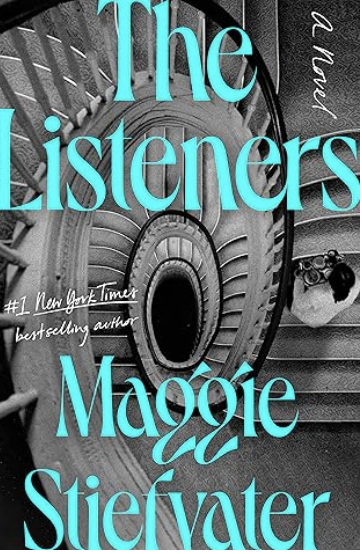
The Listeners by Maggie Stiefvater (Literary Historical Fiction)

Writing: 5/5 Characters: 5/5 Pure story: 5+/5

I loved this book — the exquisite and content rich writing, the elaborate storytelling with deep and resonant themes, the faint whisper of otherworldliness. I probably won’t do it justice in this review, but I will try.

It’s just after Pearl Harbor and the world is falling apart — recklessly, rapidly, relentlessly. The Avallon Hotel — known for Extreme Luxury — has been offered to the State Department as a holding area for hundreds of foreign Axis diplomats until they can be exchanged for similarly trapped Americans in Axis countries. The hotel is held together through sheer force of will by the new manager — June Hudson — a local mountain girl with an untamed native twang, who possesses an innate talent for “listening” to the mountain sweetwater — the mineral springs that give the Avallon its luxury reputation. But the new residents bring with them foul sentiment, angry expressions, and bitter fear and stimulate the same in others. And it threatens to turn the sweetwater into something much darker. You can read it as metaphor or as a hint of fantasy. I chose both.

The many and varied characters — from diplomats to families to hotel staff to FBI and State Department agents — were deep, real, unusual, and individual. Despite a large cast of characters, I never mixed anyone up — they were each unique. And each struggled with their own challenges — the complexities of justice, deeply held principles challenged by the realities of a world at war, threatened loyalties, the definition of bravery, the scale of protection, and the pull of love. The story wound itself into knots while the broader plot moved inexorably forward. There was no filler. I never had a moment to contemplate whether or not I might be bored. I really loved the “character” of the sweetwater, a powerful metaphor but also reified in a compelling and illuminating way. The resolution was complex, perfect, and satisfying. The (short) authors note at the end brought out some of the more dramatic events that were based on reality. The diplomat housing and eventual swap was real, as were some of the (ridiculous) tantrums, pressures, and demands of individuals.

Highly, highly, recommended.

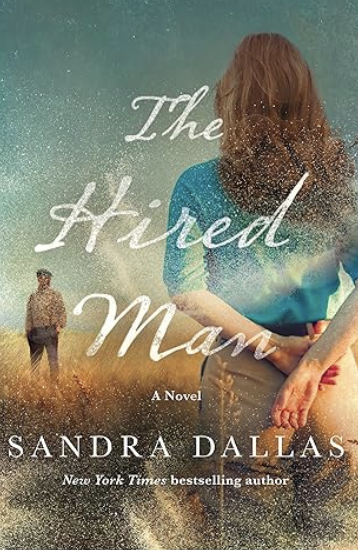
The Hired Man by Sandra Dallas (Historical Literary Fiction)

A coming-of-age story for Martha Helen, a young woman growing up in Colorado in the 1930s amid the drought, dust bowl, and an ever increasing supply of vagrants. One day, in the middle of a huge dust storm, a vagrant (Otis Hobbs) stumbles to her family’s door with a half conscious boy he found buried in the dust. He becomes a room and board only “hired man” for the family, despite the ill will of many in the town. When a young girl is found murdered much later, the town is sure Otis is the perpetrator while Martha Helen’s family staunchly defends him.

Things don’t go the way you might expect — I won’t give anything away but I was happy that there was more to this story than the obvious. It’s a true coming-of-age, so we watch Martha Helen grow as more and more of the (not always pleasant or ethical) real world makes it into her awareness and eventually the composition of her adult self. In the process she reflects on loyalties, biases, good and evil, and understanding people as individuals. The town people really fell into “good” and “bad” categories, which normally feels shallow and manipulative to me. But in this case, you could see that those in the “good” category adhered to strongly held principles, while those in the “bad” category did not, either not having principles or literally not understanding when the crossed the line. It was particularly interesting to me to watch Martha Helen shift her understanding of individuals by watching what they actually did. Martha Helen put it well:

“For better or for worse, the drought and ill winds showed what we were made of. Some folks stole and cheated and hoarded. Others rose above the hardships and displayed strength and courage, even though it threatened to destroy them. The dust bowl changed us. Mr. Hobbs did too . During the time he lived with us, I grew up. I was barely more than a girl when he joined our family. By the time everything was over I was a woman.”

Good story, great characters, a real sense of place and time, all supported by writing that is so good and unobtrusive, you forget that you’re reading at all.

Thank you to St. Martin’s Press and NetGalley for providing an advance copy of this book in exchange for my honest review. The book will be published on March 31st, 2026.

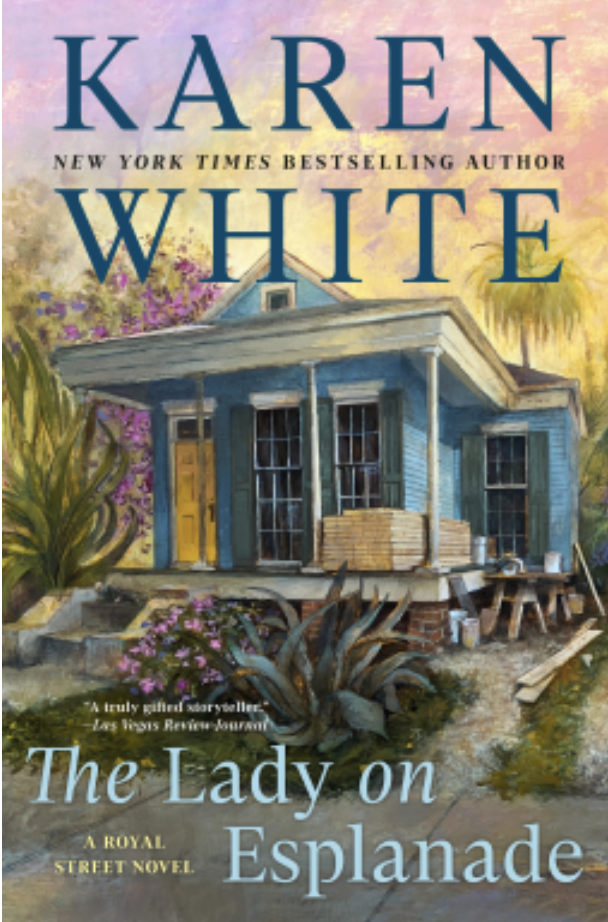
The Lady on Esplanade by Karen White (Mystery / Ghost story)

The third installment (not necessary to read the first two, but they are good!) of the New Orleans-based Nola Trenholm mystery / romance/ dear-departed-spirits series — itself a spinoff from the similar Charleston-based series starring Melanie Trenholm — Nola’s relatively new stepmother. Nola and best friend Jolene (unrelenting fashionista and all-around force-to-be-reckoned-with) tackle two mysteries centered around the haunting spirits of two old houses under renovation: Nola’s Creole cottage (a lovely money sink of renovation needs) and a new house that will be the first project for the Murder Flip Business Nola is starting with reluctant psychic Beau, with whom she has an undesired (from both sides) strangely strong connection. A few new characters, wickedly tangled stories from the past, and a pretty creepy Madame Alexander doll that manages to appear inopportunely where she isn’t wanted without any external help.

The whole series is entertaining — fun writing, plenty of colorful characters and great banter (both inside people’s own heads and in dialog exchanges). The spirit-augmented mysteries are interesting and always somewhat historical, the action well paced and full of humor, and despite the fact that this is book is number ten for me, none of the stories feel repetitive or in any way dull. They grab my interest on page one and continue through the end. For those who enjoy architectural marvels and renovation stories, plenty of that, too. Not my thing but the descriptions never get in my way.

Thank you to Berkley and NetGalley for providing an advance copy of this book in exchange for my honest review. The book will be published on Nov. 4th, 2025.

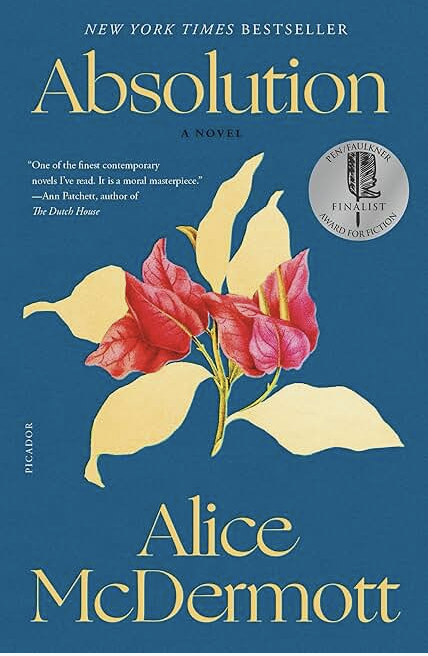
Absolution by Alice McDermott

Officer wives stationed in Vietnam at the beginning of the War. I expected garden parties, sucking up to the wives of the senior officers, etc, but instead was thrown into the tumultuous era with confusion, secrecy, courage and multiple complex and interwoven ethical issues — all within the expectations and social mores of the time and place. Tricia is a young wife, married to an up and coming lawyer on loan to Navy intelligence; Charlene is a practiced corporate wife who takes charge with abandon and scoops Tricia up in her personal whirlwind. But the whirlwind is focused on “doing good” in the middle of an environment in which any good is extremely hard to find, and the ethical and socio-political questions that triggers are worth the price of admission to me.

I was so impressed by the descriptions of not only the (exotic) setting, but the interactions between wives and their husbands, other wives, native staff, and the local population. Each character was introduced with real depth, not to mention plenty of opinions. Mc Dermott did a great job of articulating the many different views of the war (at the time) through different mouths — all as perceived by Tricia, the young and naive wife who had never been encouraged to have opinions of her own.

The story was told through the unusual format of three long, saga-length letters between Trish and Charlene’s daughter Rainey (who was quite young when they met in Vietnam). The epistolary format was interesting because Tricia is recalling events from decades before, so there is introspection and retrospection layered on top of the memories. It is full of events, regrets, analysis, and the perspective that comes with time — all masterfully done.

To be honest, the start was quite slow, and I probably would have given up if I hadn’t been reading it for a book club. The topics, while intellectually interesting, were relatively depressing — after all, there is nothing about the Vietnam War that could be considered uplifting or even instructive. Still — beautifully written with an attention to the kind of detail that tells an entire (mini) story with just a sentence or two, and a different perspective and insight into a period of history that added much to my understanding.

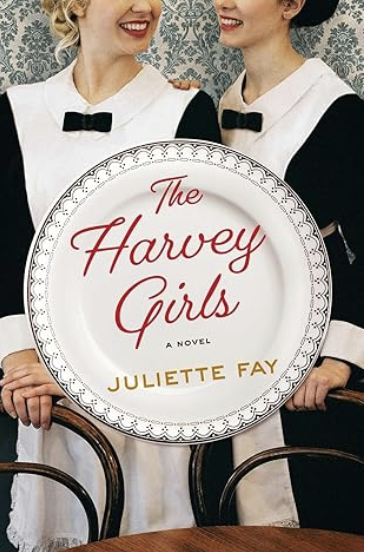
The Harvey Girls by Juliette Fay (Historical Fiction)

A warm story of duty, love, friendship, family, and survival set in the 1920s along the Santa Fe Railway lines in the chain of Fred Harvey restaurants. You may have seen the Judy Garland movie by the same name, but if you haven’t, the Harvey restaurants employed young, single, women — paid them good wages (especially for women at that time), held them to high standards of conduct, and offered passengers on the railway a clean, efficient, high quality and safe place to stop for refreshments on what were often very long train journeys.

Charlotte grew up in Boston with wealth and opportunity, but for her the job at Harvey house offered a place of safety where she could hide from a very big mistake; Billie is the eldest of nine, who sets off for the Harvey house at 15 — her six foot tall frame lending credibility to the fiction that she meets the minimum age requirement — to help earn desperately needed money for the family during the slightly less “Great” depression of 1926. With straightforward prose we follow these two dissimilar but each fiercely loyal and tough women, as they interact with an array of engaging, intelligent, and highly ethical characters — taking care of each other in what can only be described as tough times. Sometimes it’s hard to remember what the world was like before social safety nets, penicillin, and women’s rights. There are plenty of historical references that bring the story to life, and quite a bit about how the Harvey houses were run (which I found fascinating). Also, many beautiful descriptions of scenery and quite a bit about Native Americans, with individual characters depicting their status in the area, their way of supporting themselves, and their (quite understandable) attitudes towards tourists.

As an aside, the El Tovar Hotel featured in this story (the Harvey house near the Grand Canyon) is one of only two of the original 84 Harvey houses still in operation today. An easy and compelling read.

Thank you to Gallery Books and NetGalley for providing an advance copy of this book in exchange for my honest review. The book will be published on August 12th, 2025.

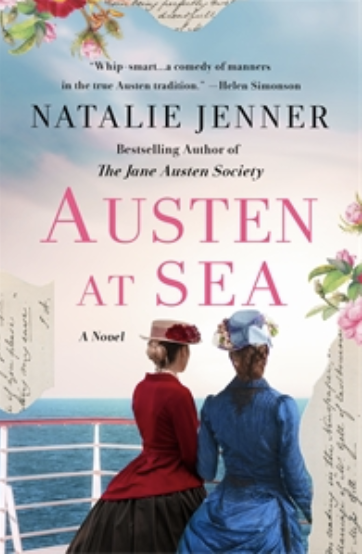
Austen at Sea by Natalie Jenner — Read by Rupert Graves (Historical Fiction)

An enthusiastic five stars for this marvelously fulfilling piece of historical fiction. The story manages to be both intellectually rich and emotionally pleasing. My perfect blend! In 1865, two daughters of the long-widowed Massachusetts Supreme Court Justice pen a daring request to the only surviving brother of their favorite author — Jane Austen. Meanwhile, two Philadelphia book collectors have similarly engaged with Admiral Austen about Austen memorabilia and editions. On the side, the Justices of the Massachusetts Supreme Court have elected to read and discuss the entire Austen oeuvre over the very summer break that sees the four correspondents heading off to England. Their discussions are completely engrossing, putting into dialog multiple well crafted opinions and surprising me with their depth. The story itself takes the reader from Boston, across to the sea to Hampshire, and concludes with a courtroom drama spectacular spanning both countries.

On the surface, this could pleasurably be read as an engaging comedy of manners a la Austen herself, with the delightful development of surprising relationships etc. But under the tip of the romantic iceberg lies the depth, thoroughness, and insight of the literary, political, legal, and economic contexts of the time period. Equality, justice, freedom — these are topics on everyone’s tongues during the post-Civil War recovery period, the still relative newness of the United States, and the current battles in both locations for various forms of women’s rights (including, but not limited to, women’s suffrage). These issues are brought out with a number of different techniques. Those discussing Austen’s works have literary discussions about her characters, their roles, purposes, desires, and life lessons. Women’s rights are addressed (and argued) through a fascinating panoply of laws, Acts, and jurisdictions — exemplified by the situations and experiences of the various characters. It’s obvious to us today (I hope!) that women should have rights equal to those of men, but to hear the completely sensical arguments and rebuttals on both sides of the issue during that time period by people who were not inherently “evil,” was deeply interesting.

I both read and listened to this book. I actually preferred the audio in this case. It slowed me down enough to actually listen to different viewpoints and consider them carefully — I usually read too fast and often miss important details. Rupert Graves is the reader — a wonderful actor with a beautiful reading voice. I learned a lot about Austen’s life and her works (despite the fact that I’ve read each multiple times) and enjoyed a wide array of references from that time period — including Louisa May Alcott who appeared in a delightful cameo role. The cast of characters at the start of the book is quite helpful.

Highly recommended.

Thank you to St. Martin’s Press, Macmillan Audio, and NetGalley for providing an advance copy of this book in exchange for my honest review. The book will be published on May 6th, 2025.

The Hidden City by Charles Finch (Historical Mystery)

Number 12 in this historical mystery series, but number one for me. Regardless of not knowing the history of the characters I was able to follow the story very well. I would definitely categorize this as a “cozy” as there were no “thrilling” (i.e. terrifying for the reader) scenes to get my anxiety going. Fine by me! Interesting that as a cozy written by a man, there was less filler of the tea parties and gown description types (also fine by me) but plenty of historical detail about the Victorian Age in which the stories are set. This included plenty of social as well as policy / political commentary. I particularly enjoyed the description of various “guilds” (known here as “livery companies”) started in medieval times — all styled as the “Worshipful Company of xxx.” Tickled me. Some good bits on women’s suffrage and the complete injustice of the treatment of London’s “lower classes.” This particular episode felt like more of a novel than a mystery, although there was a mystery obviously (old murders just tied together with a current threat to someone living in the house where one of them occurred). I quite liked the characters and will likely go back to number one and see how things progress!

Thank you to Minotaur Books and NetGalley for providing an advance copy of this book in exchange for my honest review. The book will be published on November 4th, 2025.

The Eights by Joanna Miller (Historical Fiction)

Historical fiction at its best! Four women are part of the historic 1920 matriculation of women to Oxford — the first in over 1,000 years. Roomed together in “corridor eight,” this is the story of their first year, with several flashbacks to flesh out their personal context. Beatrice Sparks — almost 6 feet tall, daughter of a famous (and vigorous!) suffragette, with an appetite for politics; Marianne Gray — the motherless daughter of an English vicar; Dora Greenwood — beautiful and still grieving for the brother and fiancee who died in the war; and Ottoline Wallace-Kerr — wealthy and at odds with her family’s expectations, who keeps herself calm with mathematics. There are some secrets and some surprises — all quite realistic and perfectly embedded in the well-drawn context of the time. And for the girls, a discovery of unexpected, but deeply felt, friendship.

I say this is historical fiction at its best because it finds the right balance between the extremes of dull, historic, facts and overly sensationalized (and manipulatively emotional) story telling with a minimum of historic accuracy. There are no modern sensibilities sneaking in — but plenty of individual reactions and experiences nestled in the very real context of the day. The country had just emerged from WWI, (some) women had just gotten the vote, and now — Oxford was open to women who wanted to pursue a more intellectual path through life. I loved the many small details that peppered the prose: a new mystery author — Agatha Christie — who was set the challenge to write a novel where it was impossible to guess who did it — and succeeded; the introduction of ouija boards; stories of the Bodlein library and how the rare books were protected during the war; the second wave of influenza; the origin of Chequers (home to Britain’s prime ministers); practice trenches in the countryside; suffragette pennies, etc. A pretty interesting Oxford-style debate on whether or not women should be at Oxford at all. I loved the bits of discussions on various studied subjects. The secondary impact of the war on various people after the war was over was equally interesting — more personal, individualized, and detailed. Philosophical and ethical issues pervaded the experiences because how could they not?

I like historical fiction because, when done well, you learn about what history might have meant to the people who lived through it. The author’s note delineates fact from fiction as well as describes inspirations — with a nice bibliography on relevant sources. Also — there is a glossary at the end that I really wish I had known about before I finished! Plenty of period specific slang was used that I had to constantly look up or guess at. Now you know!

Thank you to G. P. Putnam’s Sons and NetGalley for providing an advance copy of this book in exchange for my honest review. The book will be published on April 15th, 2025.

The Boxcar Librarian by Brianna Labuskes (Historical Fiction)

Writing: 4/5 Plot: 5/5 Characters: 5/5

Loved this historical fiction centered in Montana in the early 1900s. Three timelines for three characters that slowly converge: Millie Lang (1936), exiled to Missoula to “fix” the state’s contribution to the depression era American Guide Series, sponsored by the Federal Writers Project of the WPA. Alice Monroe (1924), small town Missoula librarian born to wealth, who works to get more books into more hands via rural visits. Colette Durand (1914), daughter of a Shakespeare loving union organizer for the miners employed by the Anaconda Mining Company.

An excellent cast of supporting characters, lots of action and surprising plot twists, well-researched details of the time period, and plenty of interesting locations (e.g. Glacier National Park, Wild Horse Island in Flathead Lakes, Missoula mining camps) — all vividly brought to life. Lots of literary references, both in terms of very apt quotes and individual books for an assortment of characters and the real impact they had. Really demolished the stereotype of the “lower classes” being uninteresting in learning and mind expansion. She handled themes of vengeance, injustice, and restrictions on and expectations of women adroitly with real reflection on how to know what “doing the right thing” means, and what it might cost. Loved the Boxcar library itself (apparently you can see the Lumberman’s library box car in Fort Missoula — I may take a trip!)

A great read!

Some quotes:

“Everyone had a story, and most people were just trying to get by. They didn’t deserve to become empty vessels to hold other people’s anger and insecurities.“

“So did writers. They saw the extremes in life as appealing – tear courage, fear, and strength, love and hate. They were what made humans human. But Millie didn’t think of herself as a writer. She thought of herself as a journalist. She was there to tell other people’s stories.”

Thank you to William Morrow and NetGalley for providing an advance copy of this book in exchange for my honest review. The book was published on March 4th, 2025.

Typewriter Beach by Meg Waite Clayton (Historical Fiction)

I really warmed up to this book — it started off a little slowly and then became more and more intriguing with every chapter, ending with a lovely last line to cap it all off.

Dual timelines — an isolated set of cottages on the beach at Carmel in 1957. During the darkest times of McCarthy’s blacklists and the slow strangulation of Hollywood, a young starlet on the verge of being the next Grace Kelly is sent to wait in one of these cottages by the studio manager and all around fixer. Told to stay indoors and not be seen, she nevertheless meets her neighbor, the enigmatic Leo — a black listed scriptwriter with a haunted past. In 2018 we follow Gemma, whose beloved grandfather has just died and left her his cottage.

The story slowly unfolds, past to present, and while I often thought I knew what was happening, I was often quite wrong. The writing style is rich with thought provoking commentary and reflections. Hollywood — the deals, the norms, the restrictions, the cheats — is on display with all of the detail that I love — not just a description of events, but a description of the people living through those events and how they are changed, what they do to survive, what decisions they make (and sometimes regret, and often don’t). It’s the full experience and incredibly well-researched. I learned a lot about the different ways people dealt with the blacklist and (of course) the very different ways men and women had to deal with opportunities, threats, and restrictions.

Along with this spectacular depiction of the times and contexts is a lovely and often surprising story of love, family, parenthood, and friendship. I don’t want to give anything away, but there are multiple lovely stories of people finding love and family in a world not inclined to make it easy for them. Plenty of stories of people living in an environment not of their choosing and not in their control — and yet … finding their happiness.

Lots of intriguing details on Carmel and Hollywood — late credits for blacklisted screenwriters, a form of “me too” throughout the ages, morals clauses (for women only). I enjoyed every minute of it.

Thank you to Harper and NetGalley for providing an advance copy of this book in exchange for my honest review. The book was published on July 1st, 2025.