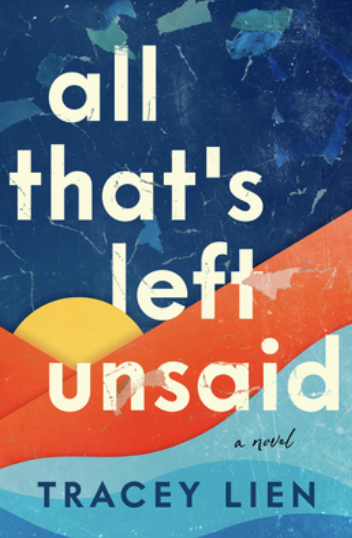
All That’s Left Unsaid by Tracey Lien (Audio Book — Literary / Multicultural Fiction)

Writing: 4/5 Characters: 4/5 Plot: 3.5/5

Ky Tran comes back to the violent, drug ridden, largely Vietnamese / Chinese Sydney suburb of Cabramatta when her relatively nerdy, honor student, brother is brutally murdered at a post graduation party. The witnesses won’t talk, the police don’t care, and her parents haven’t the language skills or the will to pursue the matter. Ky tackles the witnesses — most of whom she knows — unable to let the matter rest. The novel structure fills in background, the story each witness reluctantly lets out, and the real story each remembers about while curating what comes out of their mouth. The path of disclosure winds towards a confrontation with Minnie — the best friend Ky hasn’t spoken to in years.

The writing is good and the main reader for the audio book is excellent (I did not love the two minor readers but they only appear once each for a relatively short time). I appreciated the in-depth descriptions of different approaches taken by members of a refugee community trying to make a life in a new country that doesn’t necessarily want them. Insightful commentary on loyalty, friendship, family, justice, and the concept of “being good.”

Thank you to Harper Audio and NetGalley for providing an advance copy of this book in exchange for my honest review. The book will be published on September 13th, 2022.

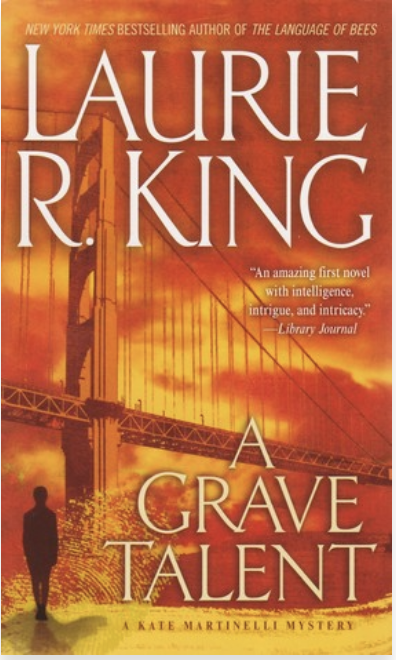
A Grave Talent by Laurie R. King (Literary Mystery)

Writing: 5/5 Characters: 4/5 Plot: 5/5

The first in the Kate Martinelli mystery series (for which she won an Edgar), and I’m completely hooked! Completely bizarre, twisted plot, fully developed characters and tight writing. Writing quality is right up there with Louise Penny (which I don’t say a lot) — feels more like literary fiction embedding an intriguing mystery rather than a (boring) cozy or a mystery that is all plot/action filled with stock characters.

A serial killer has begun murdering young girls, depositing them all on a road in the midst of an odd colony outside of San Francisco. A seasoned cop and a newly promoted Detective (Kate) have been assigned the case with no real leads — and then they find out that one of the colony residents was associated with a similar crime many years before …

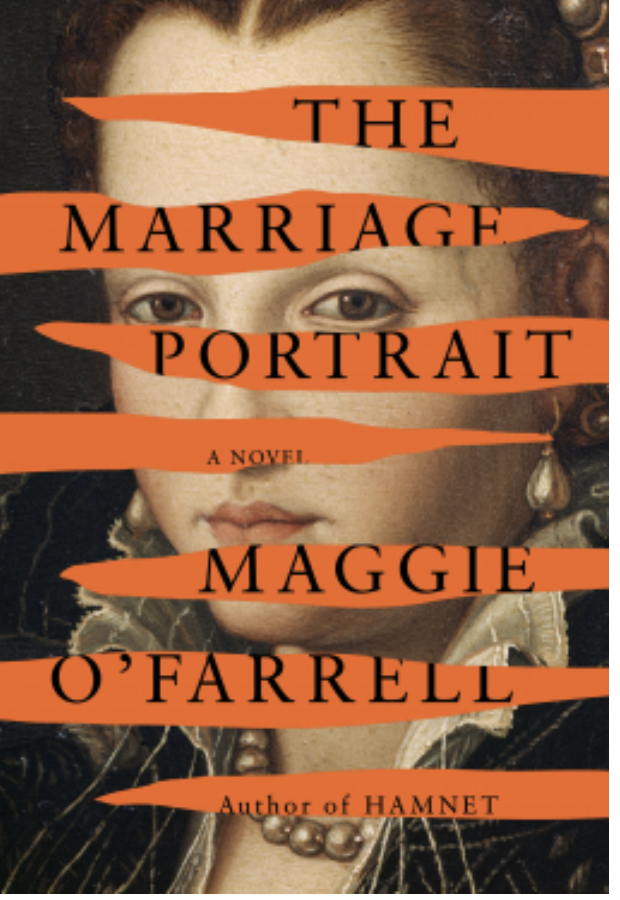
The Marriage Portrait by Maggie O’Farrell (Historical Fiction)

Writing: 5/5 Characters: 4/5 Plot: 4/5

Renaissance Italy brought to life with stunningly sensual (as in all of the senses) language. 15-year old Lucrezia do Cosimo de Medici of Florence is given in marriage to the older (but handsome and charming) new Duke of Ferrara as a replacement for her recently deceased elder sister. An unusual and high spirited girl, we experience her removal to a new land where she must learn to navigate an unfamiliar court and language and meet the expectations of a changeable husband intent on begetting an heir. Lucrezia is a surprisingly talented artist with an artist’s way of viewing the world, and this — coupled with her youth — gives an unusual perspective to her first person descriptions of what she experiences. This individualized viewpoint was my favorite part of the book.

The writing is lush and almost too persuasive and richly drawn, as I found I didn’t want to experience her life quite that vividly. This was not a time period favorable to women, particularly women serving as pawns in the power machinations of Renaissance Italy.

The story is loosely based on a real person — the wikipedia entry is interesting, but don’t read it until after you’ve finished the book!

Thank you to Knopf Doubleday Publishing Group Books and NetGalley for providing an advance copy of this book in exchange for my honest review. The book will be published on September 6th, 2022.

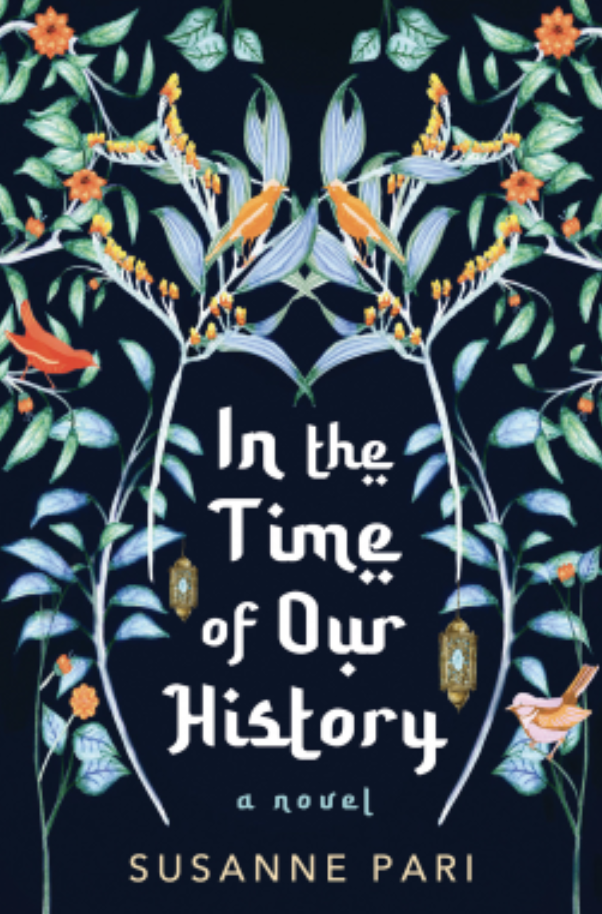
In the Time of our History by Susanne Pari (Literary Fiction)

Writing: 5/5 Characters: 5/5 Plot: 5/5

I loved this character and culture driven drama about an extended Iranian American family post the 1979 Islamic revolution. The characters have depth and nuance that take them far beyond the obvious stereotypes that could describe each of them: the family patriarch, the obedient wife, the rebellious daughter, the faithful family retainer. The depictions are honest — no clear heroes or victims, no melodramatic righteous rage — just people finding their way while blending an inherited traditional culture with the modern practices of their new home.

The language is powerful but never manipulative, and the stories feel real. Moral dilemmas — with no clearly correct solutions — abound, and the frank and straightforward discussions of some of them — perceived racism, roles for women, infidelity, etc. — are captivating. I loved the way immigrants were depicted as individuals, each with their own backstory, set of initial circumstances, and eventual integration paths — none following the same script. Also — one of the best first lines I’ve read in a long while.

Set in the late 1990s and taking place in New Jersey and San Francisco. Great for fans of “Of a Place For Us” by Fatima Farheen Mirza. Highly recommended!

Quotes:

“Espresso and anxiety — well behaved on their own, rambunctious as urchins together.”

“Mitra, on the other hand, had once told a flirtatious union official that if he didn’t smell like a sewer in non ninety-degreee weather, she might consider thanking him for staring blatantly at her breasts. Another time, Mitra told the mayor’s secretary — a consistently rude person — to call after her PMS was over.”

“Anahita had innately understood that it was a traditional woman’s responsibility to refract unwanted male attention, a concept Mitra once denounced as a direct offshoot of the idea of hejab, invented and perpetuated by men who didn’t want to take responsibility for their own lust.”

“I also had a difficult father. Some people cannot abandon their misery. Mitra studied him. His face was drawn, his mouth pulled down either end. ‘Is that how you justify their behaviour?’ ‘No, it is how I keep from hating them. Hate takes too much energy.’ ”

“This was the dynamic, false though it was on its face. Mitra tried to see Akram the way Julian did. ‘She’s just confused, Mitra. Wouldn’t you be? She’s never known anything different. We have to teach her.’ Mitra hates those lines; they sounded like something from a Kipling story about the civilized enlightening the natives. As if the Western world was devoid of poor, uneducated, and bitter people.”

“Surely someone had reminded her of this fact: that few people escaped the tragedy of senseless death, that suffering had no purpose, no meaning, no justification. But she hadn’t heard, hadn’t listened. Until now. Why now? She didn’t know. It didn’t matter. She got it.”

“This is what I’m explaining, Shireen. You came to America, and while you were here, Iran moved forward. After the Kennedys invited the Shah and Farah to visit America, the rush to reform was on. Not only did the landscape change — the buildings and roads and modern conveniences — but also the people, the culture. Even the traditional families couldn’t ignore the excitement of it — the opportunities for prosperity, technology, for resistance against Soviet influence.”

“Mitra squinted at the tube of the jetway and spotted her mother between the hulking arms of two businessmen, their suit bags hanging off their shoulders like slaughtered game.”

“Perhaps she’d seen too many TV talk shows where women displayed their mistakes and misfortunes as if they were wares on a blanket at the bazaar. Or perhaps she knew now that so few outcomes in life could be controlled.”

“The mere fact of their abandonment was a stigma, a curse almost, that prevented them from being wanted by anyone. They came from bad stock, from people in such dire straits or lacking such humanity and sense of goodness that they could abandon their own offspring.”

“Those were the days when she didn’t want to have much to do with her parent’s culture, which prized opaque symbolism excessively. The harder a person had to work to discover hidden meanings, the higher its value.”

Thank you to Kensington Books and NetGalley for providing an advance copy of this book in exchange for my honest review. The book will be published on January 3rd, 2023.

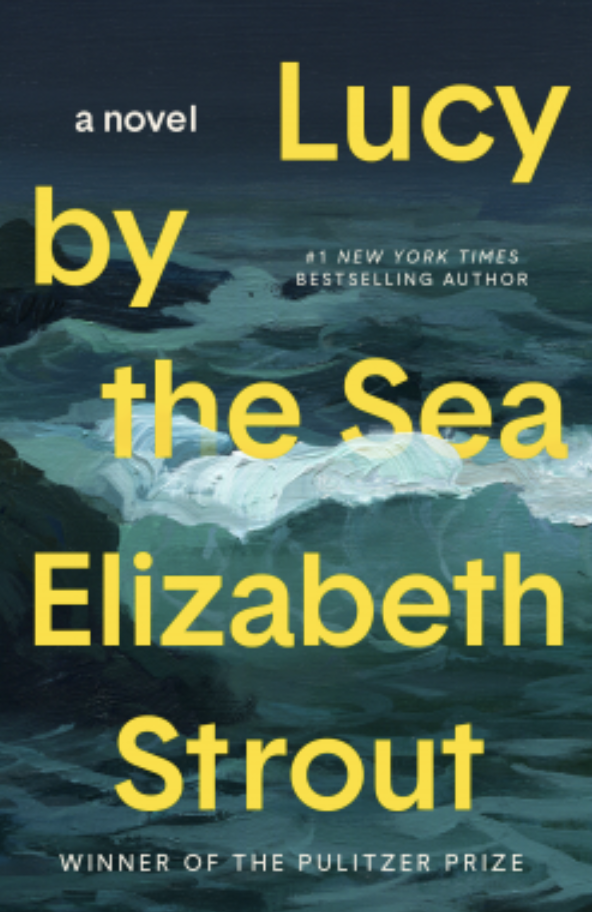
Lucy by the Sea by Elizabeth Strout (Literary Fiction)

Writing: 4.5/5 Plot: 4/5 Characters: 4.5/5
This third chapter in the Lucy Barton series (I am Lucy Barton and Oh William!) might alternately be titled Lucy Gets Through the Covid Pandemic as it extends from just before Covid slams into New York City and continues through the availability of vaccines. Lucy and her first husband, William (the parasitologist), head to Maine for what (very) naive Lucy is told will just be a few weeks to escape the ravages of Covid. William is — very simply — trying to save her life.

I’m a huge Strout fan and have read most or all of her books — I love her clean, clear writing and insight into personal experience. I did find this book a little more preachy than previous novels to the point where I liked the main character much less than I did previously. This is largely because the book took on political topics (Covid, George Floyd, the Capitol Riots) and manipulated the story to show how very correct her side of the political spectrum was in every case (the Capitol Rioters were all nazis and racists but the George Floyd riots were all peaceful; everyone in her book who did not adhere to strict covid protocols were rashly stupid and were all punished by death or hospitalization, etc.). While worrying about the state of democracy and bemoaning child labor in foreign countries, she has access to lots of money, and while befriending people with very different beliefs and professing love for her born again sister, she comes off as feeling superior to them. Of course, it is Lucy’s story and to be fair, the author does let some characters blast Lucy for just that! She even has Lucy (a writer) write stories about people very unlike herself so … overall I enjoyed the book, and it gave me a lot to think about (I think I’m still just sensitive to the many sanctimonious people I weathered Covid with, some of whom called me a “grandma killer” when I went out to run on deserted streets).

Thank you to Random House and NetGalley for providing an advance copy of this book in exchange for my honest review. The book will be published on September 20th, 2022.

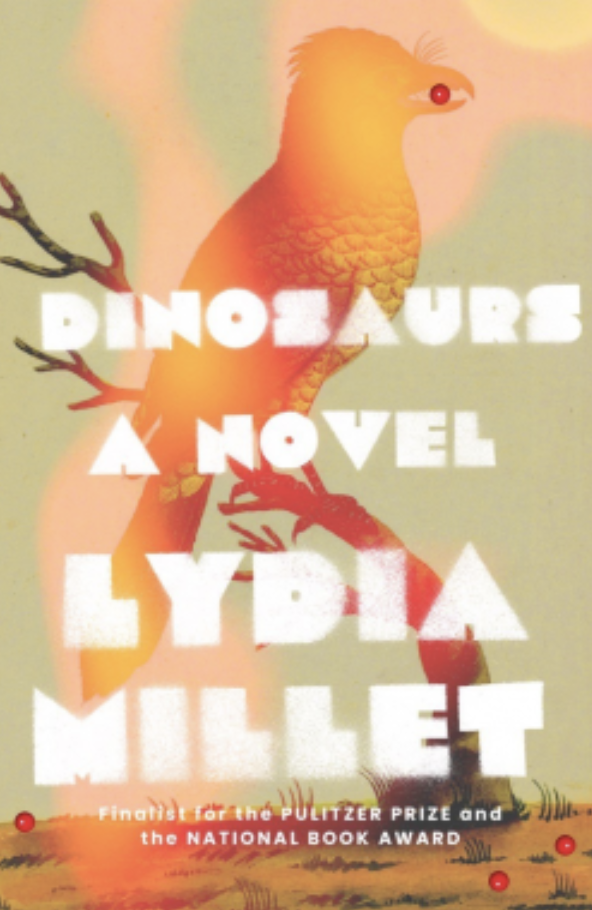
Dinosaurs by Lydia Millet (Literary Fiction)

Writing: 5/5 Plot: 4/5 Characters: 5/5

Deceptively simple, deeply beautiful story about a man who learns to open himself up to the world of human connection. Gorgeous writing detailing nature, thoughts, and a continuum of effort to fight for and take care of other people, but never himself. Takes place in the Phoenix desert, where one neighbor lives in a “castle” overlooking another neighbor whose home is built entirely of glass.

This is the first book I’ve read by Millet, and I’m definitely going to seek out the others to see if they all have this iridescent writing. The story was slow paced (which is not usually my thing) but I couldn’t stop reading. Humor, kindness, friendship, confusion, love, and moments of great poignancy — the book had it all.

Thank you to W. W. Norton & Company and Net Galley for providing an advance copy of this book in exchange for my honest review. The book was published on October 10th, 2022.

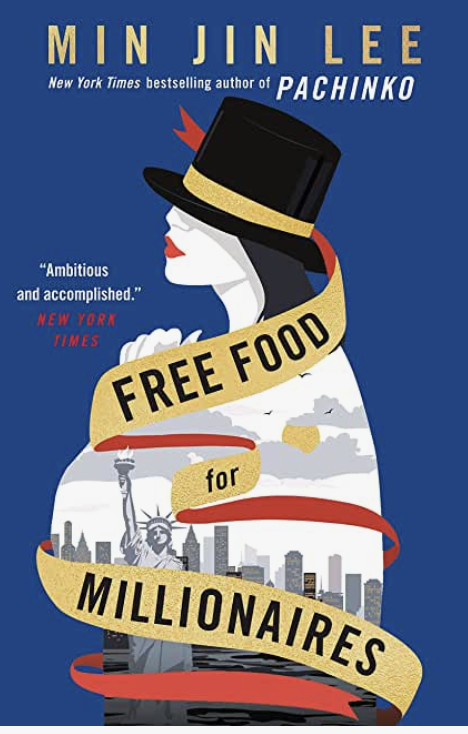
Free Food for Millionaires by Min Jin Lee (Literary fiction / Audio book)

Writing: 5/5 Characters: 5/5 Plot: 4/5

Casey Han — the daughter of Korean immigrants in Queens — craves a wealthy lifestyle she cannot afford, having been exposed to such while on a scholarship to Princeton. She craves “beauty and the illusion of a better life.” Casey balances pride, deeply embedded family traditions, and her emerging sense of self as she struggles to grow up and be the person she is slowly determining that she wants to be. While we follow Casey from graduation through the next five (or so) years, we are also treated to the developing stories of women who are important to her: her mother, a mentor, an acquaintance who rescues her and turns into a close friend. Rather than following a narrative arc, this book seems to follow a Life Arc — twisting and turning with sometimes rapid and surprising (to us and to Casey) shifts. The first novel by the author of Pachinko, you’ll recognize the style and treatment, while this book focuses on a Korean-American family and Pachinko is focused on 20th century Korea.

Although only covering a few years, this book felt epic because of its size and incredible depth. The characters are far too detailed and deeply introspective to even hint at stereotypes. Psychological analysis, philosophical musings, and cultural context (somehow never the same for any two people) help move the inner story along while the external story is utterly unpredictable.

The prose is beautiful, detailed, and rich. I love the way the author repeatedly and seamlessly contrasts the inner deliberations of each character with how his or her behavior appears to others. We are led through the minutiae of multiple lives that rarely go in the expected direction, but make do with the many, realistic tangents that comprise a life (regardless of any planning!). I appreciated the many domains that were brought to life by Casey’s experiences: investment banking and trading, millinery and fashion, church and faith, weddings, antiquarian books, and probably several others that I can no longer remember.

There were so many good quotes, but I listened to most of it as an audio book while driving and couldn’t write down a single one. 😦

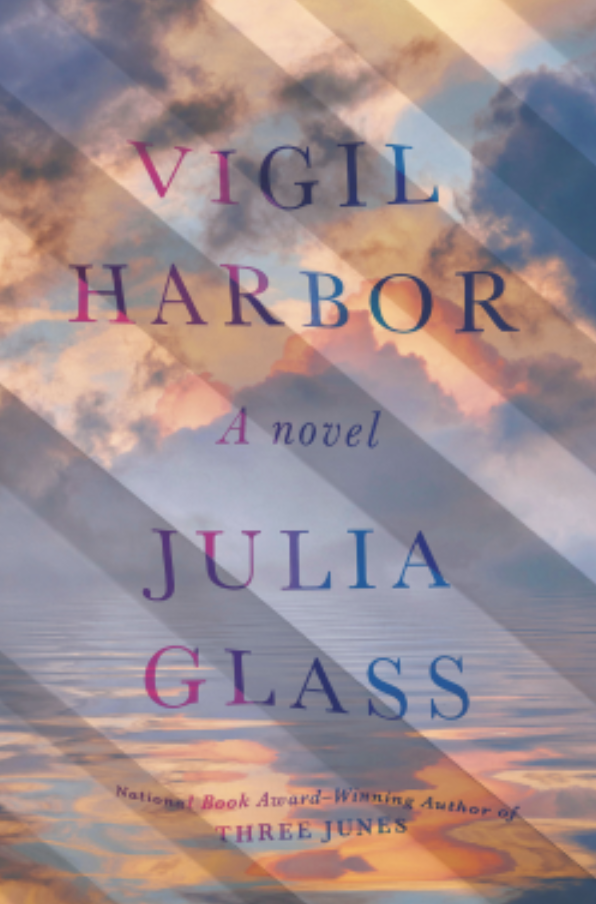
Vigil Harbor by Julia Glass (Literary Fiction)

Writing: 5/5 Plot: 4/5 Characters: 5/5

Vigil Harbor — an historic town on the Atlantic Seaboard — is a kind of safe harbor for many of its residents. It feels protected from the ever increasing calamities of the broader world — rising oceans, increased acts of terrorism, epidemics. When a spate of divorces and a couple of strangers arrive —each with a hidden agenda — suddenly the problems of the world seem to hit a little closer to home.

Only ten years into the future, many of the characters are understandably living in a constant state of fear, anxiety, and despair. In the world (too well) portrayed by the author, Survival Studies has become a college major, climate change has diminished songbirds and summer fruit almost to extinction, coastal towns have been triaged into oblivion, various groups are hunkering down in survivalist bunkers, and eco-terrorism is on the rise with frequent and deadly bombings. One character suggests that humankind is busy “unbuilding the ark.” Other characters are stubbornly optimistic or simply moving on with their lives, adapting to a constantly changing reality as we humans have been doing for millennia.

A set of deeply drawn characters — a despairing biologist who believes he works in “marine hospice”; a retired English high school teacher bent on revenge; an optimistic architect who considers himself “an architect for the future, not the apocalypse”; a college drop out back home after a narrow escape; a brilliant landscaper still terrified of possible deportation after 40 years in the country; and others — all wind around each other while living, reflecting, worrying, and hoping. They are having children and consciously considering what it means to parent in a rapidly deteriorating landscape. They are creating art, appreciating beauty, and finding people and places to love. They are finding ways to define and follow their passions to try to make the world a better place (for some definition of better and some definition of place).

Julia Glass is one of my favorite writers — as in the actual use of words to describe, set a mood, bring to life. Her vocabulary is both large and up-to-date (it’s possible that she made up several of the more modern slang words). She creates these amazing turns of phrase — the words literally turning / tumbling around in the phrase — and so many of her sentences are gorgeous little nuggets that I grew tired of underlining. She does a pretty interesting job of describing nature, pieces of art, and different architectures. I say “interesting” because I typically don’t enjoy descriptions — I don’t visualize from words well — but her descriptions touch on more than just the visual, and I find myself reading slowly, rapt. Her depiction of technology evolution and the resulting shifts in human behavior over the next ten years was seamlessly and utterly believably done.

I valued the personal reflections, discussions, and general interactions between characters — each with sometimes wildly different perceptions of reality — what was happening, what was important, what could be done, who to blame. I appreciated the sometimes subtle differences between generations, culminating in a last few pages describing the thought processes of a young (middle school age) boy whose worldview had obviously been molded by the events of his short life.

Overall, a book that made me think, made me understand other people a little better, and gave me a set of characters that I would enjoy knowing better. I did stick to reading during the day because I am easily anxietified (my word) and wanted to be able to sleep.

Some good quotes:
“The slivers of grief in your flesh dissolve or work their way out. One day they’re gone, even if they leave you with tiny, whisper-thin scars.”

“Celestino is not a man who thinks that thorough knowledge of a person’s history, much less his or her emotional “journey,” equates with greater trust or deeper love.”

“The art she made was the obsession reaching for a language.”

“Did all intelligent, creative people need to be tangled up in thickets of neurosis, their psyches riddled with the stigmata of previous heartache?”

“She was living on less than a shoestring; she was living on a filament of fishing line.”

“I am a living redundancy. I realize: the wife not so much replaced as deleted, just as I might take my green pen … and blithely score through a student’s unnecessary adverb when the verb can stand on its philandering own.”

“Time will tell,” said Margo. “As it alway does, the fucker.”

“Is this the beginning of old age, this irrepressible pull of futility? My own father lapsed into a storm cloud of silence once he retired.”

“But that was one of my worst faults: fretting over past choices when they have been chiseled into history.”

“His step father refers to his generation as Generation F: failure, fuckup, fatalist; take your pick.”

This book will be published on May 3, 2022. Many thanks to the author for giving me an early reader copy

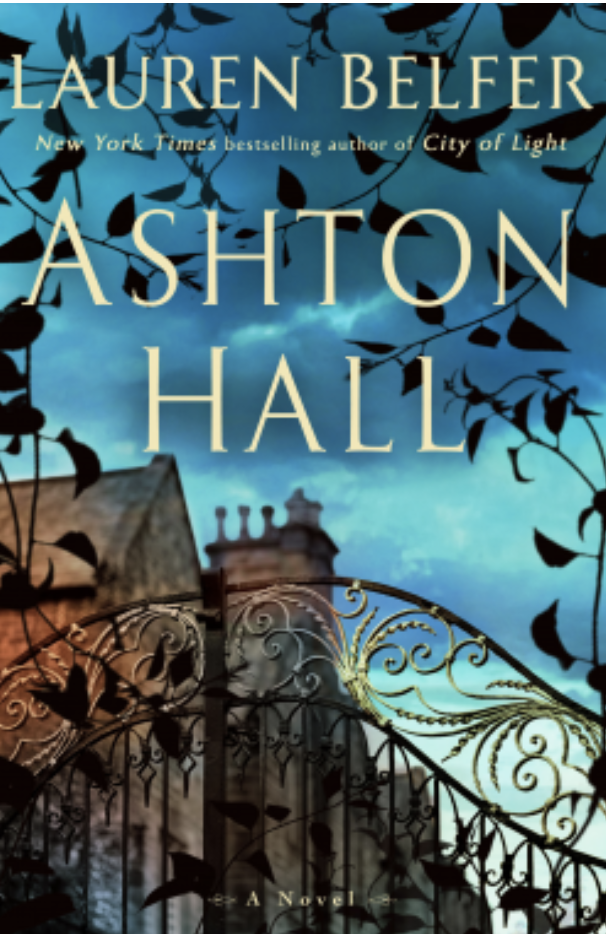
Ashton Hall by Lauren Belfer (Literary and Historical Fiction)

Writing: 4/5 Characters: 5/5 Plot: 5/5

A fabulous book full of all the literary things that I love.

Hannah Larson and her neurodiverse son, Nicky, move to a historic manor house outside of Cambridge to care for a beloved, elderly relative. Hannah uses the opportunity to take up her abandoned dissertation while simultaneously escaping a recent and devastating betrayal. While there, Nicky, through his “oddities” discovers a skeleton (dated ~late 1850s) in a bricked up room.

It’s a rich, multi-layered novel delving into both the mystery of the female skeleton, the historical context of her life, and the historical research process by which Hannah uncovers the story. In the current day story, Hannah faces a pretty major problem in her marriage and some real difficulties in raising her son who appears to be on the autism spectrum though is never officially labeled as such. He is finding a place — and friends and interests — in the new world he inhabits while continuing to have “incidents” that she is not able to control. In the past, our skeleton inhabits a world rife with religious conflict, plague, and famine. A strong theme running through both time frames is the choices women have made and the options they were given over the centuries. Interesting parallels and the author never slips into anti-man territory (thank you — so sick of that).

The author does a brilliant job at bringing to life both the world of the1800s for our bricked in skeleton and the current world of an American on leave from her “real” life in a place that opens her eyes to new possibilities. While each of these “worlds” is a context, it is a context experienced by people with different wants, desires, personalities, and situations. I love a book filled with individuals who not only don’t fall into the stereotypes of their culture, but actively question their decisions and roles!

Great for fans of Julia Kelly and Carol Goodman.

Quotes:

“The talents possessed by women had been overlooked, denigrated, dismissed, and suppressed for centuries. The diseases they might have cured. The technological advanced they might have made, the cruelties righted, works of art created, buildings designed — all denied. The tragedy and failure of it affected not only individuals but communities and societies. The women who’d found meaning by devoting themselves to their families had also been silenced by history, erased, the importance of their household labor unrecognized.”

“Even as I said this, I knew that one of the biggest roadblocks to understanding history was the false notion that the individuals of the past were more or less like us, thought like us, and would only do things we would do. I realized that I’d been thinking about Isabella this way all along. I had to stop seeing her through the filter of myself.”

“Her reign is referred to as theGolden Age, but it was a flowering of culture against a backdrop of religious suppression, torture, disease, and waves of starvation.”

“The first year of nothing, 1593, was the year when Catholics were required to have a license to travel more than five miles from their homes. It was also the year when a bill was introduced in Parliament calling for the removal of children from Catholic families, so they could be raised in Protestant homes. The bill was withdrawn, but the point had been made, brutally.”

“Such energy expended, to arrive at this restrained intimacy.”

“Four hundred years from now, was this how Anne Frank’s attic would be viewed? After enough time had passed and the trauma had faded, would the attic evolve into something fun for kids to see because it was gruesome in a shivery, Halloween sort of way, the horrifying truth rewritten to make the site more visitor-friendly? I prayed we’d never reach a day when kids could tour Anne Frank’s hiding place and after ward receive smiley-face stickers for their shirts”

“Bringing starvation and war into this discussion was like saying is was okay to cheat on an exam because the exam was insignificant compared to the atomic bomb. Individuals as well as societies needed moral standards.”

“Ah, yes, 1545 to 1610. Years of traumatic religious upheaval, played out against crop failures, famine, smallpox, sweating sickness, plague. Also, a flowering of culture, of poetry, music, and drama.”

“I wished I could view the world as Christopher did , a place where the most mundane errands were part of an adventure story.”

Thank you to Ballantine Books and NetGalley for providing an advance copy of this book in exchange for my honest review. The book will be published on June 7th, 2022.
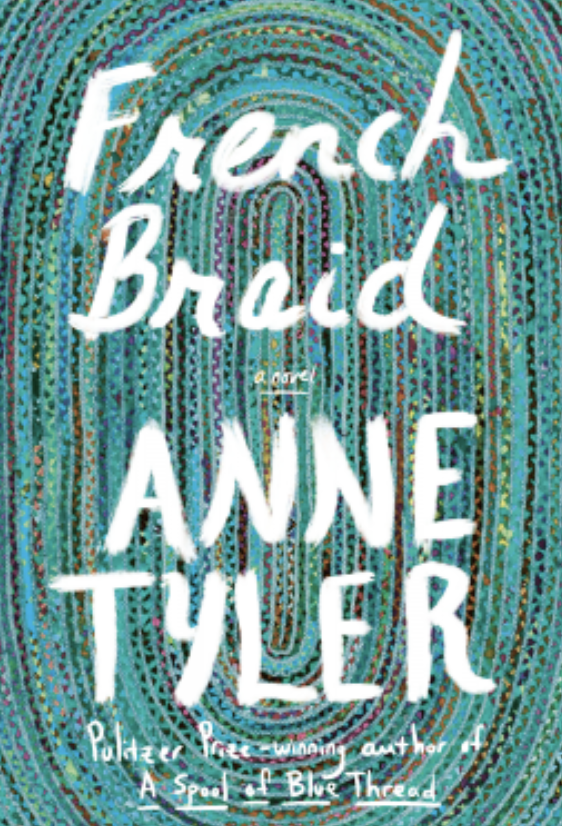
French Braid by Anne Tyler (Literary Fiction)

Writing: 4.5/5 Characters: 4/5 Plot: 3/5

A classic Anne Tyler novel following the lives of a Baltimore family through generations from 1959 to the present (including the Covid lockdown). Blending family dynamics with individual personalities in the context of the times, it is a study in the ways that families simultaneously work and don’t work.

Naturally well-written (Pulitzer prize winning author!) with a set of characters drawn in depth and with a high degree of verisimilitude. The characters were not always likable — in fact, I was struck by how few of these people I would actually enjoy spending time with. Not that there was anything terrible about them, but their very realness reminded me of the difference between live people with their selfishness, tiny cruelties, and obliviousness to the interests of others, and my favorite book characters who seem to always have their best foot forward even when making mistakes. This may be more of a commentary on why I don’t have more friends than anything else!

Thank you to Knopf Doubleday Publishing Group and NetGalley for providing an advance copy of this book in exchange for my honest review. The book will be published on March 22nd, 2022.