Wreck by Catherine Newman (Literary Fiction)

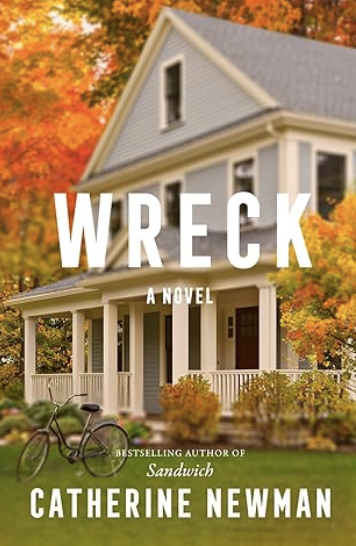
If you liked Newman’s Sandwich (I loved it), you’ll like Wreck as well. The same intense (and ultra neurotic) narrator Rocky, her amiable (but richly written) husband Nick, son Jamie (now a New York City based management consultant who sheepishly admits he likes making money), and daughter Willa (vegetarian lesbian with heavy duty anxiety issues) — with the new addition of Rocky’s 92-year old father, cohabiting in the wake of his wife’s death the year before.

As with Sandwich, this book is deftly written and laugh-out-loud funny. Some of my favorite scenes include an array of bizarre cat behavior, taking her elderly father to a juice bar for his confusing introduction to “superfoods,” the kind of items being “gifted” on Buy Nothing, and joking with the phlebotomist while waiting for potentially terrifying results. Her incisive (and insightful) wit is applied equally to social commentary, family interactions, and her own “doomsday imagination” inner spiraling. Kind of a recombinant mix of Anne Lamott and Nora Ephron.

The “plot” comprises two ongoing storylines wending their way through family scenes and discussions. Story line one weaves through Rocky’s enigmatic health condition — beginning as an innocent looking rash or two and developing into a confusing set of interrelated symptoms. Rocky navigates the utterly irrational medical system “aided” by her overactive imagination and internal doom scrolling. At the same time, an accidental train collision has claimed the life of a young man known tangentially to Rocky’s family. Rocky and her equally obsessive daughter can’t help but be tormented by the event when it appears that corporate malfeasance may have played a role. Worse still, it may be Jamie’s consulting company that did the risk assessment number crunching which could be blamed. This ethical dilemma interested me as Rocky was happy to lay the blame at the door of a faceless corporate entity, stereotypically blind to all but pure greedy profit, but when her affable and highly moral son was involved, she was willing to look further into the situation and admit to some nuance in blame and understanding.

Loved the dialog, the thickness of familial feeling, the ethical questions, and the exposed hilarity of the human condition. Newman is one of those writers who always finds the exact phrase needed to describe a hopelessly complicated set of feelings, intentions or reactions. There are only a few writers who can do that, and I love them.

Thank you to Harper and NetGalley for providing an advance copy of this book in exchange for my honest review. The book will be published on October 28th, 2025.

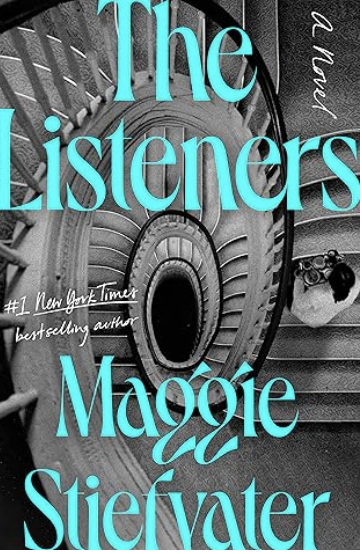
The Listeners by Maggie Stiefvater (Literary Historical Fiction)

Writing: 5/5 Characters: 5/5 Pure story: 5+/5

I loved this book — the exquisite and content rich writing, the elaborate storytelling with deep and resonant themes, the faint whisper of otherworldliness. I probably won’t do it justice in this review, but I will try.

It’s just after Pearl Harbor and the world is falling apart — recklessly, rapidly, relentlessly. The Avallon Hotel — known for Extreme Luxury — has been offered to the State Department as a holding area for hundreds of foreign Axis diplomats until they can be exchanged for similarly trapped Americans in Axis countries. The hotel is held together through sheer force of will by the new manager — June Hudson — a local mountain girl with an untamed native twang, who possesses an innate talent for “listening” to the mountain sweetwater — the mineral springs that give the Avallon its luxury reputation. But the new residents bring with them foul sentiment, angry expressions, and bitter fear and stimulate the same in others. And it threatens to turn the sweetwater into something much darker. You can read it as metaphor or as a hint of fantasy. I chose both.

The many and varied characters — from diplomats to families to hotel staff to FBI and State Department agents — were deep, real, unusual, and individual. Despite a large cast of characters, I never mixed anyone up — they were each unique. And each struggled with their own challenges — the complexities of justice, deeply held principles challenged by the realities of a world at war, threatened loyalties, the definition of bravery, the scale of protection, and the pull of love. The story wound itself into knots while the broader plot moved inexorably forward. There was no filler. I never had a moment to contemplate whether or not I might be bored. I really loved the “character” of the sweetwater, a powerful metaphor but also reified in a compelling and illuminating way. The resolution was complex, perfect, and satisfying. The (short) authors note at the end brought out some of the more dramatic events that were based on reality. The diplomat housing and eventual swap was real, as were some of the (ridiculous) tantrums, pressures, and demands of individuals.

Highly, highly, recommended.

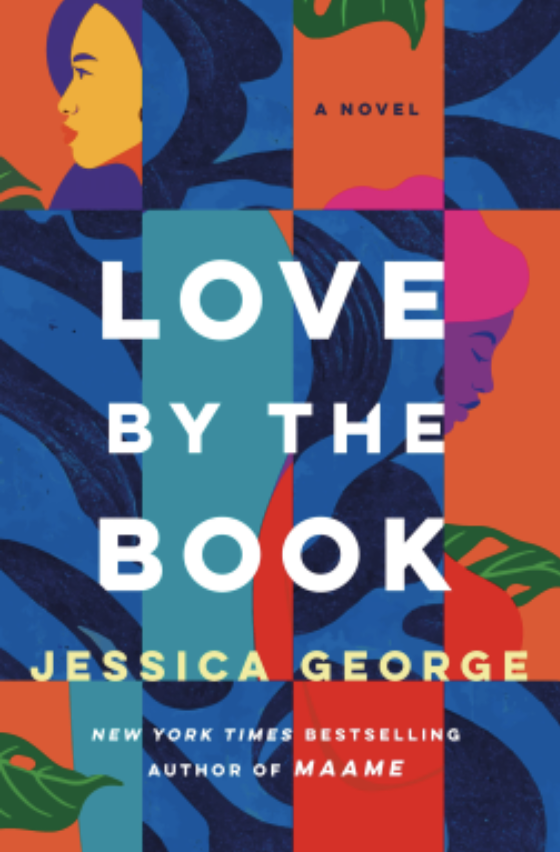
Love by the Book by Jessica George (Literary Fiction)

Writing: 5+/5 Characters: 5+/5 Story: 5

Remy is a writer struggling to produce a second book at the same time as her ten-year, very close, friendship circle is dispersing leaving her jonesing for a new friend. For her, the love she has for her close female friends is far more important than the promise of sexual relationships with men. Simone is an introvert who loves her job as a Year 1 teacher, but also loves the lifestyle provided by her second, and rather secret, job. When the two meet in a kind of platonic “meet cute,” it’s not at all clear that a friendship could be the result, but it does in fact pave the way for an incredibly rich book about female friendship. The best descriptions come straight from the book itself: “Great food, the complexities of female friendship, and the romantic nature of platonic love” and “adult friendship, and the beauty, intimacy, and unappreciated joy of platonic love are explored through the lens of the moral ethics of storytelling.”

I love that the book fully delves into so many issues of importance to women. Real issues such as whether or not have to children; how to tease apart your own moral compass from the judgment of your community; how to define selfishness and is it necessarily a bad thing; and how to manage (which is actually required) a tight friendship group. The idea of platonic love applied to friendship without attraction was a real eye-opener for me. Something I think I’ve always longer for, but honestly could never have even described. These characters are beyond rich — they are so much more interesting and complicated than the typical stereotypes and behavior groupings we get daily from fiction and the beastly news. I found the discussions of life philosophies to be penetratingly insightful (as did the characters themselves). I was able to dive into so many topics that I simply hadn’t spent much time exploring. One of my favorite lines is when one character is exposed to another’s viewpoint and says: “I’ve never really seen life that way. The idea of taking from it as opposed to merely accepting what you receive.” Think about that from the perspective of typical expectations of women!

Jessica George is a startlingly beautiful writer. A large vocabulary precisely placed into perfectly crafted phrases depicting the intricacies of human interaction and self-reflection. I enjoyed the meta-fiction circularity detailing the intricacies of Remy’s writing process while struggling to write the very book that I believe we end up reading. Masterfully done, engaging, and surprisingly unconfusing! I loved her first book — Maame — just as much (see my review here).

Thank you to St. Martin’s Press and NetGalley for providing an advance copy of this book in exchange for my honest review. The book will be published on April 7th, 2026.

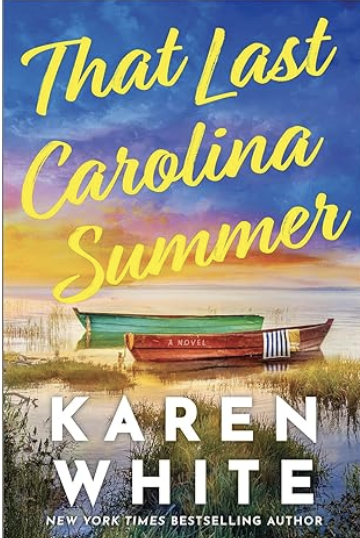
That Last Carolina Summer by Karen White (Literary Fiction)

Phoebe Manigault is called home to the South Carolina Low Country when her none-too-stable sister says she can’t handle their aging mother on her own. Phoebe has moved as far away as she can (Bend, Oregon) and is none too thrilled to be drawn back to a place that holds quite a few bad memories for her, including the fact that she barely survived being struck by lightning 20 years earlier, and has “enjoyed” strange premonitions ever since. What follows is a story of finding love, dealing with your demons, charting the narrows of dementia, and the Power of Place. And discovering the dark secret that underlies most of the pain of the last decades.

What could have been a simple (and pleasant) piece of women’s fiction quickly reveals itself to be a wonderfully insightful piece of literary fiction. The characters are deeply drawn with realistic confusions, longings, protections and vulnerabilities. They make mistakes, lose their way (and sometimes their cool), and general act like people, but they also push through bad habits, fears, and habitual suspicions and make their way forward — which is critical for me. The story was dramatic without going overboard into melodrama — I was gripped from page one yet never felt manipulated, never cringed from ridiculous coincidences, and could find myself relating to situations that were alien to me. The writing was so good that I even enjoyed the descriptions of the place (which I usually skip over, not being a great visualizer). She brought it to life for me by describing the place through the narrator’s eyes (and other senses and emotions). I should add that while the book dives deep into topics that can be very painful, I found it uplifting overall as intentional resolution led to closure. Lastly, lots of fascinating bits about birds — I’m no twitcher (love the word!), but I loved the bird facts peppered about and the ornithological epigraphs at the beginning of each chapter that often related bird behavior to aspects of people — all spot on.

I’m a big fan of Karen White’s Charleston-based Tradd Street series (and her newer New Orleans-based Royal Street series), but for me this book is in a class of its own.

Thank you to Park Row and NetGalley for providing an advance copy of this book in exchange for my honest review. The book was published on July 22nd, 2025.

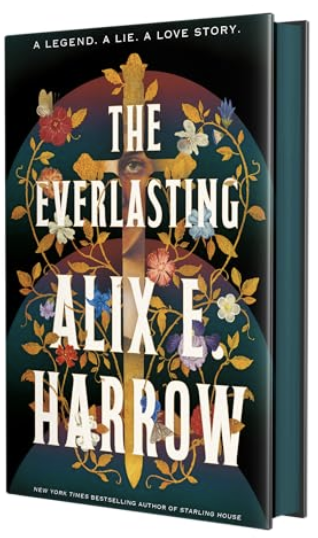
The Everlasting by Alix E. Harrow (speculative fiction)

An Academic, a Hero, and a Wicked, Wicked, Queen who must be overcome — tumbled about via a magical book and a unique and somewhat poetic instantiation of time travel. Nobody can write like Alix E. Harrow and (most of) her characters are compellingly relatable as they come to terms with the barrenness and often hopelessness of their lives when closely examined. There is an insistent love story, which is both sweet and determined in the face of some pretty intense road blocks, and there is a very satisfying conclusion (thank goodness). The characters have real depth, and there is plenty of the reflection that I like. There is also plenty of action (the Hero is a fighter par excellence — demonstrated frequently lest we forget it!) and some nice twisty gender bending as your unconscious biases are challenged by the fact that the Academic is a man and the Hero a very strong and very believable woman. The story was well-paced with twists and explanations doled out to a curious and hungry reader brain.

I’m a long time fan of Harrow and have read (and mostly loved) everything she has written. This book is just as well-written as my favorites but I do have a few issues which make it not one of my favorites. It starts quite slowly — I almost gave up but read a few reviews which insisted that I get to the 35% mark before stopping and they were right — things got much more interesting at that point. My real complaint, however, is how bad the “bad guy” was — no complexity, just complete selfish evil — and how depressing and dystopic lives were across all of time. It’s a familiar and somewhat comforting (assuming a good ending) trope about the High Stakes, good vs evil, outcome, but I didn’t enjoy all the sadness, weariness, and hopelessness that comprised most of the pages. It may be that my tastes and needs are changing, but I prefer to read about people having the agency to improve their own lives, rather than the no-other-option need for rescue from the larger-than-life oppressor. Still — masterfully done by Ms. Harrow, as always.

Thank you to Tor Books and NetGalley for providing an advance copy of this book in exchange for my honest review. The book will be published on October 28th, 2025.

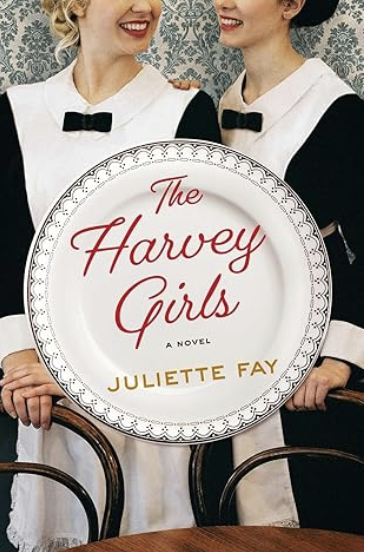
The Harvey Girls by Juliette Fay (Historical Fiction)

A warm story of duty, love, friendship, family, and survival set in the 1920s along the Santa Fe Railway lines in the chain of Fred Harvey restaurants. You may have seen the Judy Garland movie by the same name, but if you haven’t, the Harvey restaurants employed young, single, women — paid them good wages (especially for women at that time), held them to high standards of conduct, and offered passengers on the railway a clean, efficient, high quality and safe place to stop for refreshments on what were often very long train journeys.

Charlotte grew up in Boston with wealth and opportunity, but for her the job at Harvey house offered a place of safety where she could hide from a very big mistake; Billie is the eldest of nine, who sets off for the Harvey house at 15 — her six foot tall frame lending credibility to the fiction that she meets the minimum age requirement — to help earn desperately needed money for the family during the slightly less “Great” depression of 1926. With straightforward prose we follow these two dissimilar but each fiercely loyal and tough women, as they interact with an array of engaging, intelligent, and highly ethical characters — taking care of each other in what can only be described as tough times. Sometimes it’s hard to remember what the world was like before social safety nets, penicillin, and women’s rights. There are plenty of historical references that bring the story to life, and quite a bit about how the Harvey houses were run (which I found fascinating). Also, many beautiful descriptions of scenery and quite a bit about Native Americans, with individual characters depicting their status in the area, their way of supporting themselves, and their (quite understandable) attitudes towards tourists.

As an aside, the El Tovar Hotel featured in this story (the Harvey house near the Grand Canyon) is one of only two of the original 84 Harvey houses still in operation today. An easy and compelling read.

Thank you to Gallery Books and NetGalley for providing an advance copy of this book in exchange for my honest review. The book will be published on August 12th, 2025.

The Eights by Joanna Miller (Historical Fiction)

Historical fiction at its best! Four women are part of the historic 1920 matriculation of women to Oxford — the first in over 1,000 years. Roomed together in “corridor eight,” this is the story of their first year, with several flashbacks to flesh out their personal context. Beatrice Sparks — almost 6 feet tall, daughter of a famous (and vigorous!) suffragette, with an appetite for politics; Marianne Gray — the motherless daughter of an English vicar; Dora Greenwood — beautiful and still grieving for the brother and fiancee who died in the war; and Ottoline Wallace-Kerr — wealthy and at odds with her family’s expectations, who keeps herself calm with mathematics. There are some secrets and some surprises — all quite realistic and perfectly embedded in the well-drawn context of the time. And for the girls, a discovery of unexpected, but deeply felt, friendship.

I say this is historical fiction at its best because it finds the right balance between the extremes of dull, historic, facts and overly sensationalized (and manipulatively emotional) story telling with a minimum of historic accuracy. There are no modern sensibilities sneaking in — but plenty of individual reactions and experiences nestled in the very real context of the day. The country had just emerged from WWI, (some) women had just gotten the vote, and now — Oxford was open to women who wanted to pursue a more intellectual path through life. I loved the many small details that peppered the prose: a new mystery author — Agatha Christie — who was set the challenge to write a novel where it was impossible to guess who did it — and succeeded; the introduction of ouija boards; stories of the Bodlein library and how the rare books were protected during the war; the second wave of influenza; the origin of Chequers (home to Britain’s prime ministers); practice trenches in the countryside; suffragette pennies, etc. A pretty interesting Oxford-style debate on whether or not women should be at Oxford at all. I loved the bits of discussions on various studied subjects. The secondary impact of the war on various people after the war was over was equally interesting — more personal, individualized, and detailed. Philosophical and ethical issues pervaded the experiences because how could they not?

I like historical fiction because, when done well, you learn about what history might have meant to the people who lived through it. The author’s note delineates fact from fiction as well as describes inspirations — with a nice bibliography on relevant sources. Also — there is a glossary at the end that I really wish I had known about before I finished! Plenty of period specific slang was used that I had to constantly look up or guess at. Now you know!

Thank you to G. P. Putnam’s Sons and NetGalley for providing an advance copy of this book in exchange for my honest review. The book will be published on April 15th, 2025.

The Last Word by Elly Griffiths (Mystery)

Writing: 4.5/5 Characters: 5/5 Plot: 4.5/5

A fledgling detective agency is asked to investigate the (to all appearances natural) death of a client’s mother. The client is even so kind as to provide the name of the murderer — the mother’s second husband who has inherited the lot! Another client is worried about a similar situation, and oddly enough, the obituaries of both were written by a man who predeceased each of them! Natalka — a beautiful and blunt Ukranian careworker; her partner Benedict — a philosophical ex-monk who now runs a coffee shop; and Edwin — an erudite and genteel former BBC producer of advanced age all tackle the case which quickly heads off into surprising territories. At the center of the proliferating coincidences is a writers retreat and a book club run by one of the retreat’s instructors.

I always love Griffiths’ characters. They are interesting in the way real people are interesting — not just superficial quirks but different ways of thinking, different things that give them pleasure, different ways of tackling problems. While some characters get the diversity treatment (the DI with a small role in this book is a lesbian Sikh), they get to be individuals within that identity classification and do not pretend to represent the whole or spend much time letting their identity inform the important parts of their lives. Her characters are completely believable, and I would be very happy to spend time with most of them. I also love Griffiths’ writing which has been consistently good throughout all of her many (many) books. Although I would classify her mysteries as cozies, there is never any dull filler. In this book, what “fills” the pages are questions of spirituality and ethics, literary references ranging from Shakespeare to Christie to Richard Osman, (good) writerly advice, operatic clues, and feathered barbs relating English experiences to those of a Ukranian.

I read a lot of mysteries — they are my comfort reads — but most mysteries are nothing special. Some nice closure at the end, a few historical tidbits, an engaging character. I find Griffiths’ mysteries a cut (or two) above. She is in my top three along with Louise Penny and JK Rowling (as Robert Galbraith) — satisfying at every level. I’m so happy with her prolificity!

Thank you to Mariner Books and NetGalley for providing an advance copy of this book in exchange for my honest review. The book will be published on April 23rd, 2024.

Two Can Keep a Secret by Karen McManus (YA)

I received a complimentary copy of this book from Random House Children’s through NetGalley. Opinions expressed in this review are completely my own. The book will be published on Jan. 8, 2019 — in 2 days!
Writing: 4.5/5 Plot: 5/5 Characters: 4.5/5

Karen McManus is the Liane Moriarity of the YA set, writing gripping thrillers with characters that draw you in immediately and hold you fast.

California twins Ellery and Ezra Corcoran find themselves in Echo Ridge, Vermont, living with a grandmother they barely know while their single mother Sadie dries out in rehab. Echo Ridge has a haunted past — it was the place Sadie’s twin Sarah disappeared 20 years ago and more recently the place that 17-year old prom queen, Lacey Kilduff, was killed in the aptly named Murderland theme park. And the haunting doesn’t seem to be restricted to the past…

Populated with well fleshed out, multi-generational, townies, the story is told in alternating voices: Ellery is a True Crime fanatic and invents crazy scenarios faster than they can be discounted; Malcolm Kelly is the younger brother of Declan Kelly, Lacey’s boyfriend at the time of her death and thought by many to be responsible for the crime.

It’s a story full of suspicion and trust, new friendships and old understandings, standard teen stuff and very non-standard teen stuff, and lots of tangled and tortuous plot twists. As with her last book — One of Us is Lying — I didn’t figure it out until the very end.

2018 in Review …

2018 was a good reading year for me — 111 books in total; 86 by women authors, 25 by men; a lot of British and American based books but also a few from Korea, Ireland, China, and Rwanda.  Types:

10 non fiction
48 General fiction
17 Literary fiction
10 Fantasy and Science Fiction
8 Mystery
18 Children and Young Adult

My goal for 2019 — more non-fiction and more foreign fiction — but we’ll see what happens!

My favorites for the year …

Non Fiction:

The Art of Power by Jon Meacham — An insightful and well-written biography about one of the Founding Fathers and the author of our Declaration of Independence (Thomas Jefferson).

Killers of the flower moon by David Grann — A chilling history of the “Osage Reign of Terror” in which a large number of wealthy Indians from the Osage tribe were killed over a period of several years, possibly even decades, in the early 1900s.

The Library Book by Susan Orleans — The story (and multiple fascinating back stories) of the massive 1986 fire that brought the Los Angeles Central Library to its knees.

General Fiction:

The Almost Sisters by Joshilyn Jackson — Quintessentially southern, humorous, and impossible to put down. 38-year-old Leia Birch is a well-regarded graphic novel artist and self professed “uber-dork”. After an enjoyable comic book convention hook-up with a gorgeous black man in a come-hither Batman cowl and cape, she finds herself pregnant. Take it from there …

Chemistry by Weike Wang—A belated (she’s in her 20s) coming-of-age story about a young, Chinese-American woman in the midst of capsizing both her Chemistry PhD and long-term relationship. We view the process of life dismantling and reconstruction from within her own mind through her unique, first-person voice.

The Ensemble by Aja Gabel — A story about the Van Ness String Quartet and the individual members comprising it, both evolving from rocky beginnings to success and stability. Some very nice descriptions of music and the art of making music together.

The Last Year of the War by Susan Meissner — An historical novel that plunges you right into the WWII period period through the eyes of Elsie Sontag — a ten-year old Iowan girl whose life is utterly upended when her father is unjustly arrested as an enemy alien under Executive Order 9066 and first interned, and then repatriated to Germany.

The Lost for Words Bookshop by Stephanie Butland — Spiky Loveday Carew has worked in the Lost For Words bookshop in York (England) for 15 years. Her network of tattoos is a compendium of significant first lines from favorite novels — I was hooked right there. By the way, the first line of this book? — “A book is a match in the smoking second between strike and flame.” By turns comic, powerful, uplifting, and literary, this book about books and the people who love them made me one happy clam.

The News of the World by Paulette Giles — A Wild West story that by no means glorifies the period. Captain Jefferson Kidd — seventy two years old and making his living by reading the “news of the world” to audiences around Texas for a dime a piece — takes on a troubling task: to return a ten-year old white girl to relatives after being kidnapped by the Kiowa four years before.

Once Upon a River by Diane Setterfield —An old-fashioned Story (with a capital S!) full of richly drawn archetypal characters, a convoluted but cohesive plot, and just the hint of inexplicable mysteries.

Literary Fiction
Exit West — A brilliant, insightful, distillation of the experience of two individuals who go from a life which appears “normal” to one of upheaval, exposure to extremism, and displacement.

Kinship of Secrets by Eugenia Kim — An utterly engaging story that follows two sisters as they grow up separately due to the Korean War.

Like a mule bringing ice cream to the sun by Sarah Ladipo Manyika — Beautifully written book about Morayo Da Silva — a strong, vibrant, deliciously interesting character. Almost 75, she lives in a small, book-filled, rent-controlled apartment in San Francisco with an incredible view. A retired professor of literature, she was born in Nigeria and lived around the world before settling in San Francisco.

The Museum of Modern Love by Heather Rose — A powerful and poignant novel about the transformational impact of Marina Abramović’s The Artist is Present on those who witness it during the 75 days of performance at MOMA.

Pachinko by Min Jin Lee — A sweeping, multi-generational, saga of a Korean family spanning the Japanese occupation of Korea, WWII, and beyond.

Salvage the Bones by Jessmyn Ward — Salvage the Bones is an utterly gripping depiction of life in Bois Sauvage, Mississippi for the Batiste family during the twelve days before, during, and after Hurricane Katrina — as seen through the eyes of 15-year-old Esch.

Sing Unburied Sing by Jessmyn Ward — A powerful novel. The language is riveting and evokes a pervasive sense of physical and emotional space in a way I haven’t felt since reading Toni Morrison’s Beloved.

Small Country by Gaël Faye — A coming-of-age novel in the politically charged climate of Burundi in the 1990s.

Virgil Wander by Leif Enger — A story of the opportunity for redemption and resurrection for a fading town and the fading men within it. Perfect for fans of Kent Haruf, Ivan Doig, and Wallace Stegner.

Fantasy and Science Fiction
Irontown blues by John Varley — A nice fast-paced, action-oriented, noir-mystery in a futuristic setting from Sci-Fi master John Varley. could be subtitled: “The Case of the Leprous Dame of Irontown”

Zoo City by Lauren Beukes — A blend of African style juju, speculative fiction twists, and a hard boiled detective story. Our first person narrator is Zinzi Lelethu December — the “animalled,” ex-junkie, hard-boiled, Sam Spade style character with a hefty past just struggling to survive in a dark environment.

Words of Radiance by Brandon Sanderson — Book two of Sanderson’s Stormlight Archive series as awesome and complex as the first.  Unrivaled world building with an  overwhelming variety and depth of populating cultures  — a constant mental exercise for the reader as a continual stream of new information forces refactoring of the complex models held in reader land.

Mystery:
Bluebird, Bluebird — A remarkable and entertaining book — appealing to literary fiction and mystery lovers alike. As a whodunit, it has it all — convoluted plot, simmering tensions in the community, and plenty of motive to spread amongst an array of characters. What takes it past straight mystery and into the realm of literary fiction is the top notch writing, truly in-depth characters, and the fact that the narrative never takes the easy way out.

Young Adult:
School for Psychics by K.C. Archer — A Harry Potter-style story for millennials with a menagerie of psychic powers nurtured by a blend of science, chakras, vegan diets and computer hacking in a School for Psychics. A fun book — well paced, great plot development, cool characters, and multiple layers of mystery. Also, nothing egregiously stupid which frankly tends to pepper this kind of book.