Writing: 3.5/5 Plot: 4/5 Characters: 4.5/5
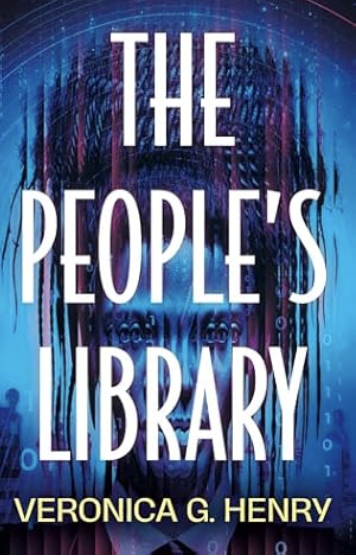
An ambitious, somewhat dystopic, but certainly thought-provoking piece of speculative fiction, The People’s Library follows Echo London, a dedicated librarian whose job, like many others, has been replaced with AI. She’s lucky, though — she has been given a position in a virtual library where people check out virtual replicas of great minds to converse with, rather than books to read. Once that would have been anathema to London, but she finds herself drawn to the “virtus” as they are called, and becomes far more involved with them than with the flesh and blood people in her community. The action becomes intense with anti-tech rebels attacking the library, invisible puppet masters trying to bring about the next evolutionary step for humanity, and virtual AI beings that appear to have the capacity to suffer. This brings up many ethical dilemmas, and I admit that it wasn’t always obvious to me what the right answers should be, or even what the author thought the right answers should be.
The book explores some of my favorite science fiction questions: the nature of consciousness, the possibility of human-AI pairing, the evolution of the human species. While I’ve read quite a few stories that dabble in these areas, I did think this one captured more of a modern sensibility. The author is known for her African American fantasy, and I liked the African and African American slant the book took in its characters, designs, and references to Black history (e.g. one of the virtual beings was Jesse Cooper, one of the first Black enlisted men who were admitted to Naval officer training in 1944). Also some great Black literary references such as Helen Oyemi’s Icarus girl. I didn’t particularly enjoy some of the plot devices used — I never like plots that depend on one super-powerful and manipulative “bad guy,” and I didn’t really grok the mechanism that allowed the good guys to get out of a bad situation, but I did think the teaser at the end was a good way to leave us thinking about the book rather than simply feeling good about closure. Trying not to give away any of the plot and still let you know what you’re in for!
Worth reading.


 Books to look forward to ...