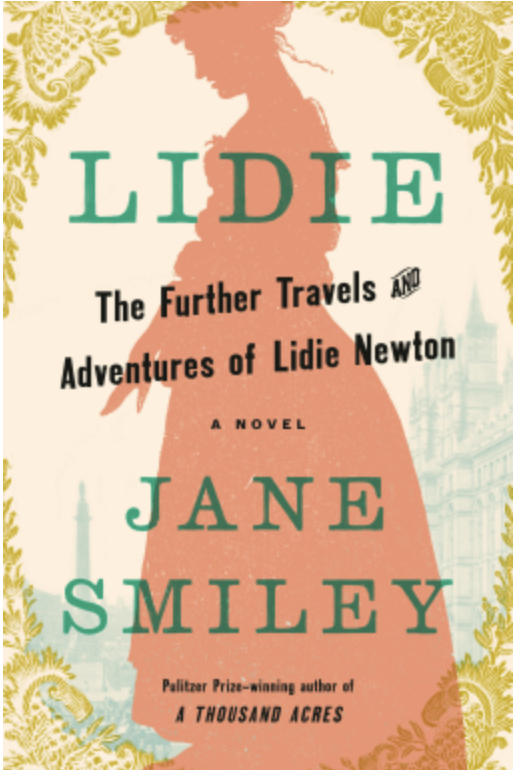
Lidie by Jane Smiley (Historical Fiction)

I love Jane Smiley’s books — they always immerse you in a place and time and unfold at a tempo that mimics the pace of life, rather than that of a novel. In this book, the titular Lidie is a young woman living in rural Illinois in the 1850s. Think Lincoln – Douglas debates, intense polarization around slavery, and rapid westward expansion in the US. She is (already) a widow, her husband having been shot in KT (Kansas Territory) for being an abolitionist. She is very tall and rather plain, and it is the general consensus that her chances of attracting another man onto which the family might offload her are bleak. However, this is the story of her life from her own viewpoint, and she is not terribly bothered by the opinions of others. Her life veers off in unexpected ways (she makes it to Liverpool!) and we go along for the thoroughly detailed ride. This is historical fiction at its best — accurate in physical, cultural, familial, and emotional description.

What interested me was her ongoing thorough observations and reflections. She is not driven towards any particular goal, nor does she worry excessively about the expectations of others, but she is extremely observant and intelligent. She is not well educated in any kind of modern sense, but she reads, sees, converses, and appears to think in a way I found quite absorbing. Through a variety of happenstances, she sees and grabs on to opportunities that lead her to veer off the typical track of a woman of her age and era. I never saw those opportunities coming, but they fit into an older, less propelled style of life. At first I found the pace of the narrative a bit slow, but when I calmed down and stopped expecting non stop action, I was able to thoroughly live a completely (to me) alien life vicariously. This book felt so real! It’s not often that a modern person can put me so thoroughly in the mind of someone from a completely different age.

Great writing, intriguing characters, and a world brought fully to life. And — I absolutely loved the (completely unexpected) ending. I will say no more about that!!

Thank you to Knopf and NetGalley for providing an advance copy of this book in exchange for my honest review. The book will be published on April 21st, 2026.

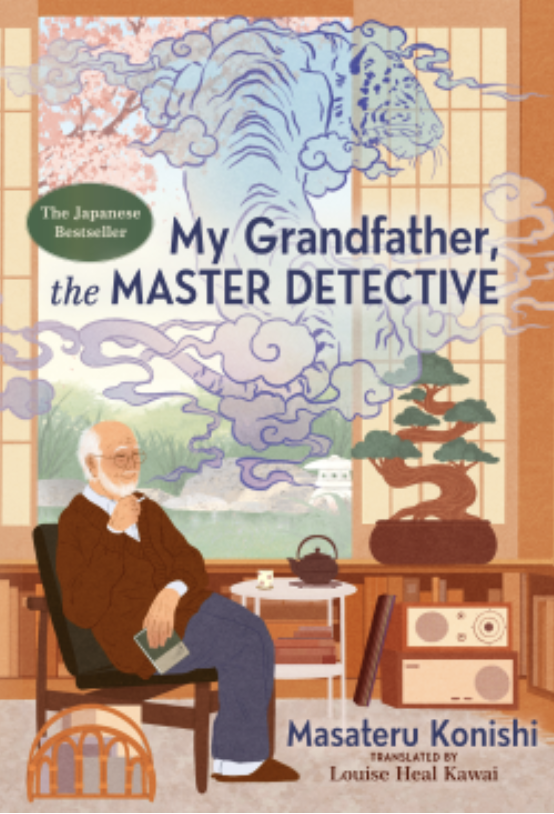
My Grandfather, the Master Detective by Masateru Konishi (Literary Mystery)

<Translated from Japanese by Louise Heal Kawai>

I loved this book — It was gentle, dispassionate, intellectually engaging, and full of human insight depicted through understated, yet beautiful prose.

Kaede is a young, somewhat reserved, woman who shares a love of mysteries and puzzles with her aging grandfather. While the grandfather is suffering from Lewy Body Dementia, he manages to maintain aspects of his intellect and personality amid the confusions and hallucinations of the disease. In fact, one of the things I enjoyed the most about the book was the way he could train his still sharp wits and experimental approach on his own internal thinking apparatus to discern reality from hallucination.

Kaede is slow to connect with others, but she begins to bond with a colleague and his friend over stories, particularly in the Mystery genre. There are four “puzzles” her companions discuss, and these she takes to her grandfather who happily solves them quickly and with a crisp elucidation of his analytic steps. And then there is the biggest — and most impactful — puzzle of all. One that affects Kaede directly.

There was so much that I loved about reading this book — the portrayal of everyday culture in Japan with the small practices of cooking, commuting, fashion, and politeinteraction; the interactions with a beloved but in many ways failing elderly relative; and the broad range of “classic” mystery stories ranging from the well-known (e.g. Agatha Christie, Ellery Queen) to those I hadn’t heard of (e.g. John Dickson Carr, Takeshi Setogawa) to more contemporary series I hadn’t thought of in ages (e.g. Harry Kemmelman). The reader becomes, along with the characters themselves, a connoisseur of the genre in the most delightful and absorbing way.

The book is an ode to storytelling, friendship, and self understanding — the writing (and translation) is detailed, deep, but never loud. I’m always so impressed with an author that can make me feel deeply without hitting me over the head with overly dramatic, world-ending crises. Most of life is filled with the personal — deeply felt, deeply meaningful, but not necessarily attention grabbing calamities.

Thank you to G. P. Putnam’s Sons and NetGalley for providing an advance copy of this book in exchange for my honest review. The book will be published on March 17th, 2026.

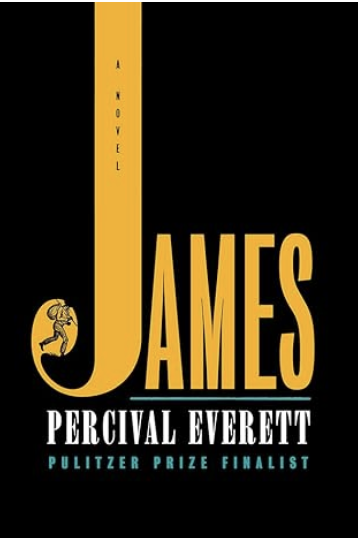
James by Perceval Everett

Writing: 5/5 Characters: 5/5 Plot: 4/5

A beautifully written reimagining of Twain’s Huckleberry Finn, told from the perspective of “Big Jim,” the slave with whom Huckleberry Finn escapes down the river. While Finn is escaping an abusive father, Jim is running from the rumor that he will be sold away from his family. This aligns with the original work. However, in this version of the story, Jim is presented as an intelligent, educated, and feeling man with a rich interior life and a strong sense of responsibility. He is the narrator of the tale and we hear the story from his perspective — drastically different than that of the Twain’s narrator Huckleberry Finn.
The key mechanism of the storytelling (for me) is the code-switching that all the slaves use when in the presence of white people — adopting an unsophisticated patois along with ignorant and superstitious behaviors. Among themselves they speak with good grammar and have a rational (if somewhat resigned) outlook. It’s fascinating what (often inaccurate) signals we receive simply by the way someone talks and behaves.

I enjoyed the writing, the deep characterization, and the (somewhat uplifting) end, although I didn’t particularly enjoy the “adventures.” Starting with the same plot lines as Huck Finn, the book expanded to include plot elements that supported Jim’s drive to free himself and his family. The story was full of realistically depicted attitudes and behaviors towards slaves. While I had read many fictionalized accounts of slavery, I thought this was one of the best for highlighting the varying attitudes of whites, as well as adding depth to the experiences of the slave himself. White characters ranged from cruel men who took pleasure in their cruelty, to those who didn’t believe in slavery but didn’t take any steps to stop it, to those who were actually kind and yet still considered Black people to be subhuman. Everett managed to convey the intense tension present in every moment for a person who is enslaved — the constant worry and lack of any kind of control, the constant tamping down of anger, the constant need for vigilance lest anyone notice anything about you that doesn’t jive with the “dumb animal” they expect. But the real stroke of mastery in the writing is how everything shifts for the reader simply by making it clear that the characters are fully recognizable as human being simply by speaking in a way that we recognize as intelligent.

While I don’t think this was the primary point of the book, it also got me thinking about when violence is justified. Without giving too much away, Jim intentionally kills two other (white) characters even though his own life was not at risk at the time. I was completely happy with his actions which left me feeling vicariously satisfied at the death of two absolutely horrible people. And yet, those people had done nothing that was illegal — instead they were cruel, violent, and behaved immorally according to my own ethical standards. Most of us today are horrified by the idea of slavery and the specific cruelty of many of those who practiced it; however, there are people today who are celebrating the murders committed by Luigi Mangione (United Healthcare CEO Brian Thompson), Tyler Robinson (Charlie Kirk), and the Hamas attack on Israel (1200 murders, rapes and 250 people kidnapped — all non combatants). In their minds, the victims were “guilty” and merited murder. The line between these situations feels clear to me, but is it?

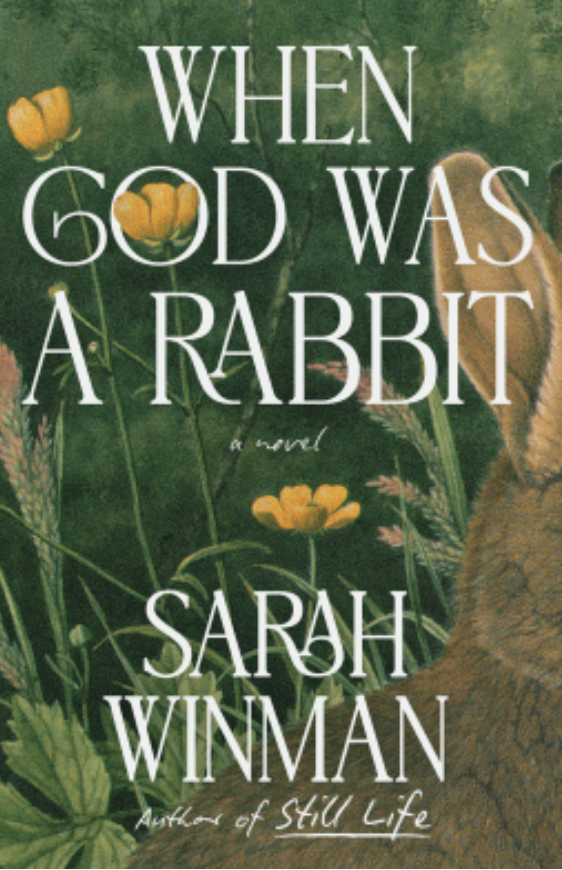
When God was a Rabbit by Sarah Winman (Literary Fiction)

Writing: 5+/5 Plot: 4/5 Characters: 5/5

Charming, deep, and full of insight. A coming of age and beyond novel with clear flows from life experiences to the development of a personality, a worldview, and a moral core.

Eleanor Maud is a bit of a loner, with an adored older brother, a best friend from the “other” side of the tracks, an odd collection of adults who provide her with myriad perspectives and experiences, and a pet rabbit she has named God. Introverted and introspective from an early age, we see her develop a sense of self and a unique brand of faith by continually modifying her worldview and her self-understanding in reaction to events both personal and societal (e.g. a suicide, a scary lump, lost memory; 9/11, the massacre at Dunblane, John Lennon getting shot).

I thoroughly enjoyed reading this, being immersed in another’s quirky and slanted, but also rational and considering, mind. Ellie was an easy character for me to “travel with” in this way. I loved the cast of supporting characters who were each unconventional in his or her own way, always through eccentricities well-supported by their outlook and exploits. This is a reprint of the book — it was originally published in 2011 and was the author’s debut. She has since written three additional books.

Some beautiful quotes:

“He had skirted the periphery of my early life like an orbiting moon, held between the alternate pull of curiosity and indifference, and probably would have remained that way, had Destiny not collided with a Tyrolean coach that tragic, pivotal afternoon.”

“He presented a colorful alternative to our mapped-out lives. And every day as I awaited his return from school, my longing became taut, became physical. I never felt complete without him. In truth I never would.”

My father had never met a lesbian before, and it was unfortunate that K. H. should be his first, because his liberal cloak was pulled away to reveal an armory of caricatured prejudice. He could never understand what Nancy saw in her, and all she ever said was that K. H. had amazing inner beauty, which my father said must be extremely hidden, since an archeological dig working round the clock would probably have found it hard to discover.

“I just want my friend back,” I said, tears burning behind my eyes. ‘I’ve become forgettable”

Do I believe in a mystery, the unexplained phenomenon that is life itself? The greater something that illuminates inconsequence in our lives; that gives us something to strive for as well as the humility to brush ourselves down and start all over again? Then yes, I do. It is the source of art, of beauty, of love, and proffers the ultimate goodness to mankind. That to me is God. That to me is life. That is what I believe in.

And she had left nature alone, opting instead to banish vanity like the meddlesome, suffocating weed it was.

His strange presence had uncovered a loneliness of such devouring longing, one that reached cruelly back into the past, and I knew I could no longer be around him.”

And he uncovered in us a curious need: that we each secretly wanted him to remember us the most. It was strange, both vital and flawed, until I realized that maybe the need to be remembered is stronger than the need to remember.

Thank you to G. P. Putnam’s Sons and NetGalley for providing an advance copy of this book in exchange for my honest review. The book will be published on February 24th, 2026.
The Heart of Everything by Marc Levy (Literary Fiction)

I loved this book — it was funny, sweet, and poignant. Always enjoyable with plenty of insight on the “big questions” and peppered with little surprises that evoke the individuality of each character, rather than serving as plot devices. I both laughed out loud and teared up frequently.

Thomas — a concert pianist in Paris — is surprised when his father (now dead for five years) appears in his apartment to beg him for one last favor — to reunite him with his long lost love in San Francisco. Not your typical ghost story, the long journey provides the vehicle for a chance for a father and son to have the kind of reconciliation one always hopes for after a death. I could not have predicted the level of insight, sweetness, and hidden delight from the plot description alone. The bantering style between the two often made me laugh out loud, but also clearly had that bittersweet feeling of two people who love each other but have never really been able to express that love directly. Teasing, at times acerbic, direct and simultaneously avoidant. What would you say to your deceased parent if you suddenly had just a few extra days with him or her? I liked being given the opportunity to think about just that. As an extra, I very much enjoyed Thomas’ musical references and his experiences as a performer. They had real depth and were not simply window dressing on a character.

I loved the writing style. Understated, lovely, and clean. The words don’t draw attention to themselves, but each one appears precisely chosen to impart exactly the meaning the author intended. I am embarrassed to admit that I had not previously heard of Marc Levy, who is apparently a bestselling French author and wrote the novel on which the movie “Just Like Heaven” was based. According to the Amazon page, “Le Figaro newspaper recently commissioned a nationwide poll asking the French to rank their favorite author: Marc Levy and Victor Hugo were #1.” I’ll certainly be investigating his backlist!

Thank you to Amazon Crossing and NetGalley for providing an advance copy of this book in exchange for my honest review. The book was published on January 1st, 2026.

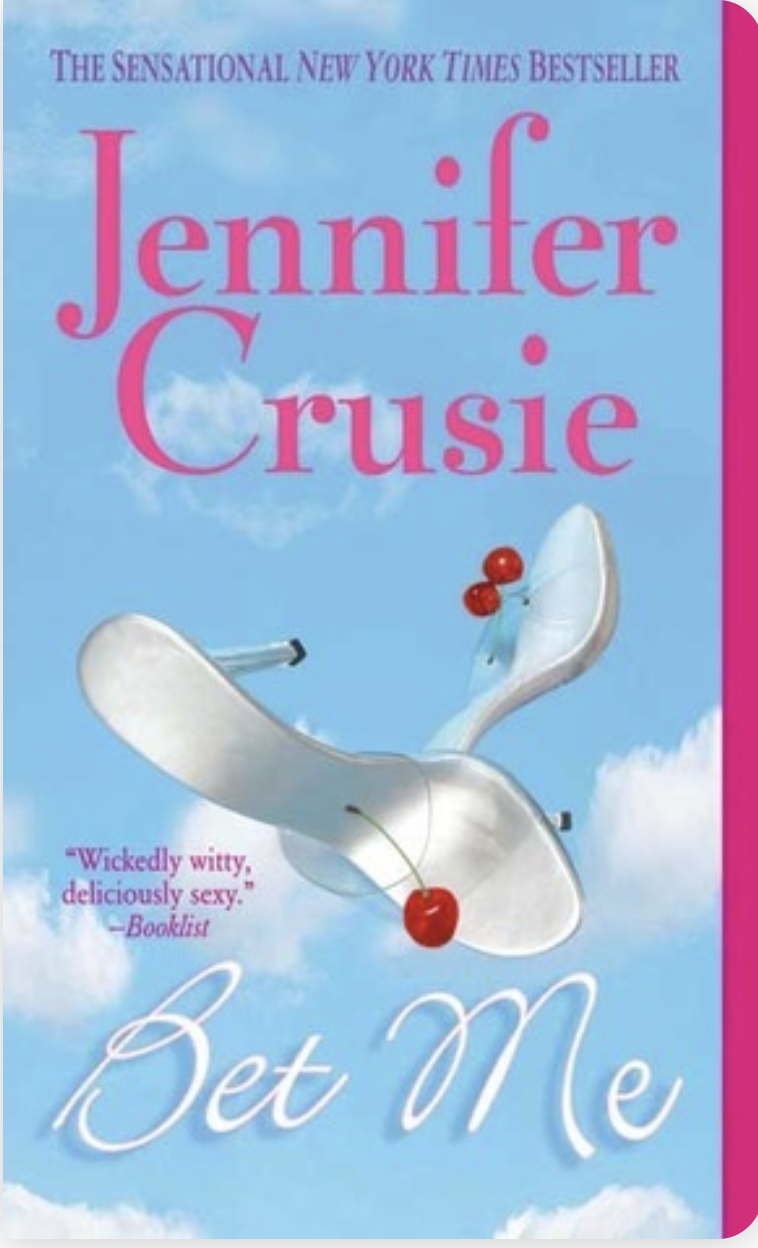
Bet Me by Jennifer Crusie (Rom-com)

This was just pure fun to read from start to finish. A romcom with a voluptuous (rather than thin) heroine, great banter, a sizzling romance, good messaging around relationships and love, and some even greater friendships that I enjoyed every bit as much as the big romance. I only read romcoms if they are very funny and if the women aren’t portrayed as disorganized idiots (think Bridget Jones) — this one had me laughing and happy throughout. A couple of funny lines that don’t give much away:

“Look mother, I am never going to be thin. I’m Norwegian. If you wanted a thin daughter, you should not have married a man whose female ancestors carried cows home from the pasture.”

“She looked like the blowsy barmaid who worked in the inn behind the castle, the one who’s trash-picked one of the princess’s castoffs.”

“…who should have been hale and welcoming but instead had the vaguely paranoid look of a sheepdog whose sheep were plotting against him.”

More than Enough by Anna Quindlen (Literary Fiction)


One of my favorite books of the year — thoughtful, relatable, and delightful, even, in an odd way, the sad parts. This is in large part due to the characters who are all good and wise people in their way, but always with more to learn. I’d like to say there was a jackass or two in the pages, but there really weren’t.

Polly is a high school English teacher at a private Manhattan school where the kids are (mostly) wealthy and privileged but also driven, smart, and with problems of their own. As an aside, I like the fact that people who are not poor, not downtrodden, and not necessarily members of a minority class are allowed to have problems and drives and desires like anyone else. Her appealingly well-adjusted husband is a big animal vet at the Bronx zoo — possibly my favorite character occupation of all time! And she is part of a perfectly balanced four member book club — unique in that its members must buy, but not actually read, the chosen book every month. At the same time, however, her beloved father is losing his mind to dementia, she is struggling with infertility, she is in a perpetually low-grade state of anger with her mother, and a “joke” DNA test gift has resulted in a surprising and uncomfortable disclosure.

The book is a “tag along” to a thoroughly examined life as it progresses, as all lives do, completely out of the control of the one who lives it. All we can do is adjust, appreciate, understand, and settle in for the ride. Beautifully written with a slew of insightful comments (and many apt literary references and quotations — she teaches advanced Literary Honors courses after all!). Full of myriad families and friend groupings, each with their own distinctive cultures and implicit behavior patterns. I loved that the story was a study in non-dysfunctional ways of handling both life’s vicissitudes and pleasures. I found myself disagreeing with Tolstoy — not all “happy families” are alike, because every family, even the happy ones, find their own way of handling all that life throws at them. And lastly, some truly fun and informative scenes with alpacas.

Some quotes both directly from the author and as referenced in the book:

I am out with lanterns looking for myself — Emily Dickinson.

Marriage. Like calculus without the answers.

There’s a kind of equipoise to our group, so that we’ll veer here and there and somehow always come back to center, and peace.

Sometimes I think the human brain is a house, and the lights only come on in mine one room at a time.

Life is a tragedy for those who feel and a comedy for those who think — Moliere

“Daddy Daddy Daddy is running through my head like a piece of music with only two notes, like Philip Glass. I hate Philip Glass.”

“I’d like to disabuse you of the notion that you are the only woman in the world who doesn’t like her mother,” my therapist had said three years before.

The thing about living in New York City is that you feel either perpetually untethered or unwaveringly embedded.

You girls need to allow me my petty grievances.

Beauty is whatever gives joy — Edna St Vincent Millay.

I’m afraid families are a funnel, and ours is running out.

Thank you to Random House and NetGalley for providing an advance copy of this book in exchange for my honest review. The book will be published on February 24th, 2026.
My friends by Fredrik Backman (Literary Fiction)

This book has been gushed over by all of my favorite readers — and I get it. It’s well-written, has characters that attach deeply to your heart, and tells a set of life stories of redemption through the powerful forces of friendship and art. I couldn’t stop reading, and I teared up fairly reliably in response to the truly heartfelt and exquisitely expressed insights, remembrances, and hopeful resolutions.

But — rather than finding it uplifting (as most others did), I was left feeling despondent. So many broken people, especially broken kids, populated these pages. I don’t believe the author ever specifies where this is taking place — what country, what city. We’re left to feel that this level of grief, brokenness, woe, and misery is the lot of most — the essential human experience as it were. I loved the uplift that came with the discussions on art, and the fierce loyalty struck between friendships forged in despair, but I felt more disturbed than inspired by the book as a whole.

Whistler by Ann Patchett (Literary Fiction)

The key to my love for all Ann Patchett novels is the depth and intricacies of her characters. There is no other writer that I know of who consistently imbues her characters with the level of introspection and thirst for personal knowledge that her characters have — or at least the ones that I relate to! Having read many of her essays, I think the secret is the profundity with which Patchett gets to know people in real life — and I mean any and all of the people she comes into contact with. Not many of us are blessed with the ability to know too many others at this level, and this wide ranging understanding of the varying types of human experience makes for characters who feel real and complex. The fact that Patchett is also an incredible storyteller, with ideal pacing and consistently enlightening disclosures, does not hurt!

So. Our deep and complex characters are launched in this story by a chance encounter between Daphne (our protagonist) and her (first and quite beloved) stepfather — the one who disappeared from her life abruptly after a traumatic car accident when she was nine (she is now 53). Through a set of discussions, connections, and events (celebrations, get-togethers, random walks), we get to unravel the very components that go into telling anyone’s personal story — the different pathways that lead to the person one becomes over time. The story (for me) was one touching moment after another, and I promise that none were of the overly schmalzified Hallmark variety. These are the moments that mark our lives, that matter, and that cause the shifts in our understanding of the world and ourselves.

I loved Daphne’s sister, the best friend and therapist; I loved her (older) husband Jonathan, who is unraveling a family mess of his own (a now deceased mother whose each element of hoarding precipitates a cornucopia of overwhelming memories); I especially loved Eddie, the newly discovered, now-ex stepfather. We see him skillfully through the eyes of the once and current Daphne, whose life experiences only slightly shade perceptions gained as a child during some intensely pivotal moments. The narrative reminded me of how different we are in each dynamic relationship with another.

There are LOTS of (really good) literary references and asides — Eddie is in publishing, Daphne writes, and let’s face it — Patchett knows a thing or two about the business! Themes include the impact of childhood experiences, mistakes and missed opportunities, the contemplation of life and death, human connection, and what it means to show up — really show up — for the people you love. The biggies! I couldn’t put it down.

Thank you to Harper and NetGalley for providing an advance copy of this book in exchange for my honest review. The book will be published on June 2nd, 2026.

Life: a Love Story by Elizabeth Berg (Literary Fiction)

A beautiful and sweet tale of an elderly woman’s life memories of love in all of its forms. At 94, Flo is still finding new opportunities to connect with people and helping others to spot their own connection opportunities. The story alternates between her “now,” and the (very long) letter she is writing to her heir, the now grown up Ruthie who had befriended her while a child. In this letter is the eponymous love story of Flo’s life, as told through vignettes describing some of the “odd” things Ruthie will find in her house once she is gone. And that will not be too far in the future as Flo has received a terminal diagnosis.

This book was never depressing. It was full of the joys, wonder and sorrows of life. It was full of (sometimes funny, sometimes poignant, sometimes both) origin stories about small, but important, objects (a toothpick dispenser, a handful of rocks). And it was full of the (endless) intricacies of knowing and loving another person. Flo feels compelled to giving advice to those who need it: Ruthie, who is contemplating divorce; her new friend Teresa, who has given up on love completely. And this advice is practical, real, sensical, and insistent in the most positive sense — based on the wisdom that comes from real experience. I loved the mechanism used to depict these experiential bits of wisdom — no bullet points, no logical expositions, just elaborating vignettes sprinkled about with purpose.

I laughed and cried, but the reading of it left me feeling warm, reflective, a bit nostalgic, and more alert to paying attention to the life that I have.

Thank you to Random House and NetGalley for providing an advance copy of this book in exchange for my honest review. The book will be published on March 17th, 2026.