Trust by Hernan Diaz (Pulitzer Prize for Fiction 2023)

I did not love this book. It won the Pulitzer — which used to be a guaranteed winner for my taste but that hasn’t been true for the last few years. Much of it was well-written in terms of actual literary sentences, but I found the structure unnecessarily tedious. Four distinct sections — each written by a different (fictional) author but purporting to describe the life of the same (very, very) wealthy man and his wife during the late 1800s / early 1900s. Part 1: a novel about a rich man who had no real passions except for the complexity of the stock market, for which his particular brain was well-suited. Some background on the woman who was to be his wife, completing after her death. I’m trying not to give away any real spoilers here — suffice it to say that the language of this section is precise, clean, somewhat poetic, and with some intriguing bits (I like thinking about how other people’s brains work), but with rather two-dimensional characters that I don’t find in the least believable or (obviously) relatable. Part 2 is the partially completed, partially outlined autobiography written by the “real” man serving as the ill-disguised subject of part 1. This was painful to read because it was (intentionally) poorly written and was basically a diatribe claiming that the man attained his riches by ensuring a good and healthy economy for all. We’re now at 50% of the book and feeling a bit weighed down by slog! Part 3 is the best. Reminiscent in style (to me) of A Tree Grows in Brooklyn — it’s the story of a young woman raised by an anarchist father who somehow gets the job of helping the rich man write his autobiography. This part is full of insight into behavior, relationships, imagination, self-preservation, and literature. Part 4 is the short excerpt from the only one of the rich man’s wife’s extensive diaries to have survived. It’s got a real twist to it and I’ll leave it at that.

It’s interesting to read about how different people perceive the same thing, and it’s always interesting to think about how literature can shape the way we think about something, even though it’s “fiction.” It was also interesting to think about why I “trusted” certain sections more than others. In truth, all of the fictional authors were unreliable — an outside author trying to make money on a best seller; a man trying to show how attaining his wealth was really about helping others; a woman writing her own memoir painting her task to embellish the biography with pure imagination in the best light; and the diary excerpt of a woman who may have been mentally ill, may have been suffering from a variety of physical ailments, or may just be an egoist in her own right — and yet we automatically believe some more than others. Is our choice of what to believe from our own biases or from the skill of the writer? That’s worth a discussion — but as the “truth” is never determined, we’re left with the same kind of confusion we (should) bring to any story, news item, piece of gossip, etc.

I think if part 2 had been left out, or at least greatly diminished, it might have been an enjoyable read, but not Pulitzer worthy. On the other hand, the latest Pulitzer Fiction award was given to a book that comprises a single sentence across 304 pages so I think experimental style may have surpassed character development and beautiful language as the key criterion. Also, some kind of social justice / anti-capitalism push as the Pulitzer page describes this book as a “A riveting novel set in a bygone America that explores family, wealth and ambition through linked narratives rendered in different literary styles, a complex examination of love and power in a country where capitalism is king.” Honestly not how I would have described it.
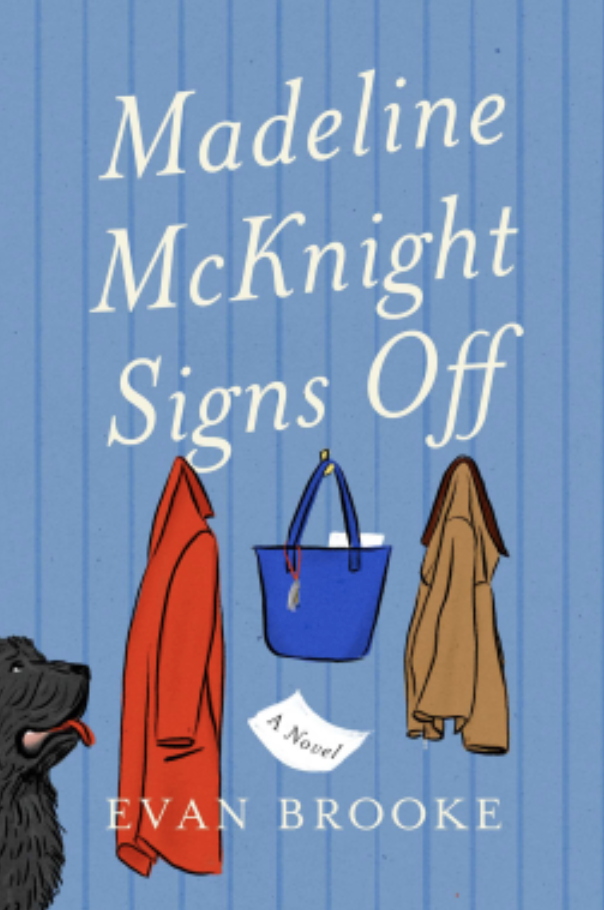
Madeline McKnight Signs Off by Evan Brooke (Literary Fiction)

Madeline McKnight — fierce, determined, a “Wizard of Wall Street”, and … not possessed of too many friends. Fighting against the inevitable resulting from a stage 4 melanoma diagnosis, she is determined to survive it until her museum honoring Hetty Green (1834 – 1916) is opened. She wants people to care about Hetty, and to recognize her brilliance. She sees herself — her accomplishments and her lack of recognition — in Hetty. Hetty was called “the Witch of Wall Street” in her time — Madeline’s epithet rhymes and starts with B. She invites (cajoles, bribes) Bri Davis — struggling nursing student drowning in debt and easily bribable — to help her get to the finish line. The catch? Bri’s mother was Madeline’s best friend until an emotional explosion drove them apart many years ago. Bri’s attitude toward Madeline is ambivalent at best.

Alternating chapters between Madeleine and Bri’s perspectives, the narrative is surprisingly witty, thoughtful, and illuminating. While I shed some tears when the obvious finally occurred, I left feeling more uplifted than down. Excellent writing — clear, humorous at times, and perfectly capturing the internal struggles one faces when considering the parts of one’s life already lived. Themes around money and wealth, atonement, loyalty conflicting with morality, and plenty of thoughtful coverage of how women are treated differently than men — not the heavy handed oppression storyline, but the small ways in which things are harder or more criticized or misunderstood or subject to some doozies of double standards. The latter was particularly interesting because Madeline was forced to acknowledge the complexity of individual human beings. She wanted to make Hetty an unsung hero but the reality of Hetty — known as the “richest woman in America in the Gilded Age” — was more complex. She was a self-made woman with astonishing financial prowess, yet she did nothing to help others, not even supporting women’s suffrage. This led to Madeline’s own soul searching and the recognition and acceptance of her own accomplishments and failures.

Completely engaging.

Thank you to Atria Books and NetGalley for providing an advance copy of this book in exchange for my honest review. The book will be published on November 3rd, 2026.

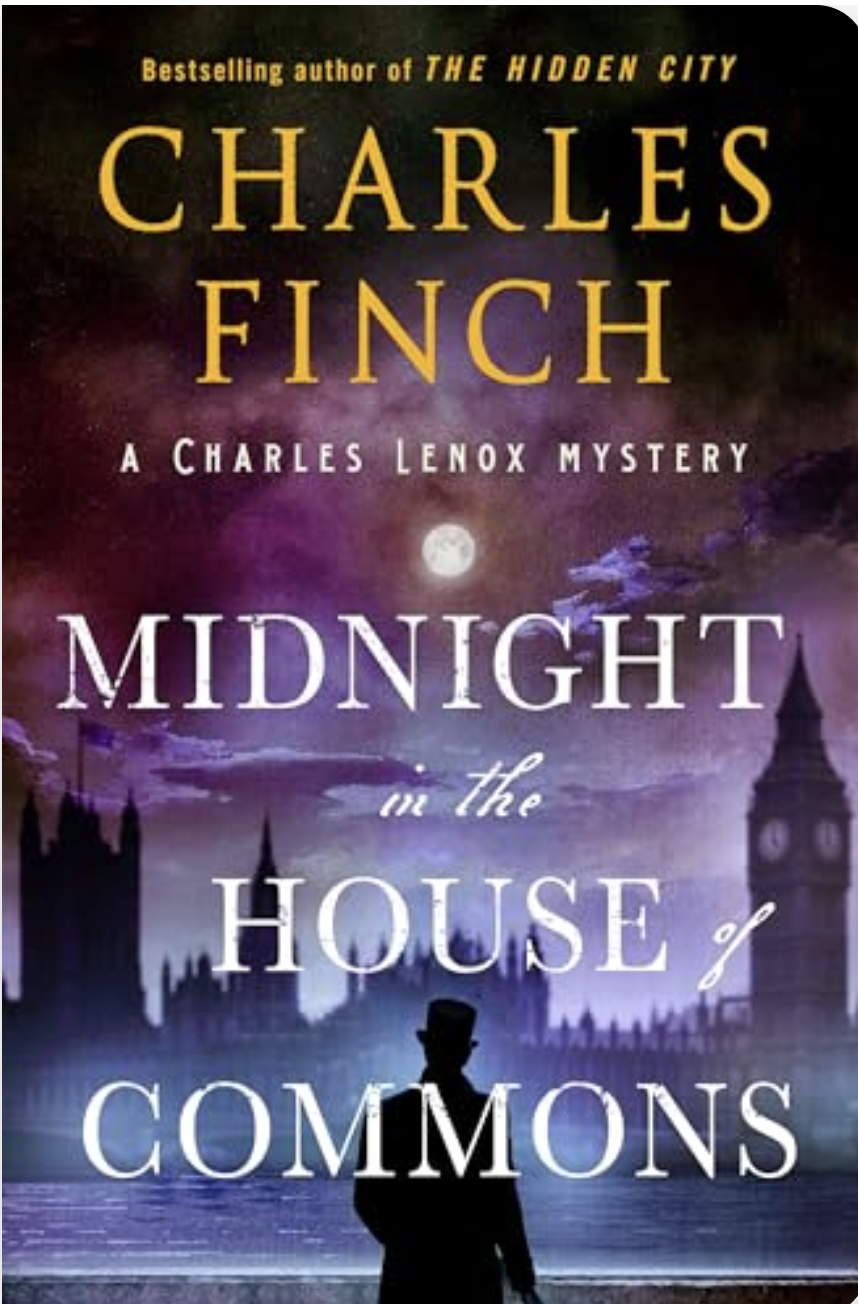
Midnight in the House of Commons by Charles Finch

Number 16 in the Charles Lennox mystery series. I haven’t read them all, but I loved this one! Got me straight through a long and uncomfortable flight.

1881 in London — in addition to the mysteries (the murder of a member of Parliament in the House of Commons, a mysteriously vanished fiancé, and a surprising heartbreak), we are treated to numerous and intriguing contextual details about the era: suffragettes, the Travelers Club for Gentlemen (you have to have traveled at least 500 miles from London in a straight line), the origin of and immediate enthusiasm for toilet tissue, 19th century chemistry, and the machinations and odd traditions of the lords and commoners in Parliament. Our Lennox — with his Holmesian observational skills, aristocratic bearing, and calm demeanor — is on the case. While it’s a cozy (IMHO) with some filler — I found the filler infinitely more interesting than the typical food related fluff.

Quite fun!

Thank you to Minotaur Books and NetGalley for providing an advance copy of this book in exchange for my honest review. The book will be published on November 3rd, 2026.

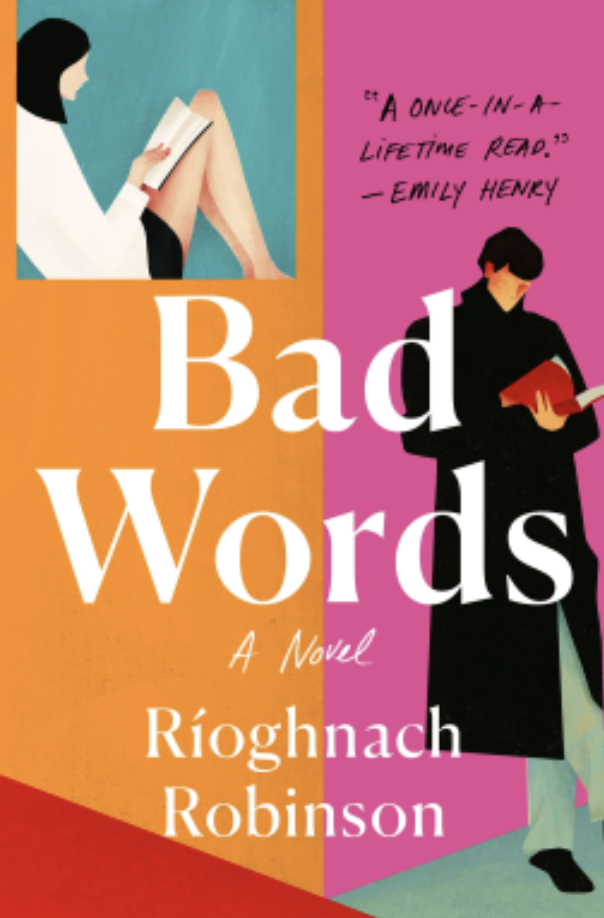
Bad Words by Rioghnach Robinson (Rom-com)

Parker Navarro is just about to release his second novel and the early reviews are promising when the very critic (with a huge following) who trashed his first novel goes online with a devastating review of his latest. Selena Chan believes that reviews and criticism are important — and holds to her opinion without intended rancor or fawning. She believes Parker has great potential but uses “200 words when he could have used 20” and doesn’t really … have a point! Thus starts an online feud which causes extreme angst on some parts, and extreme excitement (more clicks!) on others.

This enemies-to-lovers romcom goes much deeper than I expected with a real dive into every aspect of the current literary world where one bad internet review can destroy a book before it gets started, where literary websites can get skewed to chase clicks, and where nasty internet commentary explodes no matter what you do, say, or accomplish. I’m glad I grew up in the analog age where things were simpler!

Alternating chapters between Parker and Selena, we understand their perspectives, their ambitions, and their ability to handle serious derailment. And my favorite part — we get to watch them come to terms with their own biases and their ability to execute path corrections to maintain integrity and adhere to their own true values.

Good writing, humorous, informative, and thought provoking — pretty good for what could be read as simply an engaging rom-com with a happy ending!

Thank you to St. Martin’s Press and NetGalley for providing an advance copy of this book in exchange for my honest review. The book will be published on October 6th, 2026.

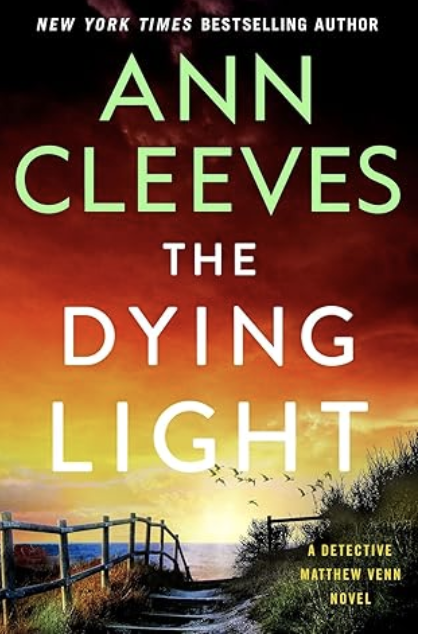
The Dying Light by Ann Cleeves (Mystery)

Two dead girls found outside the posh North Devon holiday home of a British MP the morning after a local music festival. DI Matthew Venn, a gay police detective replete with his own insecurities due to his evangelical based cult upbringing, is on the case exploring local tensions, difficult personalities, and long held secrets.

Ann Cleeves is a great mystery writer — I’ve loved reading (and viewing) all three of her series: Vera, Shetland, and this newer new Matthew Venn (this is number 3). The stories grip from page one and never really let up — plenty of tension and evolving character insights, never so much tension that my anxiety gets raised (I’m not a lover of thrillers). I enjoyed the constant shifting perspectives as characters (especially Venn) have to constantly examine the prejudices and biases that shape their judgements, leading to mistakes of attention where they can least be afforded.

Clean writing, never a dull moment, and a killer (no pun intended) finish.

Thank you to Minotaur Books and NetGalley for providing an advance copy of this book in exchange for my honest review. The book will be published on September 29th, 2026.