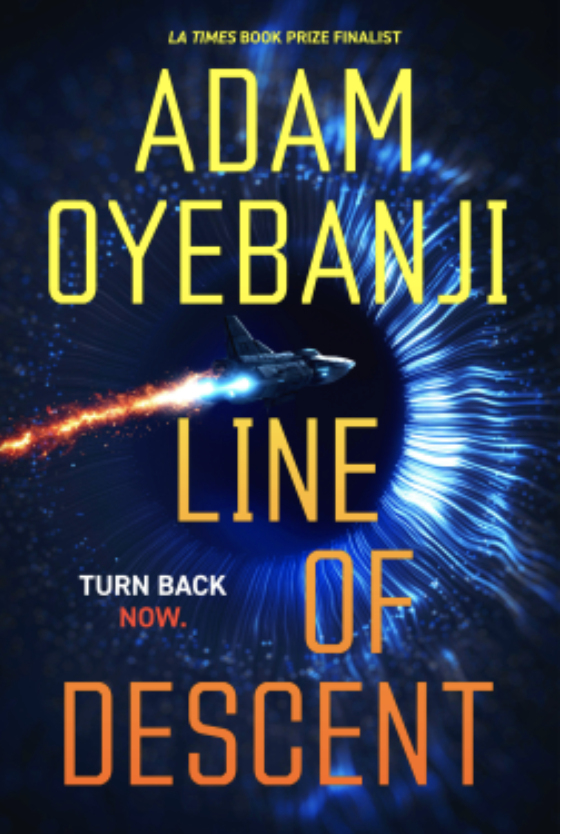
Line of Descent by Adam Oyebanji (Science Fiction)

An engaging space opera serving as a prequel to Oyebanji’s last book — Breaking Day. The action opens in the ~100th year of a 130 year voyage — humanity’s first bid for the stars. The inhabitants are Generation 5 of a carefully controlled population program, and tensions around whose “lines of descent” will be propagated are high. Reproductive rights, privacy, surveillance, and secrecy are some of the issues that have caused serious rifts in the population, leading to strong feelings and increasingly dangerous actions. And now the Captain is nearing his termination date and a vicious battle between the two candidates for the position will remind most of us of our own recent electoral “conflict.”

I like Oyebanji’s writing — it is clean and accessible, and encompasses technical detail, action, and cultural norms with equal fluidity (and equal time). The idea of a “generation” ship evolving different customs, conventions, and beliefs is not a new one, but I enjoyed his take on where the fracture points might occur and what issues could lead to polarization and rupture … and how the “government” might tackle an attempt at reconciliation given the limitations of a truly isolated environment. Plenty of obvious parallels to issues today.

Interesting and relatable characters and faction / hierarchical relationships; good world-building including mechanisms of recycling, decay, and the impact of unavoidable accidents in such a removed environment; and a plot equally comfortable with action and personality. This is Oyebanji’s 5th book in as many years, and I have enjoyed all but one of them (not sure what happened with that one!).

I appreciated Oyebanji’s bio, which you can find on his webpage — adamoyebanji.com — shows his humor and his interesting background!

Thank you to DAW and NetGalley for providing an advance copy of this book in exchange for my honest review. The book will be published on November 17th, 2026.

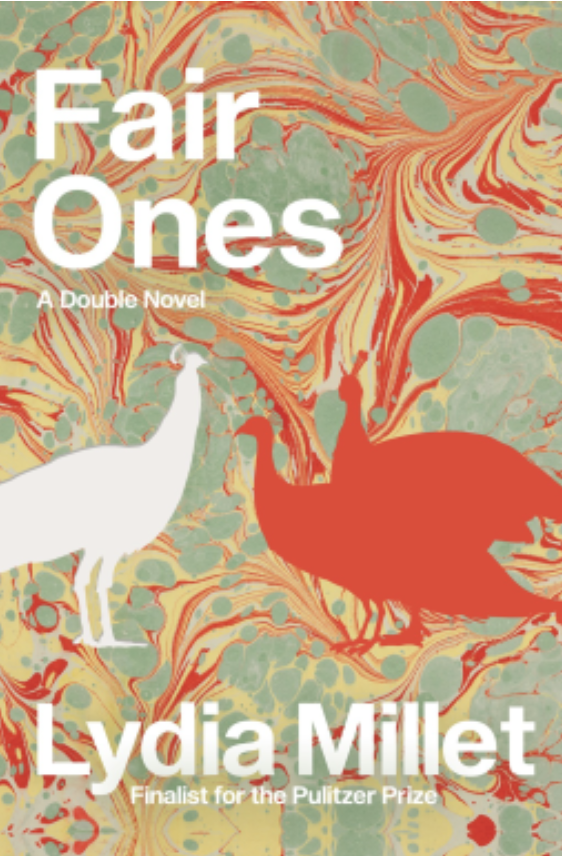
Fair Ones by Lydia Millet (Literary Fiction)

A slow paced (but exquisitely written and perversely engaging) novel rich in insightful discourse and doubly rich in character depth. At the core is a trio of best friends: Mara, Jen, and Claire — single New Yorkers operating at various edges of the wealthy. Claire — a high school guidance counselor and beauty queen; Mara a tutor for prep school students; and Jen the brainy former journalist and culture editor. It’s billed as a double novel — part one is Mara’s story, launched immediately after Claire’s sudden and violent death; part two is Jen’s story, taken up a year later and continuing with the evolving relationships, secrets, and healing.

I loved this book for the very real and thoroughly explored lives in relation to the catastrophic experience and the mad swirl of collateral damage resulting. New friendships, new discoveries, new reactions, new regrets, new hopes. The plot progresses, sometimes in very surprising (but utterly believable) ways. Social commentary throughout in characters’ thoughts, reactions, and evolving sense of self. Plenty of existential considerations as well as political discussions and a sense of societal duty (rather than entitlement). I found so many great quotes. I liked the fact that each character worked hard at understanding what made a “good person” and how they could best achieve that label, while also having the awareness of the layers of hypocrisy that lurk just below the surface. I also liked how well the author painted people from the different perspectives of the other characters through the kind of dialog / discussions we all have.

Quintessentially a New York story, and yet, typical for stories about New Yorkers, the characters are all NY transplants and so we travel from a Jain community in California, to the woods in Maine, to elite boarding schools, to high priced, drug infused Wall Street lofts in discovery of backstories. We consider white collar crime, dementia without financial resources, and the search for meaningful occupation. And we are surprised with a creeping, surreptitious solution to a mystery we didn’t know existed. We “join” in the discussion of a wide variety of topics from multiple perspectives on everything from climate change to the pros and cons of capitalism, to the real meaning of Shel Silverstein’s The Giving Tree (that was a hoot). Millet’s books have a kind of dream like quality for me because I feel like I am occupying so many different heads at once. I loved this book.

Quotes:
“We had our daily routines, inside millions of others, and along the edges of those routines there was always the prospect of the story taking new turns. Because the city contained multitudes. So if the story changed, we’d figured, maybe we’d be excited all over again. Even the pandemic hadn’t driven us away. We’d survived.”

“In more neutral terms, she explained, they were both aware that pleasure and so-called ‘being in love’ are based on neurological novelty. And that the brain can’t be trusted not to take a relationship for granted. If they hung out together for too long a stretch, the dopamine surges would flare out.”

“If I tried to join in, throwing out a quick word of agreement or question, they’d gaze at me anthropologically. Like they were tolerating my naive opinion the way you’d tolerate a well-meaning foreigner who doesn’t speak the language.”

“Still, if you took away words, music lasted for centuries, I thought. A distillation of sadness that never aged. Unlike the person who’d felt it.”

“‘Economically underprivileged,’ was what the school called them, but Claire said poor kids; economically underprivileged was a privileged euphemism.”

“Although, she’d added, they outsourced their misery. Norway, for instance, claimed to be leading on carbon-neutrality but got most of its money from exporting a s***load of fossil fuels. Plus they went around slaughtering whales. Like the Japanese.”

“I never wanted kids. Even back when being gay meant you probably couldn’t have them. For the middle and upper classes, it’s a way of replacing anxiety about society with a fixation on the domestic. So you don’t have to strain your compassion by worrying about anything beyond the home front. Because you’ve already met your daily quota struggling to raise your young You can give up your ideals and your unresolved tension over the existential crisis of the ongoing death of the planet. And be praised for it. Since breeding’s sanctioned as the highest form of love.”

“There’s no such thing as a gift horse, Mara. Richard’s a regular horse. And the deal with horses is, you have to take care of them. You have to feed them. Muck out their stalls, Clean the first and shit from their hooves with a rasp. And ride them on a regular basis.”

“I don’t have a heart at peace, with my ex-wife. With that woman, I have a heart at war.”

“Plus Richard bloviated more if another professional was present. Especially Eli, who he saw as highly intelligent and yet, as a forensic pathologist, not fully conversant with current readings of late-stage capitalism. Richard would shift into enthusiastic lecture mode while Eli, likely exhausted from eight hours poking around in gnarly corpses, nodded politely and endured. I had to break into the lectures to save him.”

“So what did I do, again? With all that was given to me? And the answer would be, I ate. Mara claims social boredom makes me act out. But I don’t act out enough. If I did, I wouldn’t get so bored.”

Thank you to W. W. Norton & Company and NetGalley for providing an advance copy of this book in exchange for my honest review. The book will be published on October 6th, 2026.

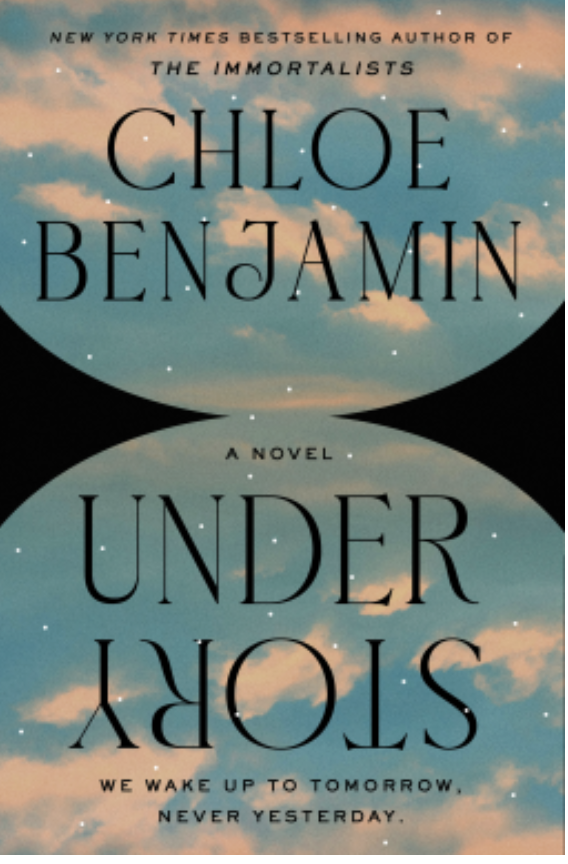
Under Story by Chloe Benjamin (speculative fiction)

Writing: 4/5 Plot: 3.5/5 Characters: 4/5

Laurel Salter, a distinguished biologist focussed on trees and fungi has run away from grief to Antarctica’s McMurdo Station — as a dishwasher. While there she is captivated by a strange phenomenon that has the research physicists both excited and perplexed — the Arc, a strange light appearing over the ice. When her ex-husband, himself a renowned physicist, appears at the station to study it, she persuades him to join her on an expedition to what she posits will be an anti-universe (where time moves backwards) enabling them to correct a grievous error.

I have mixed feelings about this book — there are parts I loved, and other parts I found a bit facile and / or too drawn out. I loved the world-building involved in the anti-universe. A lot of thought went into what it would really mean for time to run backwards (from our perspective) and what that would look like in terms of birth, death, parenting, schooling, etc. Benjamin’s depiction of such a “place” was detailed, persuasive, and pretty thorough. I particularly liked that it wasn’t simply a “roll the camera backwards” mimicry of the parts of life Laurel had already lived in her own universe. While the opportunities were there (e.g. a past boyfriend in our world made advances in the mirror universe but she was able to deflect them), she had autonomy to behave as she liked. Friendships with people she had known in our universe were the same, but different, and I found the exploration of connection with the “same” people in a different context and with a different past, well done and believable. I liked some (but not all) of the scientific descriptions of physics (including quantum entanglement, one of my favorite concepts), biology, and the nature of consciousness that were brought into the story. I also loved the first part about life at McMurdo. I would have been quite happy to have the whole novel take place there.

On the other hand, I do think the book was too long (500 pages) for the content, with too much repetition (especially around some of the relationships) and too much elaboration around the theories behind the (often made-up) science. I found myself bogged down at times, and was able to skim sections without losing any appreciable context or information. While the speculative nature of the story was well thought out and described, I would have liked a little more character depth and development. I had a hard time understanding why Laurel did some of the things that she did, and didn’t really take to her (which could say more about me than the character!).

Overall, I enjoyed reading the book (especially allowing judicious skimming as needed). Multiple themes pervade the narrative — ecology and the planet, human connection and the lengths we will go to maintain it, and the nature of time and consciousness. The ending was a bit unexpectedly bizarre, but decent. The book has a ton of advance praise from a veritable who’s who of literary talent. So!

Thank you to G.P. Putnam’s Sons and NetGalley for providing an advance copy of this book in exchange for my honest review. The book will be published on September 1st, 2026.

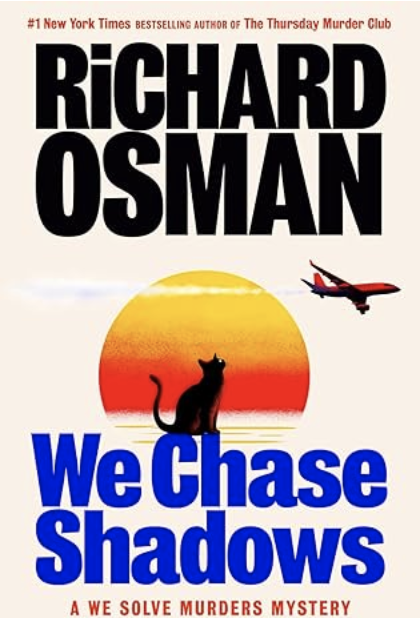
We Chase Shadows by Richard Osman (Mystery)

Second in Osman’s “We Solve Murders” series. This time the “gang” is called to a gorgeous villa in the Italian Hills where one of three bodyguards to the wealthy owner has been shot, with a cryptic note left in his pocket. Things progress along with several twists and Osman’s trademark humor to a satisfying closure.

Unfortunately, as in the first book, I simply could not relate to (or care about) any of the characters — the good guys, the friends of the good guys, and the bad guys. I know each member of the “gang” is supposed to be highly competent (in their specific area of expertise) and quirkily interesting, but I’m afraid none of them work for me the way almost all of the characters in the Thursday Murder Club books did. Could simply be a matter of personal character taste — your mileage may vary! The book is a good romp and very accessible — as in a middle schooler would have no trouble with it. But I don’t think I’ll bother with any additions to the series — I need a little more than a semi-good yarn in my reading. (I will eagerly await any additional Thursday Murder Club books!)

Thank you to Pamela Dorman and NetGalley for providing an advance copy of this book in exchange for my honest review. The book will be published on September 15th, 2026.

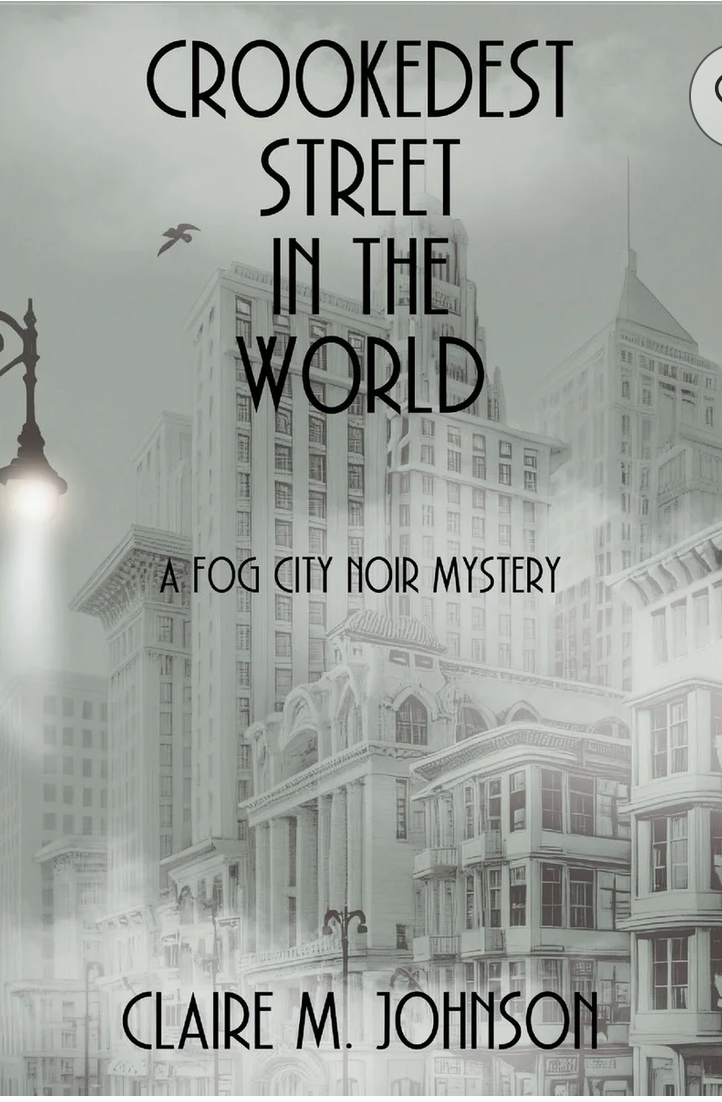
Crookedest Street in the World by Claire M. Johnson (Historical Mystery)

Book three of Johnson’s Fog City (San Francisco) noir series starring the hardboiled detective’s equally hardboiled secretary who tries (pretty successfully) to make a go of private sleuthing in an era unfriendly to women stepping out of their place. It’s hard going but she slowly accumulates a set of useful friends such as Dickie Vance (a fabulous foodie journalist Truman Capote clone) and the mostly-closeted, but thoroughly hard-nosed police detective O’Malley. This episode marries the Catholic convent with the Chinese underworld in a (typical, but also pleasantly convoluted) conflagration of power struggles. For whatever reason I didn’t enjoy the actual plot as much as in the first two, but it was still entertaining, and I liked the character development and writing a lot — especially the witty dialog, personal reflections, and philosophy (religious and otherwise).