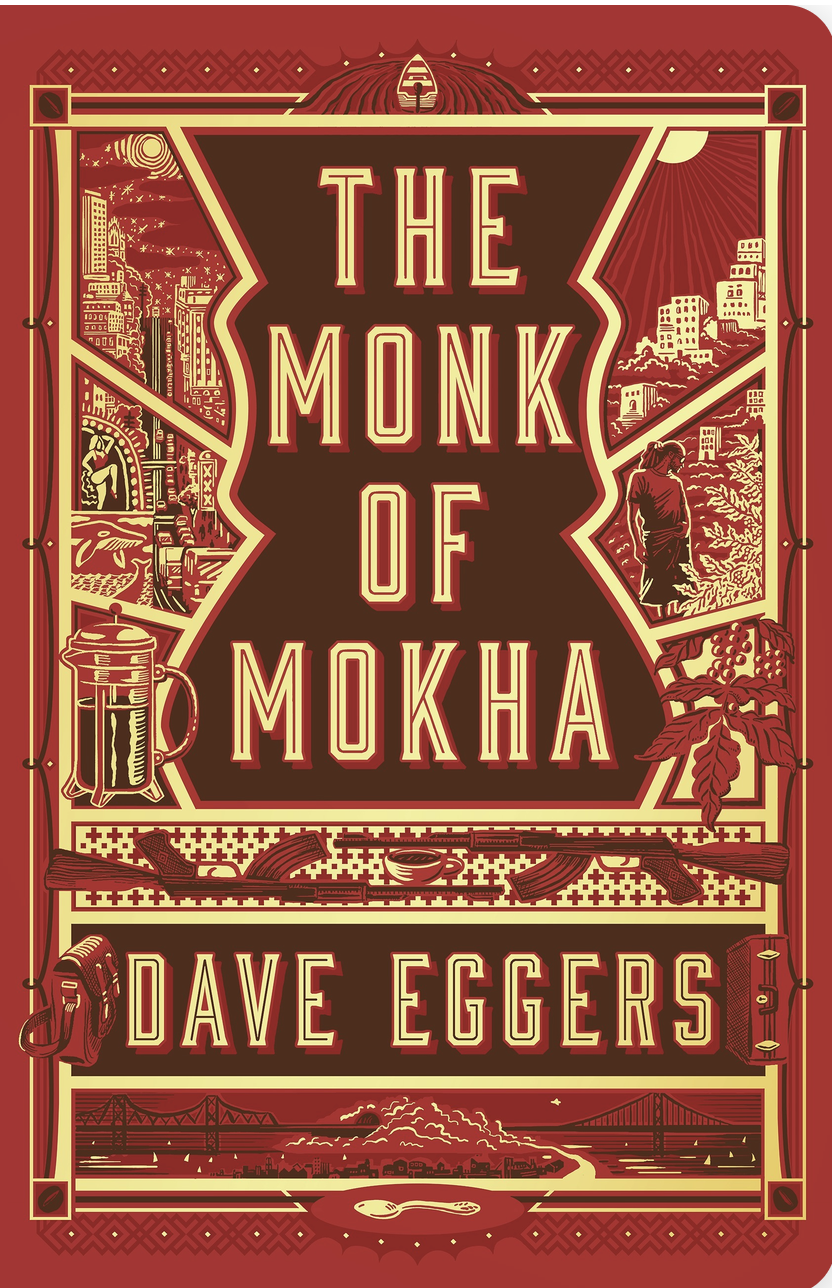
Monk of Mokha by Dave Eggars (Narrative Non-fiction)

An entertaining and educational book about one man’s successful effort to revitalize Yemen’s quality coffee production. It stars a somewhat unlikely hero — Mokhtar Alkhanshali — an American of Yemeni descent growing up in San Francisco’s Tenderloin district who is initially depicted as a bit of a screw up but manages to accomplish what would be impossible for most.

This is a work of “narrative non-fiction” — it reads like a novel but is a “true story” (not based on a true story). It’s part education and part high adventure, giving every type of brain something to hook into. I learned an astonishing amount about the history of coffee production, the means of assessing “quality” coffee, the convoluted “seed to Starbucks” process, and a great deal about starting and funding a complex business. I also learned more than I ever knew existed about Yemen — its history, current political climate, and US immigrant community. All of this learning was encapsulated in an intriguing (i.e. not at all dry) narrative that was full of compelling characters, the ideal level of concept-supporting detail, and literal high adventure (Try to escape the country during a civil war! Crossing the Red Sea on a tiny boat! Getting out of Dodge while drowning in an ocean of bureaucracy!).

I particularly found the way he did business to be interesting — while not an admirable student, Mokhtar thrived in an entrepreneurial setting, supported by his social abilities and connections. He was fast thinking, able to engage with a wide variety of people, and had a ready made set of connections in Yemen without which I don’t think he could have gotten very far — they certainly had to bail him out many times. Plenty of implicit commentary on what life is like in a low trust society. Also plenty of implicit commentary on the role of women in Mokhtar’s community both within the U.S. and Yemen — there were no women in the story! The exceptions were those in supporting roles (someone’s wife, someone’s admin, and one group of stellar coffee workers located by a business partner’s mother — they were the only workers who didn’t steal!). I did appreciate that the political commentary (which I will not comment on) appeared to be impartial and not agenda based.

A note on process the author used to write this book (according to an SF Gate article). Apparently the work is based on extensive (hundreds of hours) interviews with Mokhtar, but additionally Eggars traveled to the various regions personally to retrace the route, went through his own Q-grading coffee course, and verified events through interviews with several of the key players.

Not my usual reading material — I had a lot of questions, particularly about people, and nobody to ask — but lots of well-documented information that I’m glad to now know.
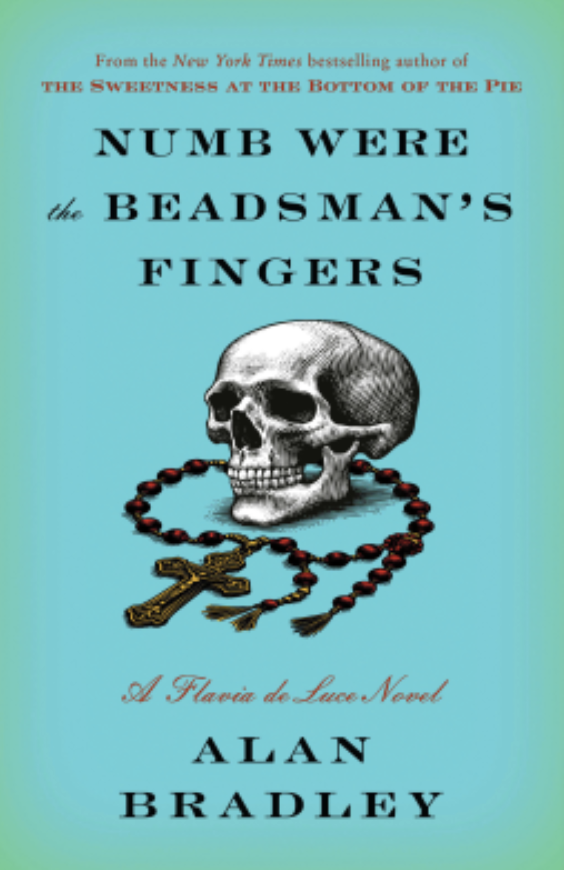
Numb Were the Beadsman’s Fingers by Alan Bradley (Historical Mystery)

This is the 12th, and probably last, delightful mystery in the Flavia de Luce series. If you’re new to the series, it follows an 11-year old irreverent chemist and amateur detective pottering about with her poisons in her family’s decaying estate in 1950s rural England. If you are newbie, I recommend going back and starting at the beginning — it isn’t necessary, but it’s much more fun.

This book starts with an immediate hook — Flavia and Dogger (the family manservant with a complex past and a “black belt in noncommittal”) are called in to the (silent) Sisters of Clemency convent to help identify a recently deceased nun who — wait for it — turned out to be a man. The (quite satisfying) unraveling of this mystery takes us to the Klondike, the shell-shock victims of WWI, and an intriguing Rosary Code. The writing is humorous and full of the creative and surprising asides that constantly stream out of Flavia’s fertile mind. The characters are highly competent (each in their own way) and likably quirky. The story is fun to follow with the kind of relevant (and sometimes utterly irrelevant) tangents that will attract the intellectually curious reader.

Alan Bradley wrote the first book in the series when he was 70 based on his winning entry for the Debut Dagger fiction competition. He passed away at the age of 87 just this last May.

Thank you to Bantam Sons and NetGalley for providing an advance copy of this book in exchange for my honest review. The book will be published on November 3rd, 2027.

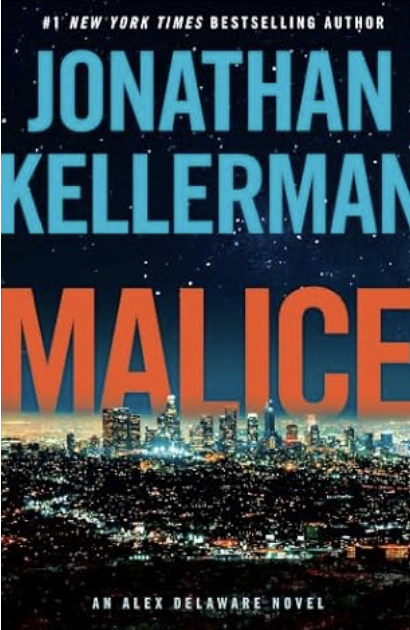
Malice by Jonathan Kellerman (Mystery)

Number 42 in what has quickly become my favorite police procedural series, starring a gruff, inexorable, gay LA homicide detective and his best friend Alex Delaware, a psychologist who has a real talent for consulting on extra twisted murder cases. In this case, they track down the psychopath who has attached his own particular twist to the killing of three apparently unrelated victims.

AI suggests that this series is also a psychological thriller series — I agree with the psychological part, but I’m happy to say that while I’m on the edge of my seat during the entire trip, I’m never anxious (which is what often happens in books I label thrillers). Perfect for me.

I started reading this series a couple of years ago and have read them completely out of order with no problems. Kellerman is quite good at recapping any bit of history necessary to understand the narrative in a short set of aptly placed sentences. And while I usually read (as opposed to listen to) books, this is one series that I prefer opting for audio — John Rubinstein — the reader for most of the series — is fantastic and I’ve become accustomed to the personalities he imbues in the characters via their voices.

Thank you to Ballantine Books and NetGalley for providing an advance copy of this book in exchange for my honest review. The book will be published on February 2nd, 2026.

Otter Music by Karen Joy Fowler (Fiction)

I’ve read (and loved) every single book Karen Joy Fowler has ever written, spanning a wildly different set of genres and topics. Unfortunately, I found this book very disappointing.

Our protagonist and narrator — Lainey Miller — is a marine researcher with a penchant for otters. Told in a series of vignettes, we watch her search for hope and maybe some fun in what feels like a devastatingly, collapsing world. The tiny bit of narrative (about 30% of the book) combines recalled childhood memories (random obsessions and a strange but interesting thread about Lizard People — an odd, but apparently documented mashup of ancient gnosticism and current conspiracy theories) and some funny and heartwarming scenes with her family members.

Excellent writing as always, but I missed having a real narrative arc, and wished for a little more story in the midst of the hand wringing. To be fair, she did include some positive scientific discoveries and policy successes, but they felt trivial in the face of the utter dread Lainey feels about the state of the world. In the last few pages — I don’t think this is really a spoiler as there is very little story here — Lainey does come to a decision about a personal attitude adjustment — finding a way to be more positive in her life — but unfortunately I found her insights to be more of the “shlocky” variety than anything I could find meaningful or inspiring. Perhaps readers who are also in a state of constant dread and anxiety about the state of the world will feel better hearing someone else expressing their fears, and will enjoy this book more than I did.

Thank you to G. P. Putnam’s Sons and NetGalley for providing an advance copy of this book in exchange for my honest review. The book will be published on February 23rd, 2027.

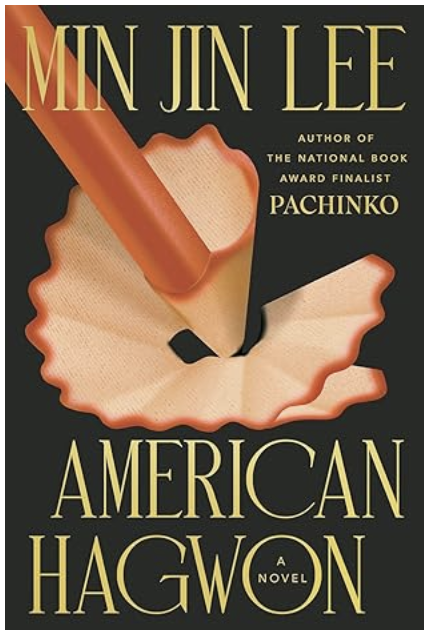
American Hagwon by Min Jin Lee (Literary Fiction)

Writing: 5/5 Characters: 5/5 Storytelling: 5+++/5

The book will be published on September 29th, 2026.A sweeping family saga ranging from 1992 to 2007 from the author of Pachinko. The Kohs — John, his wife Helen, and their three children Bo, DH, and Mido — are heading back to their native Korea after spending seven years in Paramus, New Jersey (where all three children were born), three years in Korea, and six years in Australia — all following the demands of John’s career. The plunge into the ultra rigorous and punishing education system is brutal for all — in Korea your educational achievements can determine the path of your entire life; the competition is fierce, and the Koh children are behind. Enter the Hagwon — a private, for-profit, after-school and weekend academy in South Korea to supplement public education — difficult to get into, but can make all the difference.

I loved every bit of this book and the 752 pages (daunting at first glance) flew by easily. The multi-dimensional and ever expanding story follows the Koh family’s struggle to at least survive, and hopefully thrive, as the vicissitudes of fate toss them about geographically, financially, and emotionally. For the Kohs, the American Hagwon they become part of greatly expands their network of friends, family, and connections — both the ones they needed to get in, and those resulting from the experience within. But the place of the Hagwon in the story is not just about its role in ensuring the children’s future; it’s also a deep dive on educational pedagogy and a genuine striving to understand what really educates a child, versus simply earning a desired status.

Lee writes in a clean, clear style — low on emotional melodrama or manipulation, high in character and relationship depth and growth, and extra high in pure unadulterated storytelling. The book shifts between vignette-style sections, each highlighting a character or set of characters — opening us up to their individual personal development: principles, motivations, realizations, troubles and triumphs. In this book, everyone is constantly evolving, using experiences and contemplation to course correct as necessary. I like that the adversities faced were realistic and neither heavy handed nor dependent on some overall “evil power wielder.” While some characters are definitely not “good guys,” they are presented as full beings with their own motivations and (different, and not great IMHO) principles and goals. Most importantly, I love the way the characters handle their problems without whining, without assuming victimhood, and without neurosis (they couldn’t afford therapy anyway!). Family is (obviously) a big theme in a book like this, but I also liked the fact that the loyalty they showed one another was mutual — everyone supported the others in whatever way they could. Not a blind and determined loyalty that rewarded selfish and misguided behaviors that impacted others.

The book kept me entertained, made me think, and left me in a positive mood reflecting on what is important in life. And — my ultimate test — I would be very happy to befriend just about every character within the pages. These are people who live by their principles, and they are principles I share!

Thank you to Cardinal and NetGalley for providing an advance copy of this book in exchange for my honest review. The book will be published on September 29th, 2026.

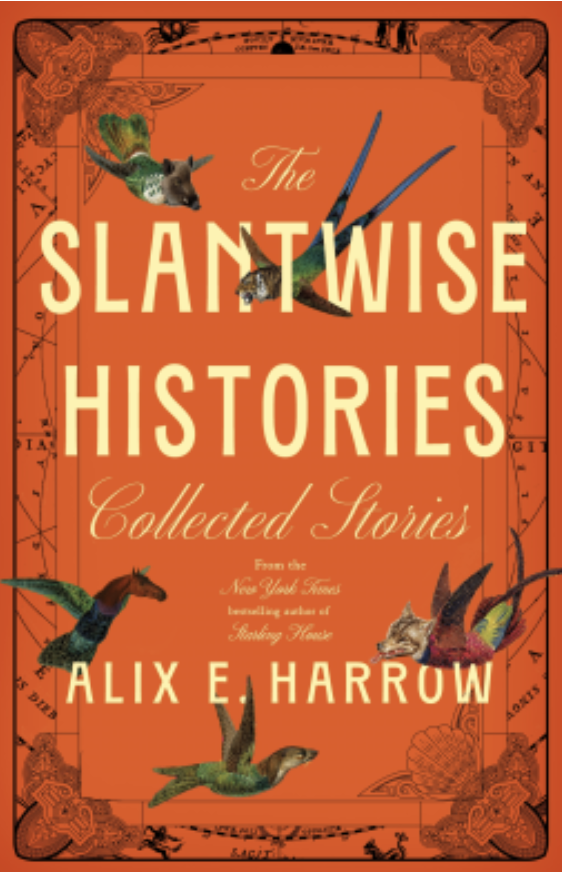
The Slantwise Histories by Alix E Harrow (Speculative Short Stories)

This is a collection of previously published stories that the author describes as the “pleasures I have devised over the last decade.” Her “preoccupations and grudges, infatuations and nightmares.” This goes a long way to explaining the diverse set of stories included in the book. Before I tell you how and what I thought about the stories, let me first state categorically that in terms of pure writing, Harrow is one of the best. Her language, humor, compassion, insight and the insistent way she wrenches reactions from the reader are unsurpassed by other writers in my experience. I don’t always care for the subjects of her writing (or the feelings they wrench out of me!) but the quality of her writing is never challenged.

I think about the stories in this collection in three categories (and they aren’t the “Almost, Always, and Again” divisions they are separated into in the TOC — I still don’t get that). My favorites are the humorous stories with the utterly unexpected but totally integrated twists. Most feature a wry wit that recognizes and pokes fun at the very essence of our fears and aspirations. These contain plenty of quality banter (which I love) and often lovely inserts of modernity into canonical tales. The stories in this category are: The Knight and the Butcher Bird, The Ransom of Miss Coraline Connelly, The Long Way Up, and A Witches Guide to Escape: a Practical Compendium of Portal Fantasies. The next category clearly aligns with Harrow’s “grudges and nightmares.” They are dark, often depressing (for the emotional sponge that I am), and have a tendency to feature stereotype “Bad Guy” groups. For example, in these stories, all the men are misogynistic a**holes, and all corporations are greedy, abusive, and evil. Great stories, but I don’t like perpetuating these polarizing descriptions. Lastly, quite a few “queer” stories — tales of discovering and exploring someone’s sexuality, often in a speculative fiction setting. These were well done, but not something that I search for.

I’m not usually a short fiction reader — I love to get deep into a novel and stay with it for a while, but it is hard for me to pass up anything that Harrow writes. I had no problem simply skipping a story or two that didn’t work for me and focus on enjoying the rest.

Thank you to Tordotcom and NetGalley for providing an advance copy of this book in exchange for my honest review. The book will be published on October 20th, 2026.