
Writing: 4/5 Plot: 3.5/5 Characters: 4/5
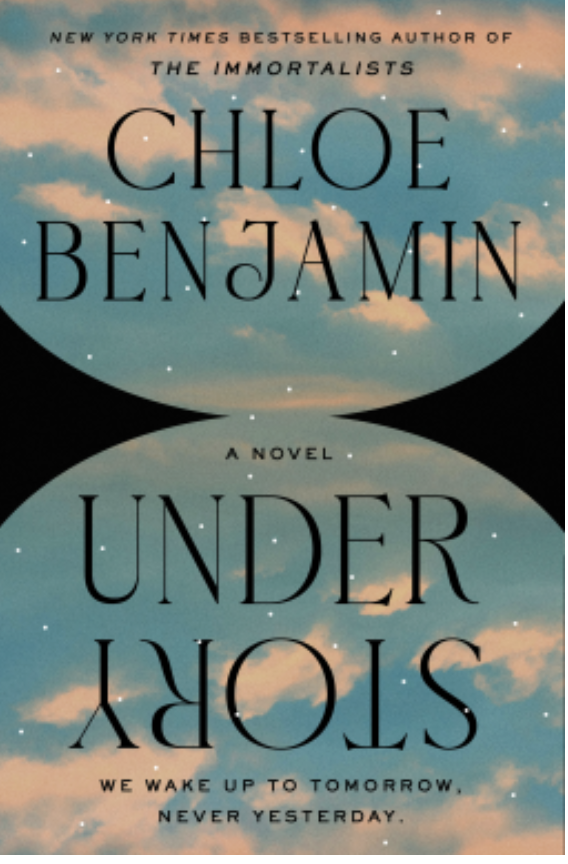
Laurel Salter, a distinguished biologist focussed on trees and fungi has run away from grief to Antarctica’s McMurdo Station — as a dishwasher. While there she is captivated by a strange phenomenon that has the research physicists both excited and perplexed — the Arc, a strange light appearing over the ice. When her ex-husband, himself a renowned physicist, appears at the station to study it, she persuades him to join her on an expedition to what she posits will be an anti-universe (where time moves backwards) enabling them to correct a grievous error.
I have mixed feelings about this book — there are parts I loved, and other parts I found a bit facile and / or too drawn out. I loved the world-building involved in the anti-universe. A lot of thought went into what it would really mean for time to run backwards (from our perspective) and what that would look like in terms of birth, death, parenting, schooling, etc. Benjamin’s depiction of such a “place” was detailed, persuasive, and pretty thorough. I particularly liked that it wasn’t simply a “roll the camera backwards” mimicry of the parts of life Laurel had already lived in her own universe. While the opportunities were there (e.g. a past boyfriend in our world made advances in the mirror universe but she was able to deflect them), she had autonomy to behave as she liked. Friendships with people she had known in our universe were the same, but different, and I found the exploration of connection with the “same” people in a different context and with a different past, well done and believable. I liked some (but not all) of the scientific descriptions of physics (including quantum entanglement, one of my favorite concepts), biology, and the nature of consciousness that were brought into the story. I also loved the first part about life at McMurdo. I would have been quite happy to have the whole novel take place there.
On the other hand, I do think the book was too long (500 pages) for the content, with too much repetition (especially around some of the relationships) and too much elaboration around the theories behind the (often made-up) science. I found myself bogged down at times, and was able to skim sections without losing any appreciable context or information. While the speculative nature of the story was well thought out and described, I would have liked a little more character depth and development. I had a hard time understanding why Laurel did some of the things that she did, and didn’t really take to her (which could say more about me than the character!).
Overall, I enjoyed reading the book (especially allowing judicious skimming as needed). Multiple themes pervade the narrative — ecology and the planet, human connection and the lengths we will go to maintain it, and the nature of time and consciousness. The ending was a bit unexpectedly bizarre, but decent. The book has a ton of advance praise from a veritable who’s who of literary talent. So!
Thank you to G.P. Putnam’s Sons and NetGalley for providing an advance copy of this book in exchange for my honest review. The book will be published on September 1st, 2026.

