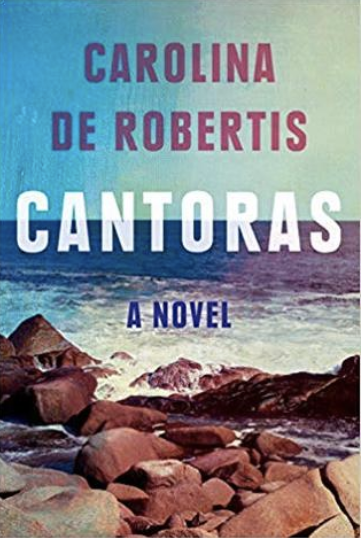
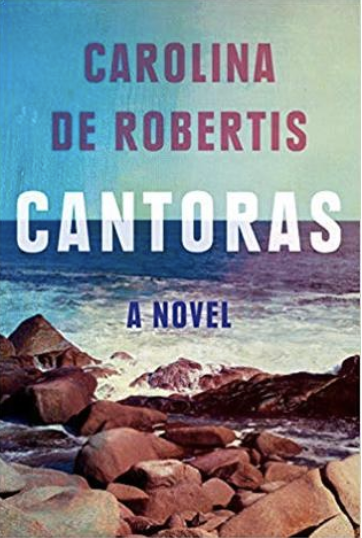
Cantoras by Carolina De Robertis (Literary / Historical Fiction)

Writing: 3.5/5 Characters: 4.5/5 Plot: 4.5/5
Five women find each other amidst the oppressive dictatorship in Uruguay in the 1970s. Together they manage to find and buy a small shack in a lonely coastal town where they can be themselves without fear, where they can blossom into themselves. They are “cantoras” or “women who sing” — a euphemism in this case for women who prefer women. Flaca, a relatively masculine butcher’s daughter; Romina, a Jewish refugee from Ukraine; Anita, renamed “La Venus,” a housewife who can no longer bear the standard life she is expected to lead; Malena, a schoolteacher with a hidden past; and Paz, the youngest at 16.


Following the individual and collective stories of these women through the long dictatorship and through the first years of recovery was far more captivating that I had expected. Based (I believe) on many interviews with people who had lived through this time period, the author really captured the experiences, feelings, and reactions of individuals without going overboard on the drama. I’m always appreciative of an author who recognizes that the subject can speak for itself when properly depicted without resorting to melodramatic finger pointing. Woven together in the narrative is the general persecution of people during an oppressive regime as well as the more generic persecution of homosexuals (in truth this persecution seemed to be more cultural and not actually related to the dictatorship, though the book jacket links the two together). The writing was full and descriptive, doing an excellent job of depicting the sensuality of the lesbian relationships and the pervasive tumult of feelings — fear, joy, worry, exultation — resulting from living through the period. I liked the reflection of each character as she considered her life and the larger situation into which she had been born. And her decision as to how she would participate — enjoy what she has? Take chances by working with those willing to rebel? Hide — either physically or culturally?


I learned a lot about Uruguay — I’m probably not alone in simply being unaware of this aspect of Uruguayan history. While not mentioned in the story, the all-knowing Wikipedia claims the 1973 coup that brought in the military was backed by the U.S. (I’m guessing to stop the perceived Community insurgency). Separately, the gradual opening of the culture to homosexuality, culminating in the 2013 right to same-sex marriage (the third country to do so in the Americas after Canada and Argentina), was also depicted through the stories of these women. The narrative brought together these two concurrent themes well — the book felt quite real.

A few good quotes:
“Histories tend to grow richer with time, gathering details as they pour down generations.”
“That the silence of dictatorship, the silence of the closet, as we call it now—all of that is layered and layered like blankets that muffle you until you cannot breathe. For many people it is too much. In Paraguay we have seen it. And so, here, none of you should carry the blame.”
“Furniture gave slow birth to itself: a table started as a plank on four stacks of bricks, then became a slab of swirled driftwood, found on the beach and dragged back home, cut, placed over the bricks at first until the attempt began to hammer on legs and to sand the knots and whorls on the top into a more even surface.”

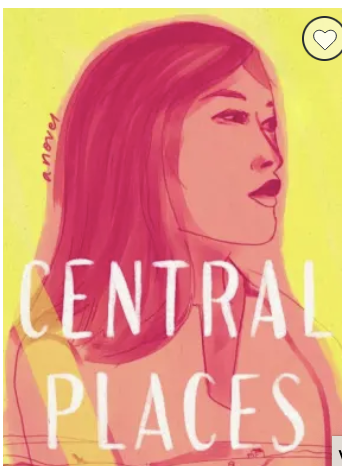
Central Places by Delia Cai (Literary / multi-cultural fiction)

Writing: 4/5 Characters: 4/5 Plot: 3.5/5
A somewhat over-detailed but ultimately satisfying story of a young woman coming to an understanding of herself — the person she wants to be and the person she evolved from. Twenty something Audrey Zhou loves her life in New York City: her kind and conscientious NYC born and bred photojournalist boyfriend (Ben) and her job as a salesperson for a trendy NY magazine, but most of all she loves the extreme distance from her home and immigrant parents in Hickory Grove, Illinois. When her father has a potential health problem, Ben insists on accompanying Audrey home to meet her parents for the first time and learn more about her.

I was impressed by the way this book worked out — it really did focus on a single person’s experience, rather than another agenda heavy diatribe about racism in the U.S. Assumptions, biases, and exposed hypocrisies appear in multiple places, and the recognition of what part Audrey finds herself playing in all of that is worth the price of admission. The story did NOT evolve the way I expected it to, and I found I really liked the non-standard, unexpected ending. Some of the more descriptive sections contrasting her Hickory Grove memories and current experiences went on for a little longer than I needed, but I was overall quite happy with the book.

Thank you to Ballantine Books and NetGalley for providing an advance copy of this book in exchange for my honest review. The book will be published on January 31st, 2023.

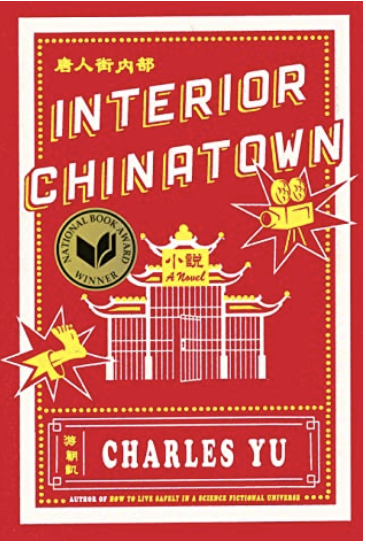
Interior Chinatown by Charles Wu (Fiction)

A bizarre, screenplay format novel told in the second person as Willis Wu describes his life as a series of bit part Asian roles, particularly Generic Asian Man with a dim hope of becoming a specialty character: Kung Fu Guy. Moving from an SRO to the Golden Palace restaurant where the cop show Black and White (starring — wait for it — a black cop and a white cop) is constantly “playing,” we are treated to an ongoing internal monologue where the bitterness is as often directed against himself as to others. Full of a wry humor that derives from essential and uncomfortable truths, the narrative is interspersed with a recitation of U.S. laws aimed specifically at excluding Asians (e.g. the Chinese Exclusion Act, 1882; the SF Bingham Ordinance of 1890; the Geary Act of 1892; the Cable Act of 1920; and the Johnson-Reed Act of 1924 — look them up — they are appalling) and a pretty compelling speech asking why, after two centuries in America, Asians are not fully assimilated and are not considered “American”? By the way, I particularly enjoyed this quote which I am including out of context:

“What are you looking? Do you think you’re the only group to be invisible? How about: Older women. Older people in general. People that are overweight. People that don’t conform to conventional Western beauty standards. Black women. Women in general in the workplace.”

It’s always irked me that there are so many “groups” which are treated unfairly in one way or the other, but unless you are part of some larger, acknowledged, “oppressed” group, nobody really cares…

In sum: a short book with a pretty interesting message and engaging format.

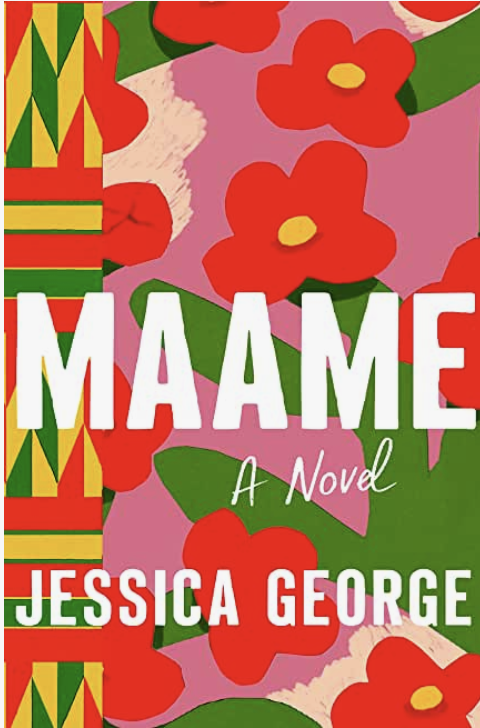
Maame by Jessica George (Literary Fiction)

Writing: 5/5 Plot: 5/5 Characters: 5/5

In Twi (one of the languages spoken in Southern and Central Ghana), Maame means “woman” or “mother” or “Responsible One.” And that is the name by which Maddie is known (and treated) within her (somewhat dysfunctional by many standards) family. This story of the 25 year old dutiful daughter of Ghanaian immigrants in London is beautiful, insightful, humorous, and utterly engaging. Maddie is finally ready to strike out on her own after several years of caring for her Parkinson’s debilitated father whilst her brother and mother have managed to find urgent excuses to be elsewhere. With a new job, a new apartment (with new flatmates), and a few boyfriend experiments, Maddie feels ready to transpose herself into “fun” Maddie and “happy” Maddie, though her true (intentionally stifled) feelings always manage to seep through. With deft and spare prose, the book delves into deep issues of how we become the selves we want to be, rather than the selves that have unintentionally emerged while we were making other plans.

The story explores the roots of Maddie’s desires and unhappiness — seen through the lens of multiple cultures, friends, family, religion, and … the ultimate source of all knowledge … Google. Some honest and new (to me) discussions of racism, from a personal point of view rather than a strident, social justice approach. I loved the first lines: “In African culture — Wait, no, I don’t want to be presumptuous or in any way nationalistic enough to assume certain Ghanaian customs run true in other African countries. I might in fact just be speaking of what passes as practice in my family, but regardless of who the mores belong to, I was raised to keep family matters private.” In one fell swoop George outlined Maddie’s personal context in the many layers of identity to which she belonged.

I absolutely love George’s writing. Great structure with most of the content deriving from interactions (in-person, text), reflections (including some great conversations with “subconscious Maddie” who can be quite flippant bordering on rude), and extensive (and intriguing) “conversations” with Google. I love her use of vocabulary — the exact right word at the exact right spot in the prose. I love that Maddie’s flirtation with one man made extensive use of accurately placed semicolons. I loved Maddie’s Voice — so real and so individual. The language conveys essence and experience skillfully, without resorting to tricks of plots and constant emotional tugging. It feels genuine — that rarest of literary attributes.

So many excellent quotes — here are just a few:

“When Waterloo station approaches, I brace myself for another day at a job Google itself has deemed deserving of a bronze medal in the race to unhappiness.”

“We were friendlier at first, joked around a bit more, but that dried up like the arse of a prune on a date and time I still can’t stick a definitive pin in.”

“For some reason, at night, when you’re meant to be sleeping, your brain wants answers to everything.”

“It’s mentally exhausting trying to figure out if I’m taking that comment on my hair or lunch too seriously. It’s isolating when no one I know here is reading the Black authors I am or watching the same TV shows.”

“Still, that doesn’t change the fact that although I didn’t think I’d be rich I expected to be happy and the failure to do so has left me gasping for air most of the day.”

“I only suffer a few hiccups, mainly with the printer because they’re all bastards and will likely lead the technological charge in the eventual war against humans, but I’ve finished everything before Penny returns from her last meeting of the day.”

“I’d googled what to do when your flatmate is dumped by someone they’re casually seeing, but Google seemed very confused with at least two parts of the sentence.”

“I know what to do, how not to bring attention to myself. I’m skilled in assimilation, though my subconscious is quick to remind me that it’s nothing to be proud of. I have spent the entirety of my professional life in predominantly white spaces. As a bookseller, a receptionist, at the theater, and now a publishing house. Over the years, my instinct has been to shrink myself, to make sure I’m not too loud, to talk only about subjects I feel well versed in.”

“She frowns. ‘I don’t know why you’re offended. Gold-diggers are our nation’s hardest workers; do you know how much effort goes into pretending to give a shit about some guy for his money? A lot. Hoes are Britain’s unsung heroes.”

“It’s about what love is. Which is trust, commitment, empathy, and respect. It means really giving a shit about the other person.”

“I’m late, arriving halfway through, and he’s speaking Fante, which when spoken quickly is like trying to catch bubbles before they pop.”

“I cut the conversation off there because the way I see it, apologies only benefit the beggar. They get a clear conscience, and I get a sequence of hollow words incapable of changing anything.”

“Okay,” she says, and for a word that is often spelled with only two letters, she makes each syllable work hard. I slightly hate her.”

“I think when working in white spaces we can feel programmed to not rock the boat; like, we got a foot in the door and we should try to keep that door closed behind us. Which means you begin assigning any and all problematic issues to just being a part of the job….”

Thank you to St. Martin’s Press and NetGalley for providing an advance copy of this book in exchange for my honest review. The book will be published on February 7th, 2023.

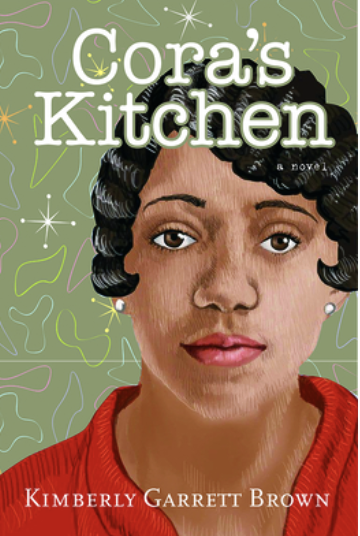
Cora’s Kitchen by Kimberly Garrett Brown (Historical / Literary / Multicultural Fiction)

Plot: 4/5 Characters: 5/5 Writing: 4/5 Enjoyment: 5/5

In 1928, Harlem librarian Cora James writes a letter to Langston Hughes whose poetry has inspired her. In ongoing correspondence, he supports her confessed desire to write and offers advice and commentary on her writing attempts.

There are more story elements including a surprising friendship with a white woman and a dangerous encounter, but for me the real story is about Cora’s awakening to the concept of having her own dreams and desires — beyond the expectations of being a wife and mother, a Black woman, and a good Christian. I absolutely loved and was startled by her own recognition of the limitations placed on her by societal and familial norms that she hadn’t even been aware of herself.

As part of the story she reads literature — Kate Chopin’s The Awakening, W.E.B Du Bois’ The Souls of Black Folk, Miss Esale Fauset’s There is Confusion, Walt Whitman’s Leaves of Grass, Nella Larsen’s Quicksand — and each informs her developing desire to express more than she knew she had in her to express. It is thoughtful, inspiring, and fascinating. Her reactions to works of literature are individual. She doesn’t like Amos and Andy or the characters in a prize winning Zora Neale Hurston story because she feels they make colored people look like fools. And she doesn’t want to write the standard colored woman story — growing up poor and oppressed in the South etc. She says, “We have been through so much as a people, but we have endured. I guess that’s why I think racism and oppression shouldn’t be our only focus. There are other stories to tell.” And in the end, when forced to choose, she makes what I found to be a surprising (and I was surprised that I was surprised by this) choice to identify more with the womanhood of her characters, rather than their Blackness). She explains it much better than I can, so I’ll let you read the story.

I loved this book and read it in a single sitting (OK — I was on a long plane flight BUT I had plenty of other books available on the kindle!).

Just a couple of quotes to let you see how Cora’s mind works:
“But most books written by colored authors are about race one way or another. And though I know it’s important to talk about, I’m tired of that being the focus all the time. There are other things in life that are just as important. Dreams. Desires. But maybe that’s too much to ask of a book.”

“But I wish Miss Larsen spent more time exploring Helga Crane’s desire for individuality and beauty, rather than her struggle as a mulatto woman trying to figure out where she belongs. Then maybe the novel would have spoken more to the workings of a colored woman’s mind.”

Thank you to Inanna Publications and NetGalley for providing an advance copy of this book in exchange for my honest review. The book will be published on September 20th, 2022.

All That’s Left Unsaid by Tracey Lien (Audio Book — Literary / Multicultural Fiction)

Writing: 4/5 Characters: 4/5 Plot: 3.5/5

Ky Tran comes back to the violent, drug ridden, largely Vietnamese / Chinese Sydney suburb of Cabramatta when her relatively nerdy, honor student, brother is brutally murdered at a post graduation party. The witnesses won’t talk, the police don’t care, and her parents haven’t the language skills or the will to pursue the matter. Ky tackles the witnesses — most of whom she knows — unable to let the matter rest. The novel structure fills in background, the story each witness reluctantly lets out, and the real story each remembers about while curating what comes out of their mouth. The path of disclosure winds towards a confrontation with Minnie — the best friend Ky hasn’t spoken to in years.

The writing is good and the main reader for the audio book is excellent (I did not love the two minor readers but they only appear once each for a relatively short time). I appreciated the in-depth descriptions of different approaches taken by members of a refugee community trying to make a life in a new country that doesn’t necessarily want them. Insightful commentary on loyalty, friendship, family, justice, and the concept of “being good.”

Thank you to Harper Audio and NetGalley for providing an advance copy of this book in exchange for my honest review. The book will be published on September 13th, 2022.

Free Food for Millionaires by Min Jin Lee (Literary fiction / Audio book)

Writing: 5/5 Characters: 5/5 Plot: 4/5

Casey Han — the daughter of Korean immigrants in Queens — craves a wealthy lifestyle she cannot afford, having been exposed to such while on a scholarship to Princeton. She craves “beauty and the illusion of a better life.” Casey balances pride, deeply embedded family traditions, and her emerging sense of self as she struggles to grow up and be the person she is slowly determining that she wants to be. While we follow Casey from graduation through the next five (or so) years, we are also treated to the developing stories of women who are important to her: her mother, a mentor, an acquaintance who rescues her and turns into a close friend. Rather than following a narrative arc, this book seems to follow a Life Arc — twisting and turning with sometimes rapid and surprising (to us and to Casey) shifts. The first novel by the author of Pachinko, you’ll recognize the style and treatment, while this book focuses on a Korean-American family and Pachinko is focused on 20th century Korea.

Although only covering a few years, this book felt epic because of its size and incredible depth. The characters are far too detailed and deeply introspective to even hint at stereotypes. Psychological analysis, philosophical musings, and cultural context (somehow never the same for any two people) help move the inner story along while the external story is utterly unpredictable.

The prose is beautiful, detailed, and rich. I love the way the author repeatedly and seamlessly contrasts the inner deliberations of each character with how his or her behavior appears to others. We are led through the minutiae of multiple lives that rarely go in the expected direction, but make do with the many, realistic tangents that comprise a life (regardless of any planning!). I appreciated the many domains that were brought to life by Casey’s experiences: investment banking and trading, millinery and fashion, church and faith, weddings, antiquarian books, and probably several others that I can no longer remember.

There were so many good quotes, but I listened to most of it as an audio book while driving and couldn’t write down a single one. 😦

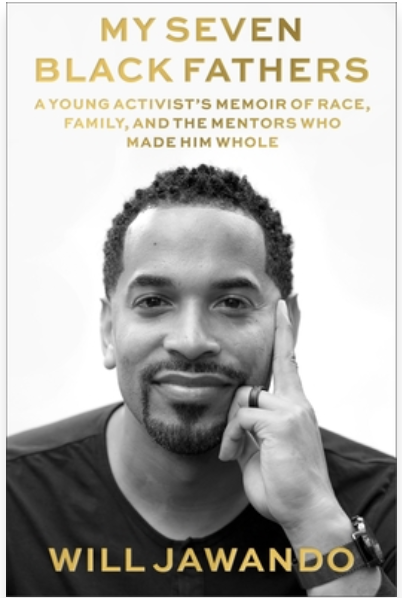
My Seven Black Fathers by Will Jawando (Memoir)

Montgomery County Councilman Will Jawando’s memoir of growing up with an absent Black Nigerian father and a white mother is well-written, measured and thoughtful, with constant fresh insights along the way. I loved the overall theme of the book — rather than considering himself a boy raised without a father, he considers himself as having seven fathers — Black men who took the time to teach him how to be a man by mentoring him, serving as role models, and generally giving him the love, attention, and advice he needed. Eventually, this even led to a loving reconciliation with his biological father.

He honestly made me see mentoring in a new light — how mentoring can literally help someone by exposing them to aspects of life that many of us take for granted. How else can a fatherless boy learn to be a man (or a motherless girl learn to be a woman, or an immigrant learn how to be a citizen of a new country, etc.)? I’ve read a number of books recently about children growing up in some of the more gang ridden areas of the country, with very few fathers present. Why wouldn’t they grow up modeling on the adult men available to them — gang members?

Jawando speaks intelligently about issues — not in slogans — and while racism is a factor in the story, it is just one factor of his experience, not the lens through which the whole story is filtered. He did occasionally make unsubstantiated generalizations based on his interpretation of personal experiences, but not very often, and more often referenced studies showing the broader sociological impact of various things he personally saw or experienced on a personal scale.

It would be hard not to immediately think of Obama’s first book — Dreams from My Father — while reading this. There are many parallels between them (both had African fathers, white mothers from Kansas, and wives named Michel(l)e and in fact, Obama is one of Jawando’s “fathers” based on the time Jawando worked on his staff.

Interesting, inspiring, accessible, and with real depth — definitely worth reading.

Thank you to Farrar, Straus and Giroux and NetGalley for providing an advance copy of this book in exchange for my honest review. The book will be published on May 3rd, 2022.

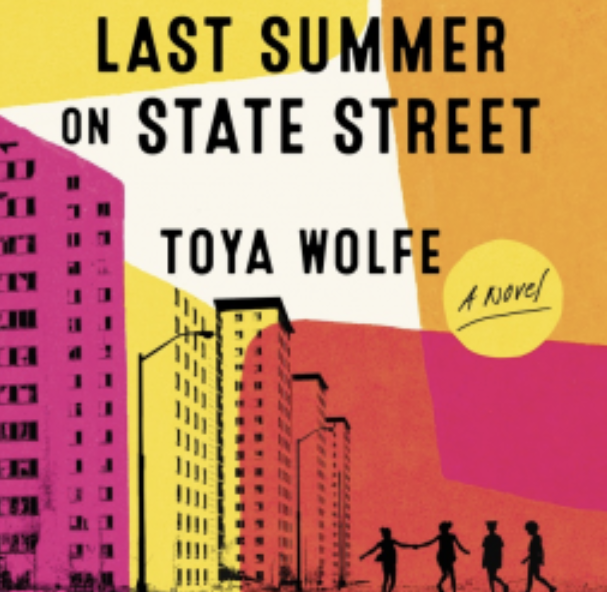
Last Summer on State Street by Toya Wolfe (Fiction — Audio book)

Summer 1999 — the Robert Taylor Homes (aka the Projects) on State Street on the South Side of Chicago. 12-year old Felicia (Fefe) is happy jumping rope on the third floor porch with her three friends: Precious, the daughter of a pastor; Stacia, member of the notorious, gang-affiliated, Buchanan family; and newcomer Tanya, the ultra-timid, obviously neglected daughter of a crackhead on the 10th floor. Everything changes during this fateful summer: The Chicago Housing Authority is demolishing all of the Project buildings on State Street, and theirs is slated to go next; her brother, Meechee, is taken by the police in the middle of the night in a warrantless raid; random gunfire becomes more frequent; and Stacia begins to favor the family business over jumping rope.

Labeled a novel, the story reads like a memoir, and it would be easy to believe that much of the story comes from the author’s personal experience as she was raised in the Robert Taylor Homes in this time period. The writing is excellent (I have no quotes as I listened to it on audio), and the reader is absolutely excellent — perfect pacing, differentiated and consistent voices for the multiple characters, and beautifully timbre in her voice. Told in the first person from Fefe’s perspective, we follow her through that summer and then on through her life for the next twenty years, giving her an opportunity to revisit the turning point that summer was and to get closure on some of the events. It’s a gritty and truthful telling with added introspective commentary as Fefe comes of age in the midst of gangs, police crackdowns, drugs, single mothers on the one hand, and a strong community, loving family, and supportive clergy, teachers, and neighbors on the other. I love the advice she is given, the wide array of people from whom she gets it, and what she does with it. Fefe is a success story — she gets out of the Projects and finds her vocation in helping others — unlike some of the friends she had who do not have some of the same advantages offseting the meanness, cruelty, and unfairness of the environment.

This is a coming-of-age story, not a political treatise. Her conclusion near the very end is that “We are not the originator of our misfortunes — we are all the victims of it.” Her point: people do what they have to do to survive. I would have been a little happier with some ideas on what creates these misfortunes and how everyone — including those who live amidst it — could contribute to making it better.

Thank you to Harper Audio and NetGalley for providing an advance copy of this book in exchange for my honest review. The book will be published on June 14th, 2022.

The Family Chao by Lan Samantha Chang (Audio Book – Fiction)

Writing: 4/5 Characters: 5/5 Plot: 4/5

Fine Chao Restaurant in Haven, Wisconsin, serves mouthwatering Chinese food to the local Chinese American community. While the jacket blurb promises us the dead body of the patriarch and all around not-very-nice-guy, this doesn’t appear until roughly half way through the book. In the meantime, we are introduced to his three sons (Dagou, the brash head chef; Ming, a financial success overcome with self-hatred; and James, home from college for Christmas) along with Katherine, a stubborn but no longer wanted fiancee, and an entire community struggling to define itself in an environment that is not exactly hostile, but isn’t exactly welcoming either.

I listened to this on audio so had more trouble taking notes and identifying quotes. The writing is very good — with an excellent vocabulary and the ability to tease out individual personalities and issues for each of the distinct characters (even the dog!). The racially based and often insidious experiences of each character was felt and reacted to differently for a more subtle and (IMHO) realistic portrayal. I found the book deeply interesting, but not nearly as comic as the marketing blurb suggested. I’m honestly confused about why it is billed as a comedy (I have a hard time laughing at other people’s problems unless they themselves are making a joke of it). I also found it less tense than I expected (which is a plus, as who needs more tension in their life?). I was impressed that the book didn’t resolve in anything even approaching a formulaic way — another big plus!

In summary — definitely worth reading, more family drama than mystery, stereotype busting, and full of character depth.

Thank you to RB Media and NetGalley for providing an advance copy of this book in exchange for my honest review. The book was published on February 11th, 2022.