
Writing: 5/5 Characters: 5/5 Storytelling: 5+++/5
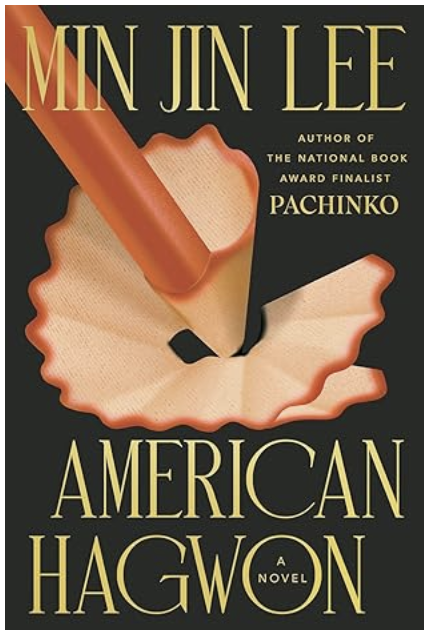
The book will be published on September 29th, 2026.A sweeping family saga ranging from 1992 to 2007 from the author of Pachinko. The Kohs — John, his wife Helen, and their three children Bo, DH, and Mido — are heading back to their native Korea after spending seven years in Paramus, New Jersey (where all three children were born), three years in Korea, and six years in Australia — all following the demands of John’s career. The plunge into the ultra rigorous and punishing education system is brutal for all — in Korea your educational achievements can determine the path of your entire life; the competition is fierce, and the Koh children are behind. Enter the Hagwon — a private, for-profit, after-school and weekend academy in South Korea to supplement public education — difficult to get into, but can make all the difference.
I loved every bit of this book and the 752 pages (daunting at first glance) flew by easily. The multi-dimensional and ever expanding story follows the Koh family’s struggle to at least survive, and hopefully thrive, as the vicissitudes of fate toss them about geographically, financially, and emotionally. For the Kohs, the American Hagwon they become part of greatly expands their network of friends, family, and connections — both the ones they needed to get in, and those resulting from the experience within. But the place of the Hagwon in the story is not just about its role in ensuring the children’s future; it’s also a deep dive on educational pedagogy and a genuine striving to understand what really educates a child, versus simply earning a desired status.
Lee writes in a clean, clear style — low on emotional melodrama or manipulation, high in character and relationship depth and growth, and extra high in pure unadulterated storytelling. The book shifts between vignette-style sections, each highlighting a character or set of characters — opening us up to their individual personal development: principles, motivations, realizations, troubles and triumphs. In this book, everyone is constantly evolving, using experiences and contemplation to course correct as necessary. I like that the adversities faced were realistic and neither heavy handed nor dependent on some overall “evil power wielder.” While some characters are definitely not “good guys,” they are presented as full beings with their own motivations and (different, and not great IMHO) principles and goals. Most importantly, I love the way the characters handle their problems without whining, without assuming victimhood, and without neurosis (they couldn’t afford therapy anyway!). Family is (obviously) a big theme in a book like this, but I also liked the fact that the loyalty they showed one another was mutual — everyone supported the others in whatever way they could. Not a blind and determined loyalty that rewarded selfish and misguided behaviors that impacted others.
The book kept me entertained, made me think, and left me in a positive mood reflecting on what is important in life. And — my ultimate test — I would be very happy to befriend just about every character within the pages. These are people who live by their principles, and they are principles I share!
Thank you to Cardinal and NetGalley for providing an advance copy of this book in exchange for my honest review. The book will be published on September 29th, 2026.

